In a case capturing national attention, the accused shooter of conservative figure Charlie Kirk has been charged with multiple felonies, sparking a debate over motives and political violence. While some officials, including Utah Governor Cox, have labeled the suspect Tyler Robinson a “leftist,” extremism experts highlight a different narrative, pointing towards Robinson’s engagement with online meme culture.
Charges and Investigation Details
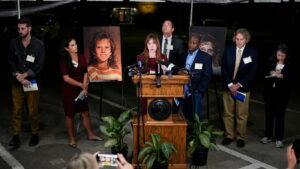
Today, prosecutors in Utah formally charged Tyler Robinson with six felonies, including aggravated murder, in the killing of Charlie Kirk. The Utah County attorney, Jeff Gray, announced his intention to seek the death penalty. Key revelations emerged from Robinson’s alleged text exchanges with his roommate, who authorities described as a transitioning male to female and a former romantic partner of Robinson. This individual has reportedly cooperated fully with the investigation.
Gray disclosed a note left by Robinson, which allegedly stated, “I have the opportunity to take out Charlie Kirk, and I’m going to take it.” Following the incident, Robinson reportedly texted his roommate, “I had enough of his hatred. Some hate can’t be negotiated out.” Kirk’s public stance on anti-trans issues was well known.
Speculations on Motive
Despite these charges, Robinson’s case has stirred a wave of conjecture regarding his motives. The prosecutor’s remarks suggest a link to Kirk’s anti-trans rhetoric. Nevertheless, political figures have used this case to amplify broader narratives about left-wing violence, despite a lack of concrete evidence.
Political Reactions
Comments from political figures have fueled the discourse. White House Deputy Chief of Staff Stephen Miller, speaking with Vice President JD Vance on Kirk’s podcast, accused certain left-wing groups of inciting violence. Similarly, Senator Ted Cruz, during a hearing with FBI Director Kash Patel, urged scrutiny of alleged funding sources behind such activities, particularly focusing on Antifa.
Context of Political Violence
Odette Yousef, NPR’s correspondent on domestic extremism, notes that historically, violent white supremacists have posed the most significant threat in the U.S., as evidenced by numerous mass shootings. Should the allegations against Robinson hold, it could mark a notable shift in perceived threats from the political left.
Accuracy and availability of NPR transcripts may vary. Transcript text may be revised to correct errors or match updates to audio. Audio on npr.org may be edited after its original broadcast or publication. The authoritative record of NPR’s programming is the audio record.
This article was originally written by www.npr.org