Uncertainty Clouds Davos as Global Leaders Grapple with U.S. Policies
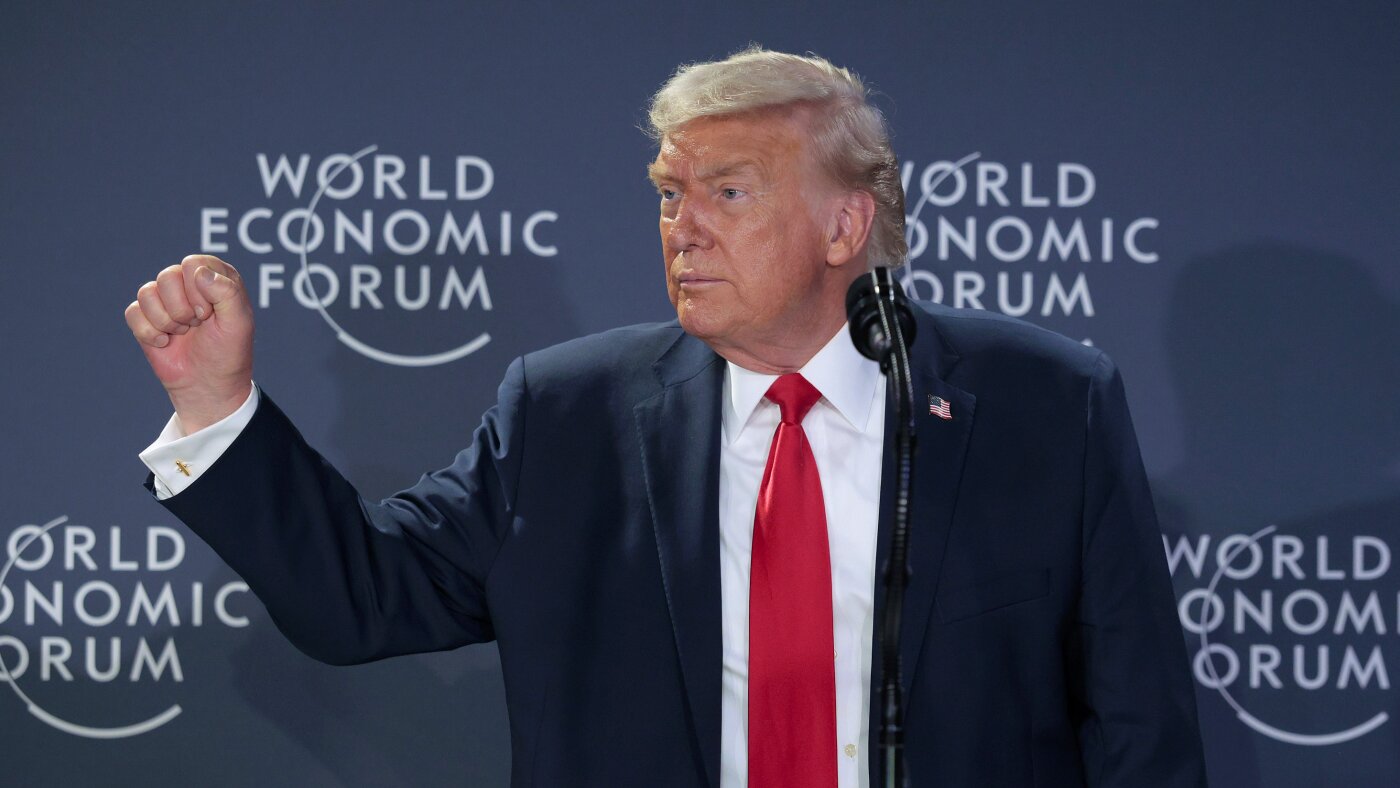
The picturesque setting of Davos, Switzerland, often serves as a backdrop for crucial global discussions. This year, however, the World Economic Forum was marked by significant political tensions and market anxieties, primarily stemming from recent statements by President Trump. His assertions on issues ranging from Greenland to Gaza have stirred diplomatic unease and economic uncertainty.
During the forum, the focus quickly shifted to the volatility in trans-Atlantic relations. President Trump’s remarks had already rippled through diplomatic circles, creating a sense of unpredictability about America’s role in global affairs. The situation intensified with suggestions of a U.S. military interest in Greenland, alongside tariff threats aimed at several European countries.
Canadian Prime Minister Mark Carney addressed the gathering, expressing concerns about the erosion of the post-World War II international order. “We are in the midst of a rupture, not a transition,” he stated, highlighting how economic tools are being wielded as strategic weapons.
Similarly, French President Emmanuel Macron emphasized the geopolitical instability. He pointed to a “shift towards a world without rules” and drew attention to a retreat from democratic norms, which he suggested could have once been attributed to leaders like Xi Jinping or Vladimir Putin, but now also seemed to implicate President Trump.
President Trump, in his response, underscored the importance of military and economic strength over diplomatic assurances. “We want strong allies, not seriously weakened ones,” he asserted, while questioning Denmark’s management of Greenland, despite ruling out a U.S. invasion of the territory.
In the following days, NATO Secretary-General Mark Rutte attempted to alleviate tensions, with Trump announcing a vague agreement on Arctic security and a withdrawal of his tariff threats. However, Denmark’s leadership later clarified that Rutte’s discussions did not represent their stance, adding to the diplomatic ambiguity.
The impact of these developments was felt within NATO, raising concerns about U.S. reliability. Ukrainian President Volodymyr Zelenskyy, speaking in Davos, expressed his frustration over Europe’s reluctance to take decisive actions, urging for immediate efforts to shape the future.
As the forum concluded, the questions remained: Are these disruptions a temporary phase, or do they signal a shift in global leadership dynamics, forcing allies to reconsider their strategies independently?