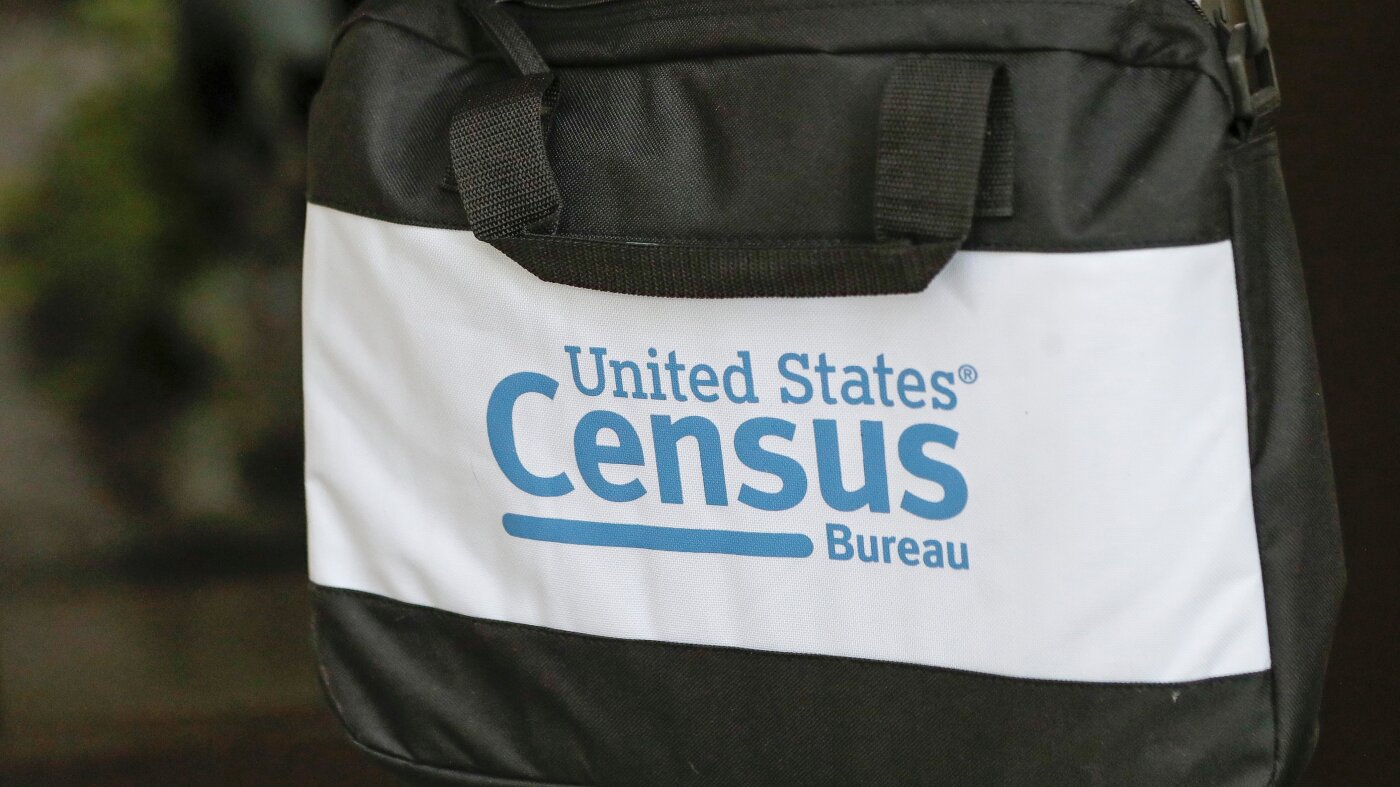

The U.S. Census Bureau’s logo is featured on a black bag carried by a census worker knocking on doors in 2020 in Winter Park, Fla.
John Raoux/AP
hide caption
toggle caption
John Raoux/AP
The Census Bureau’s preparations for the 2030 national headcount are undergoing significant changes, leading to concerns about the accuracy of future population data essential for political and financial decisions. The Trump administration has decided to trim the 2026 field test locations from a broader range to just two sites: Spartanburg, South Carolina, and Huntsville, Alabama. This move shifts the focus of the test, originally intended to improve the accuracy of the census, from a variety of communities across six states.
Notably, the agency plans to experiment with using U.S. Postal Service employees in place of temporary census workers, as detailed in a Federal Register notice before its publication. Additionally, the test will forego offering Spanish- and Chinese-language versions of its online form, limiting it to English only.
Despite these alterations, the Census Bureau’s statement on the “launch of the 2026 Census Test” emphasized their commitment to achieving an accurate count for the 2030 Census. However, spokespersons for the bureau and the Commerce Department have yet to disclose the reasons for these changes or confirm the scheduled start of the test in March.
Communities like rural regions in western Texas and Indigenous lands in Arizona and North Carolina will no longer participate in the test. These areas include the Fort Apache Reservation, San Carlos Reservation, and the Qualla Boundary.
Census consultant Terri Ann Lowenthal expressed concern, describing the revised test plan as “disheartening.” She stated, “The descoped 2026 test plan is confusing and unclear to the public — a product, regrettably, of the administration pulling a black-out shade over all planning for 2030.”
These developments follow a pattern of reduced transparency, including the bureau’s failure to update Congress and the disbanding of advisory committees. The bureau has also faced staff departures amid federal workforce reductions, and delays have hampered preparations due to funding uncertainties.
The proposal to involve Postal Service workers has sparked debate, given a 2011 Government Accountability Office report suggesting it may not be cost-effective. Despite this, Commerce Secretary Howard Lutnick supports the idea, citing potential savings.
USPS spokesperson Albert Ruiz redirected inquiries to the Commerce Department but noted, “The United States Postal Service looks forward to participating in the 2026 Operational Test in Support of the 2030 Census.”
Edited by Benjamin Swasey