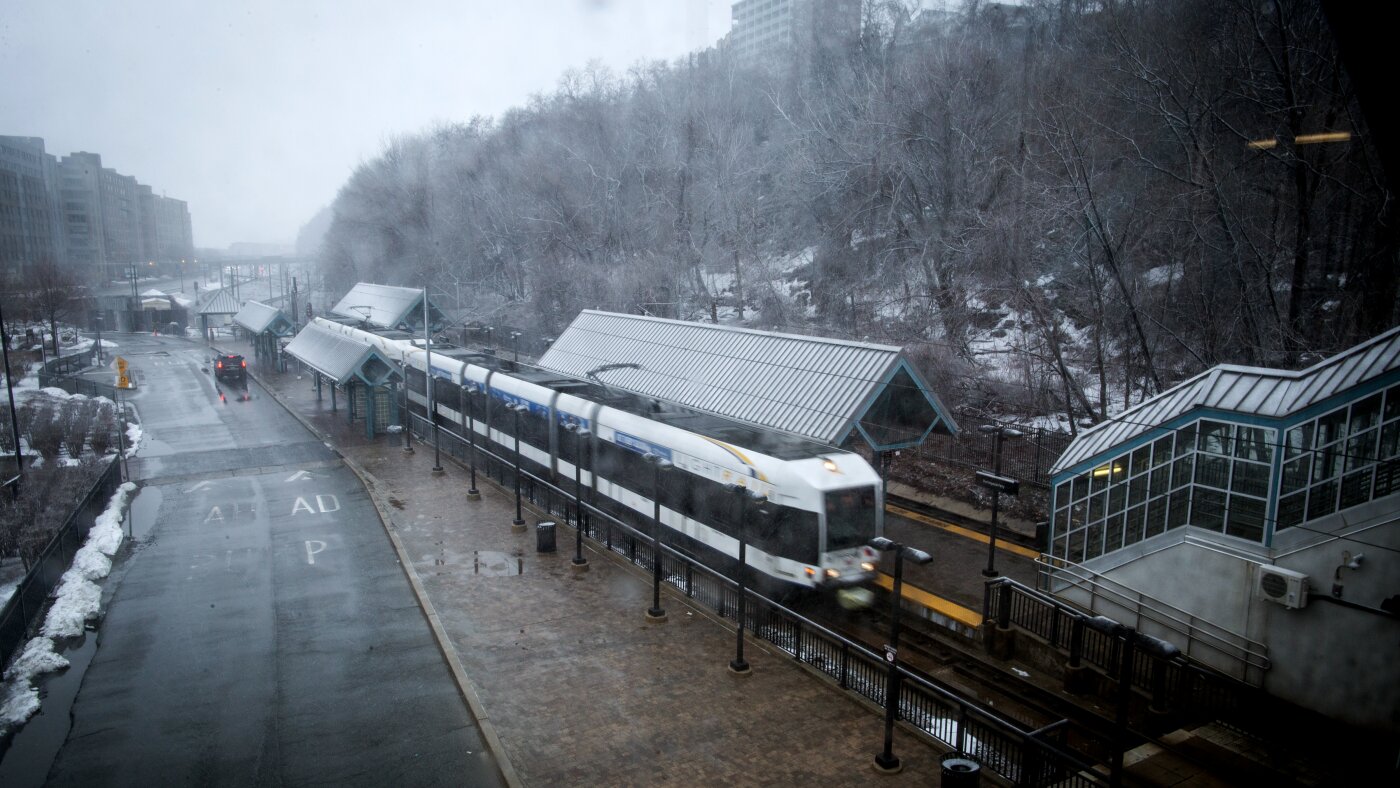
Intense Winter Storm Poised to Slam East Coast
A powerful winter storm is on course to hit the East Coast, prompting officials to issue warnings for residents to prepare adequately. The storm is expected to bring severe weather conditions from Sunday through Monday, affecting multiple states along the coast.
The National Weather Service (NWS) has alerted residents to anticipate “heavy snow, high winds, blizzard conditions and coastal flooding across the Mid-Atlantic and Northeast.” This warning was issued on Sunday as the storm approached.
Cody Snell, a forecaster with the NWS Weather Prediction Center, indicated the potential for significant snowfall along the East Coast, particularly from New Jersey to Massachusetts. “That’s where we’re going to see the major impacts from snowfall with this system that includes heavy snowfall rates, which can reduce visibility and accumulate on roads very quickly tonight, into tomorrow morning,” Snell explained during a briefing on Sunday. “We’re going to see the snowfall be very heavy and wet. … It’s going to weigh down trees, power lines.”
Expected wind gusts ranging from 40 to 70 mph from New Jersey to New England could result in power outages, according to the NWS. Coastal regions from Delaware to Cape Cod may also experience flooding and erosion.
Parts of Maryland, Delaware, New Jersey, Pennsylvania, New York, Connecticut, Rhode Island, Massachusetts, New Hampshire, and Maine have been issued blizzard warnings. In New York City, Mayor Zohran Mamdani announced the closure of public schools on Monday, urging residents to prioritize safety as they navigate the snowy conditions. “We haven’t seen a storm like this in a decade. Some parts of the city could see up to 28in,” Mamdani stated in a social media post.
States of emergency have been declared in several areas, including Delaware, New Jersey, New York, Connecticut, and Massachusetts. The NWS has labeled travel in areas like southeast Pennsylvania, New Jersey, Long Island, Rhode Island, and southeast Maine as potentially “dangerous or impossible.”
A travel ban in New York City will affect all “bridges, highways, and streets,” which will be closed to traffic from 9 p.m. Sunday through noon Monday, according to NYC Comptroller Mark Levine. “No cars, trucks, scooters, or e-bikes. Limited exemptions for essential and emergency movement,” Levine posted on social media.
Air travel has also been significantly affected, with over 5,100 U.S. flights delayed and more than 3,300 canceled as of 5:30 p.m. ET Sunday, per FlightAware. Amtrak announced service adjustments through Monday due to the storm conditions.
NWS meteorologist Owen Shieh urged caution regarding the heavy and wet snow, advising residents to take breaks while shoveling to prevent overexertion. He also emphasized the importance of staying in vehicles if stranded during the storm, noting, “To wander off in the middle of the storm would actually be more dangerous.”
The Federal Emergency Management Agency (FEMA) on Saturday encouraged those affected by the storm to “avoid unnecessary travel, charge devices, stock up on essentials & be ready for power outages.” They also advised adhering to local official directives.
This article was originally written by www.npr.org