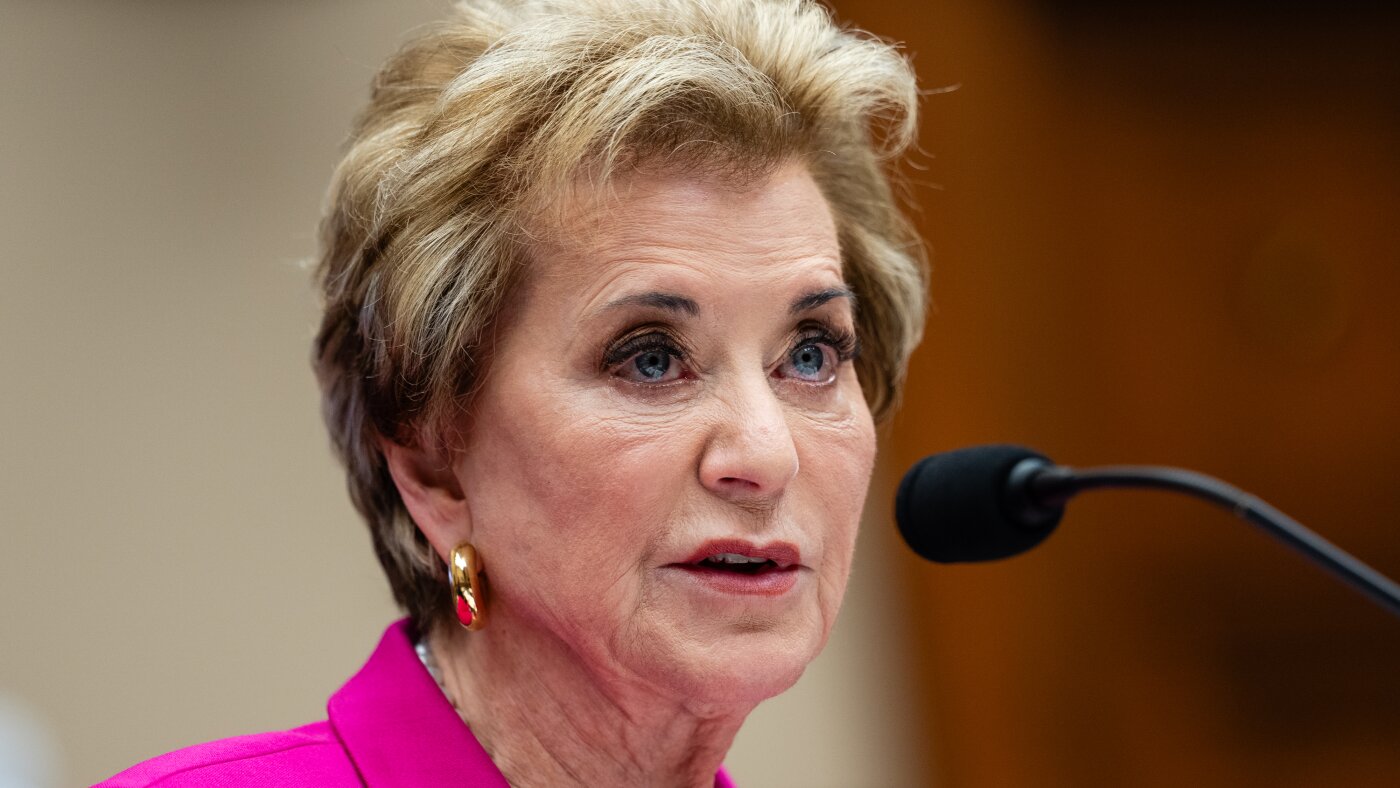

Education Secretary Linda McMahon fields questions Thursday from members of Congress about the dismantling of her agency, student loans and other issues.
Eric Lee/Bloomberg via Getty Images
hide caption
toggle caption
Eric Lee/Bloomberg via Getty Images
In a heated congressional hearing, U.S. Education Secretary Linda McMahon defended the administration’s latest budget proposal amidst sharp criticism from Democratic lawmakers. The discussion highlighted significant education policy changes that could impact millions, including debates over federal student loan caps and the role of the federal government in education.
McMahon faced a barrage of questions from both sides of the aisle regarding the future of the Department of Education, particularly as the Trump administration’s policies aim to minimize federal oversight in favor of local control. “The American people elected President Trump with a clear mandate: to sunset a 46-year-old, $3 trillion failed federal education bureaucracy,” McMahon declared, emphasizing the administration’s push to decentralize education governance.
The Department’s Future in Question
The hearing underscored a fundamental conflict over the department’s very existence. McMahon advocated for its dissolution, citing voter support for reduced federal intervention in education. In contrast, Rep. Bobby Scott criticized the administration’s approach, arguing it undermines a critical civil rights institution.
Significant reductions in department staffing reflect this policy shift, with employee numbers dropping from 4,200 in 2024 to 2,300 in 2026. Additionally, numerous programs have been reallocated to other federal agencies, signaling a broad restructuring of educational oversight.
Recent developments include the transfer of the federal student loan portfolio to the U.S. Treasury Department, further indicating a strategic downsizing of the department’s responsibilities.
Debate Over Special Education Management
The potential transfer of special education oversight remains a contentious issue. Disability-rights advocates have expressed concerns over moving the Individuals with Disabilities Education Act (IDEA) to another agency. McMahon acknowledged ongoing discussions regarding this potential transition but provided no definitive timeline or decision.
Rep. Suzanne Bonamici pressed for clarity, challenging McMahon’s statements on the matter, but received no straightforward answer, reflecting the complexity and sensitivity of the issue.
Challenges Facing the Office for Civil Rights
The department’s Office for Civil Rights (OCR) has also experienced significant changes, including substantial staff cuts. In the wake of these reductions, Rep. Mark Takano questioned McMahon about the implications for civil rights enforcement. Despite acknowledging the importance of OCR, McMahon’s budget proposal includes a 35% funding cut, raising questions about the office’s future capacity.
Controversial Student Loan Policies
The introduction of new caps on federal student loans, particularly affecting graduate students, was another point of contention. While McMahon argued these limits are necessary to control exorbitant college costs, critics expressed concerns about potential shortages in key professions such as healthcare and education.
Despite the administration’s stance, the relationship between loan accessibility and college pricing remains complex, with economists questioning the effectiveness of loan caps in reducing education costs.
Addressing Literacy Challenges
Concerns over declining literacy rates in the U.S. were also highlighted during the hearing. McMahon pointed to state-level initiatives as promising examples of literacy improvements, though she acknowledged broader challenges remain.
Proposed MEGA grants aim to support state efforts to enhance literacy, though the consolidation of existing programs into this new funding model has sparked debate over potential resource reductions.
Edited by: Nirvi Shah
Visual design and development by: LA Johnson
This article was originally written by www.npr.org