U.S. Investigates Deadly Missile Strike on Iranian Girls’ School
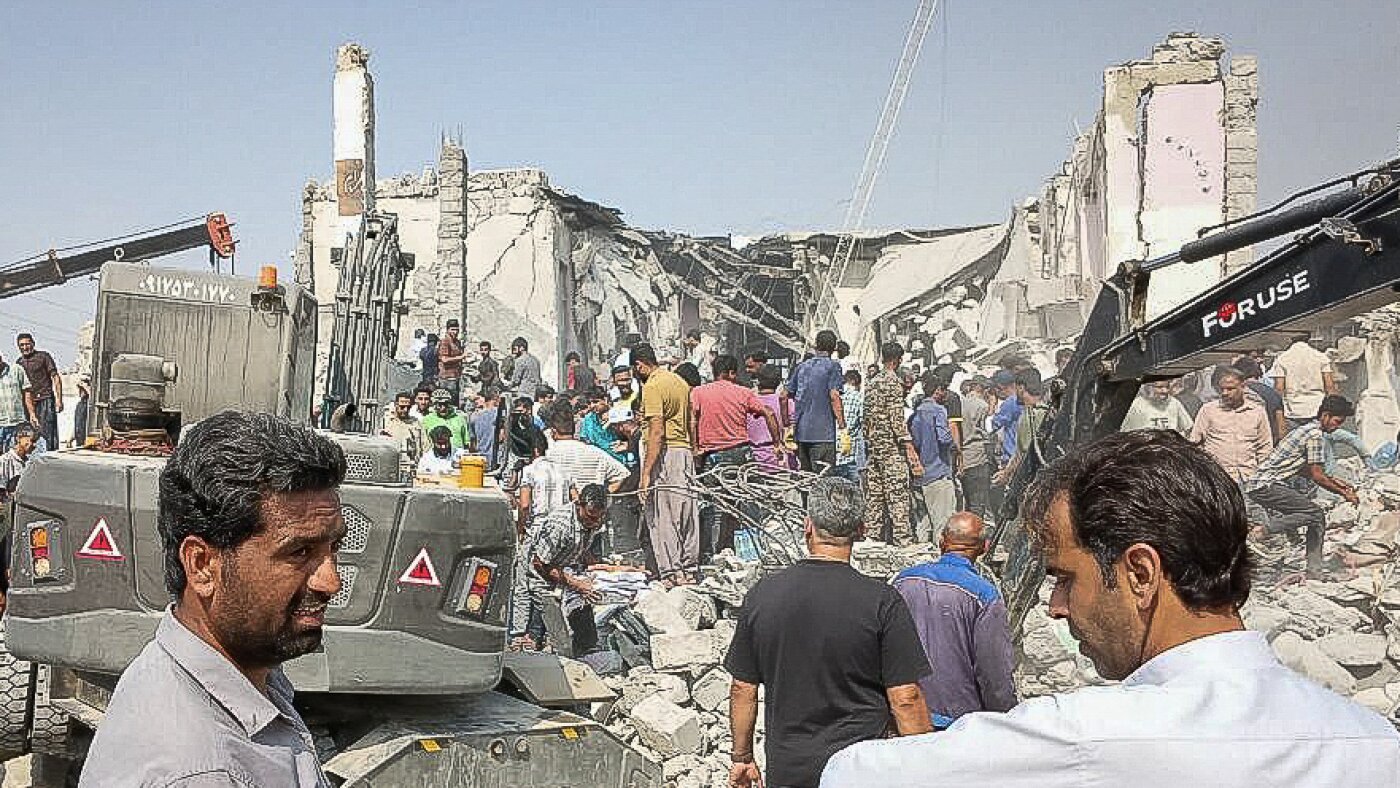
In a tragic incident that has captured international attention, the U.S. government is conducting a thorough investigation into a missile attack on a girls’ school in Minab, Iran. This strike, which resulted in the deaths of at least 165 civilians, predominantly children, has prompted significant scrutiny and is anticipated to be one of the most consequential inquiries into civilian casualties by the U.S. military in recent history.
An anonymous U.S. official revealed that a preliminary assessment suggests the U.S. might be responsible for the attack. The investigation, which is expected to span several months, will involve comprehensive interviews with individuals across various levels of command, from planners to those who executed the strike.
Should the U.S. involvement be confirmed, this incident could become one of the deadliest involving civilian casualties in recent decades. Despite efforts to reduce such occurrences, a special Pentagon office dedicated to preventing civilian casualties was significantly reduced in size by Secretary of Defense Pete Hegseth last year, sparking controversy.
White House spokesperson Anna Kelly emphasized, “This investigation is ongoing. As we have said, unlike the terrorist Iranian regime, the United States does not target civilians.” Meanwhile, the Pentagon has remained silent on requests for comments.
During a press briefing at the onset of the conflict, Hegseth criticized existing “stupid rules of engagement,” suggesting that they hinder military success. He has faced criticism for scaling back initiatives aimed at reducing civilian casualties, including the Civilian Harm Mitigation and Response initiative established under the Biden administration.
Further complicating matters, satellite imagery and video released by Iranian state media suggest that Tomahawk missiles, typically used by the U.S. military, struck the school. NPR was the first to report that precision weapons were involved, and subsequent visuals appear to confirm this.
The girls’ school was reportedly once part of an Iranian Revolutionary Guard naval base and may have been inaccurately classified as a military target on outdated lists. Historical imagery shows that the school and a nearby clinic, also hit in the strike, were segregated from the base years ago.
President Trump has suggested alternative theories, implying that another country might have fired the missile. However, military experts, including N.R. Jenzen-Jones of Armament Research Services, argue against this possibility, asserting that only a few nations, including the U.S., operate Tomahawks in the region.
Jenzer-Jones stated, “Tomahawks are only used and operated by a very small number of nations,” adding that the U.S. is the only participant in the conflict with access to such missiles. He described the incident as likely being a “strike that’s gone wrong,” pointing to potential intelligence failures in the targeting process.
Congress has mandated the Pentagon to reduce civilian casualties since a law passed in 2019. Nonetheless, the reduction of dedicated civilian mitigation teams by 90% under Hegseth’s leadership has raised concerns about the prioritization of civilian safety in military operations.
Oona Hathaway, a professor of International Law at Yale, highlighted the issue, stating, “A modern army has to fight according to the law, and the law requires that you protect civilians.” The scaling back of civilian protection efforts has left U.S. Central Command with minimal resources dedicated to this crucial task.
NPR’s RAD team contributed to this report.