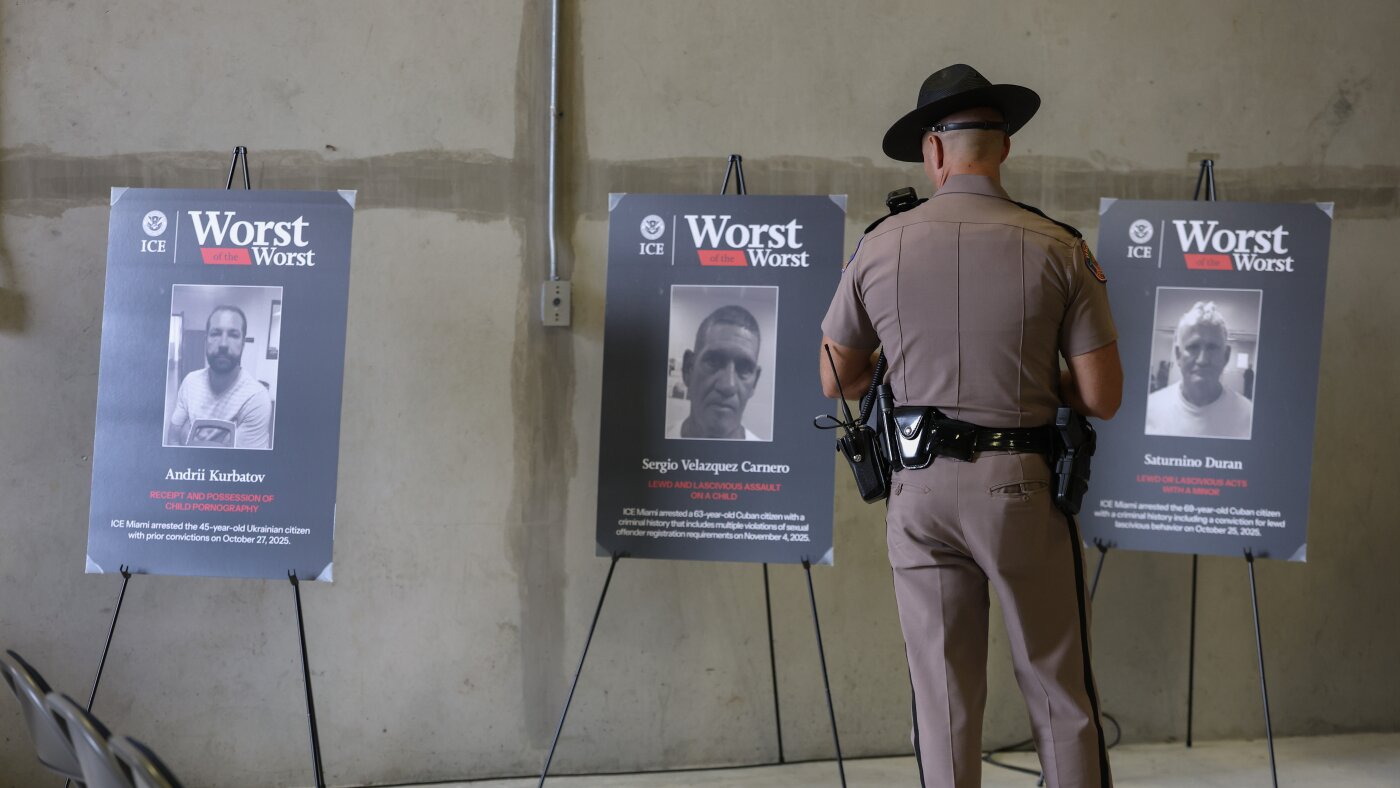

A Florida Highway Patrol officer looks at pictures of undocumented immigrants accused of crimes before a press conference at the ICE Enforcement and Removal Operations building on November 13, 2025 in Miramar, Florida. Florida law enforcement agencies have among the highest ICE cooperation rates in the nation, with state troopers making a significant number of immigration arrests. Joe Raedle/Getty Images North America
toggle caption
Joe Raedle/Getty Images North America
In a departure from previous practices, federal authorities are increasingly leaning on local police to assist with immigration enforcement. This change marks a shift from the visible displays of force, such as those seen in Minnesota, towards a more discreet collaborative approach.
“Partnership is vitally important,” Markwayne Mullin, the newly appointed secretary for the Department of Homeland Security, stated during his confirmation hearing last month. “I would love to see ICE become a transport more than the front line. If we can get back into just simply working with law enforcement, we’re going to them, we’re picking up these criminals from their jail.”
This sentiment was echoed by a DHS spokesperson in a recent statement to NPR, emphasizing the enhanced collaboration between ICE and local law enforcement as a means to bolster national safety.
Why the Shift?
The aggressive tactics during ICE’s Minnesota operations, which included the use of tear gas and resulted in fatalities, were met with public disapproval. A poll conducted by NPR/PBS News/Marist in February revealed that two-thirds of Americans felt ICE had overstepped its bounds.
Collaboration with Local Police
Mullin’s comments signal an increased reliance on the federal 287(g) program, which empowers local law enforcement to perform functions typically reserved for ICE agents. The program has seen significant growth, with over 1,600 agreements across 39 states, compared to just 45 during Trump’s first term.
According to an ACLU report, approximately one-third of U.S. residents now live in areas where local police participate in this program. The “Task Force Model” is particularly comprehensive, deputizing local officers to enforce immigration laws during their routine duties.
Community Impact
States like Florida and Texas have mandated participation in 287(g) programs, affecting over 40 million people. Florida, in particular, has seen a surge in agreements, with incentives for law enforcement to join and penalties for non-compliance. This has resulted in numerous agencies, from highway patrols to campus police, signing up to assist ICE.
Such partnerships have altered local policing dynamics, with trained officers conducting immigration checks during standard traffic stops. As a result, immigration arrests by local agencies have increased, with reports of racial profiling emerging in areas like Palm Beach County.
Law Enforcement Perspectives
While some law enforcement agencies receive federal incentives for participating in 287(g) agreements, the approach is not without controversy. Critics argue that it erodes community trust and deters undocumented immigrants from seeking police assistance. Some states, including Maryland, have banned such agreements altogether.
In Florida, even among strong supporters of Governor Ron DeSantis, there is concern about the impact on families who are otherwise contributing to society. This tension highlights the ongoing debate over the role of local law enforcement in federal immigration enforcement.
This article was originally written by www.npr.org