Millions of American families are sitting down this summer to the same fresh salads, chilled fruit, and garden vegetables they’ve trusted for years. That trust rests on a simple assumption: someone, somewhere, is watching for danger before it reaches the table. Right now, that assumption is wrong — and people are getting sick because of it.
A parasitic illness called cyclosporiasis is tearing through dozens of states this summer, leaving people with what doctors describe as “explosive” watery diarrhea, stomach cramps, nausea, and fatigue that can drag on for weeks. The illness itself is bad enough. What makes it a scandal is this: the federal early-warning system built specifically to catch outbreaks like this one was gutted just twelve months before cases started to surge.
What Cyclospora Does to a Body
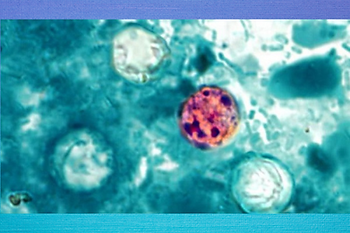
Cyclospora cayetanensis is a microscopic parasite that spreads through food or water contaminated with human waste, typically through poor sanitation in agricultural operations. It doesn’t come from animals. Past U.S. outbreaks have been traced to raspberries, basil, cilantro, and pre-washed bagged salad mixes — the everyday staples of a summer kitchen.
Healthy adults usually survive it without lasting harm. Young children, elderly people, pregnant women, and anyone with a weakened immune system are not so lucky. Left untreated, symptoms can linger for weeks and return in waves. There’s a standard treatment — the antibiotic trimethoprim-sulfamethoxazole — but it only works if doctors think to test for the parasite in the first place, and if public health officials can spot the pattern before it spreads further. Both of those depend on infrastructure the government just tore down.
The Alarm System Washington Chose to Silence
For nearly thirty years, a CDC-USDA partnership called FoodNet stood watch over eight major foodborne pathogens — cyclospora, campylobacter, listeria, shigella, vibrio, yersinia, and others — flagging the unusual spikes that signal an outbreak before it becomes a crisis.
In July 2025, the Trump administration stripped that system down to just two mandatory pathogens: salmonella and E. coli. Surveillance of cyclospora and five other pathogens became optional busywork left to whichever states felt like doing it. The same year, the CDC dissolved its entire Division of Parasitic Diseases and Malaria, scattering the scientists who had built careers tracking parasites like cyclospora to other corners of the agency.
A year later, the largest cyclosporiasis outbreak in years is spreading — and the country is trying to fight it with a fraction of the tools it had before the cuts.
Investigators Are Flying Blind
Health officials still haven’t identified a common source behind this outbreak. The CDC says it has no evidence tying the cases together into a single multistate event — but that’s exactly the kind of connection FoodNet was built to make, and exactly the kind of connection that’s much harder to make with the system hollowed out.
Craig Hedberg, a professor in the Division of Environmental Health Sciences at the University of Minnesota, isn’t buying the administration’s line that the cuts were reasonable belt-tightening. He’s rejected the CDC’s framing of the surveillance as duplicative, warning that gutting it “normalize[s] the idea that foodborne disease surveillance is expensive and unimportant” when it’s actually “the foundation of our food safety system.”
That’s the trap with public health infrastructure: it’s invisible when it’s working. Nobody notices FoodNet on the days it quietly does its job. Its absence only becomes obvious once people start getting sick and the machinery meant to stop it isn’t there anymore.
What You Can Do While Washington Looks the Other Way
Investigators are still hunting for the source. In the meantime, public health officials are urging basic precautions: wash all fresh produce thoroughly under running water, even anything labeled “pre-washed.” Cook leafy greens when you can, especially for kids, pregnant women, or anyone immunocompromised. Skip pre-washed bagged salad mixes — they’ve been the culprit before.
If you or someone in your family has watery diarrhea lasting more than a few days, see a doctor and ask specifically about testing for cyclospora. Most standard stool tests don’t screen for it automatically, so you have to ask by name.
These precautions aren’t new — they’re the same advice public health officials have given for years, and they’re still good advice. But they’re also a reminder of what individuals can’t do alone. Stopping an outbreak before it reaches tens of thousands of people isn’t a personal responsibility problem. It requires a coordinated, funded, always-on public health system working in the background every day — the exact system this administration chose to dismantle.