Understanding the Divide: Progressives’ Challenge in Reaching Working-Class Voters
As the Democratic Party gears up for future elections, it faces a critical challenge: bridging the gap between its progressive base and the working-class voters it needs to win over. A new report from California researchers highlights a key insight—it’s not centrism, but rather a genuine understanding and respect for working-class values that holds the key to building a successful coalition.

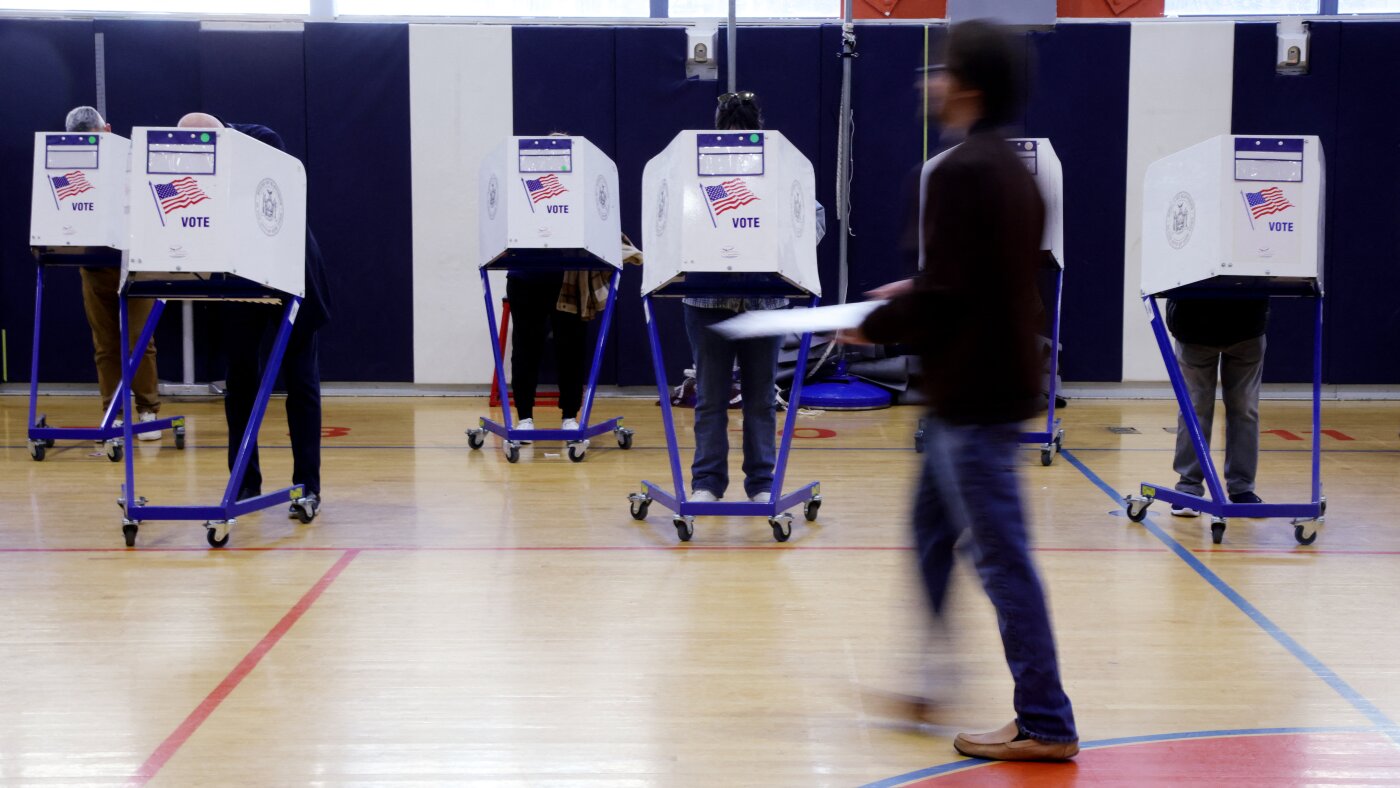
People vote at a polling location in New York City on Nov. 4, 2025. Leonardo Munoz/AFP via Getty Images
The report, shared exclusively with NPR, is authored by Joan C. Williams, a law professor known for her work in diversity, equity, and inclusion, and Jared Abbott, leader of the Center for Working Class Politics. Their research suggests that the Democratic Party must understand and respect the aspirations of working-class voters to form a winning coalition.
“It’s about understanding that people need a sense of personal and economic security before they will support the changes progressives are calling for,” the authors note.
The report emphasizes that the Democratic Party risks a strategic error if it continues to focus solely on social justice issues without addressing the concerns of working-class citizens. Williams expressed her frustration, stating, “I am tired of losing. I want to build a sustained progressive coalition capable of delivering on progressive goals. And that’s not what we have now, and that’s not what we’ve had for decades.”
According to the report, titled “The Left’s Coalition Crisis: Understanding the Massive Divide Between Working Class and College Educated Voters, and How to Bridge It,” Democrats are losing support from working-class voters across all races because the party’s base is perceived as disconnected from the priorities of these individuals.
Abbott highlights the importance of valuing self-reliance, patriotism, tradition, and personal security. “Until Democrats understand the importance of really respecting, listening to, and taking seriously the values of self-reliance, the values of patriotism and tradition and personal security,” he said, “they’re going to have a major messaging and a major electoral problem.”
The report suggests a two-part strategy to bridge the “diploma divide.” First, embrace populism by highlighting economic disparities where hard work is not yielding a stable middle-class life. Second, avoid narratives that suggest liberal college graduates look down on those without a degree.
Results from the Class Gaps Poll reveal a disconnect between college-educated liberals and working-class voters on various issues, including LGBTQ+ rights, abortion access, climate change, immigration, and income redistribution. The report identifies the most significant divide on “resisting authoritarianism.”
Williams notes, “Resisting authoritarianism is the second-highest priority for liberal college grads, but for workers, it’s like 19 out of 20.”
The report underscores that addressing economic concerns should be the Democrats’ focus, as ten out of twelve top priorities for workers are economic. Williams advises, “Ten out of 12 workers’ top priorities are economics, so if you want them to vote for you, talk about economics.”
Abbott and Williams tested new messages by framing issues around working-class values, which moved opinions significantly. For example, climate initiatives gained more support when linked to job creation, energy costs, pollution reduction, and competition with China.
Importantly, this reframing did not alienate college-educated liberals. Abbott concluded, “In general, we found that there are no clear systematic tradeoffs, that what’s better messaging for the working class is typically better messaging for all voters.”
This article was originally written by www.npr.org