High School Students Take on AI Policy at a Mock Senate
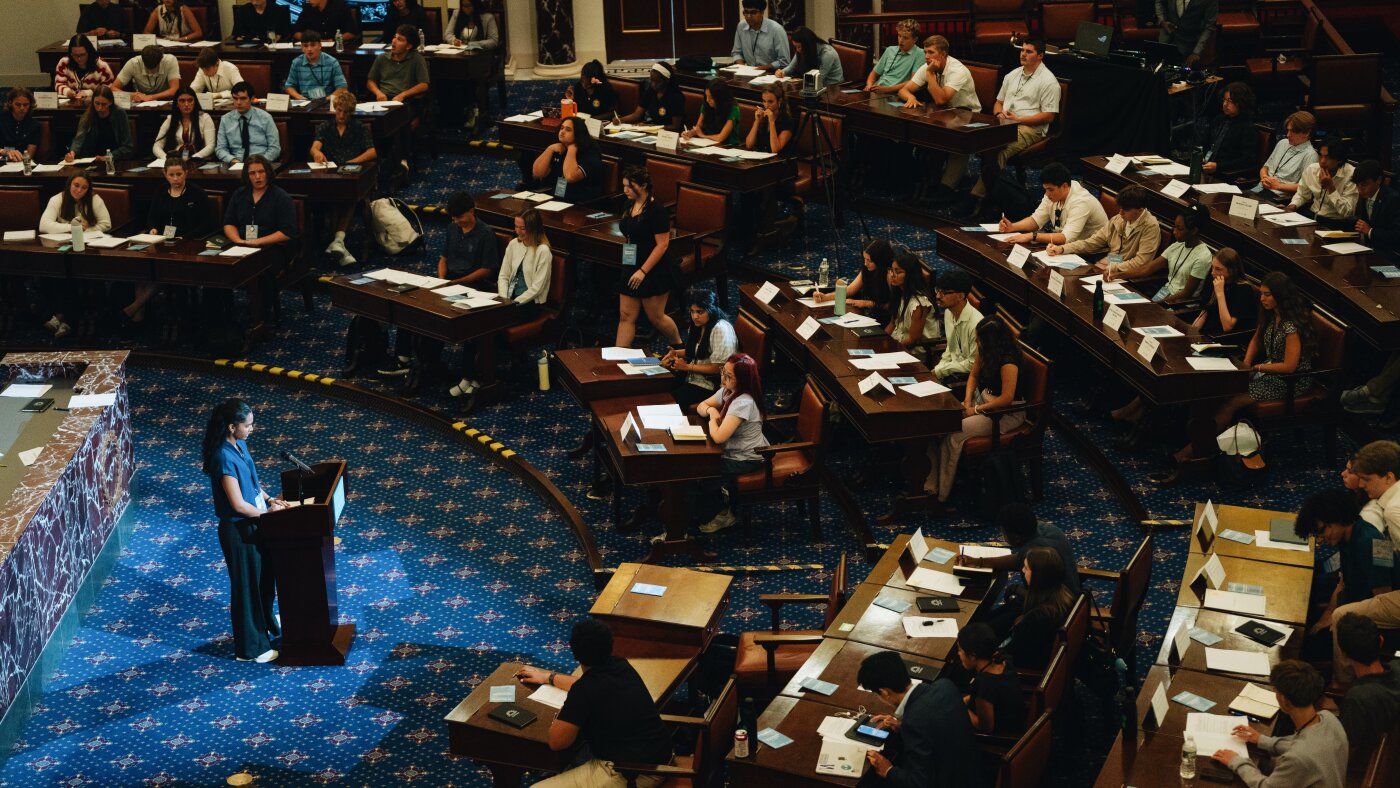
In a unique educational experiment, 98 high school students from across the United States assembled in Boston to tackle the challenges posed by artificial intelligence in K-12 education. This gathering, held at the Edward M. Kennedy Institute for the United States Senate, saw participants acting as senators in a replica of the U.S. Senate chamber.
During this late-July weekend, these students attempted to achieve what many believe the actual Congress has struggled with—creating legislation to guide the integration of AI in educational settings. The students aimed to address pressing questions such as whether AI should be used in assignments and tests, and whether schools should be responsible for teaching AI literacy. Currently, there is no national policy on AI use in schools, leaving individual states and districts to develop their own guidelines.
“This is a once-in-a-lifetime opportunity for us to actually help and try to change the country for the better,” remarked Gabriel Sutphin, representing South Carolina, during proceedings at the institute.
Throughout the weekend, NPR observed the students as they engaged in spirited debates and negotiations, a process which nearly saw the proposed bill being derailed several times. However, through compromise and cooperation, the “Students First Act” was eventually passed with an 82-16 vote.
Key Provisions of the Students First Act
The legislation includes several key directives: AI literacy should be introduced as soon as students gain access to classroom technology, AI use is prohibited in graded testing, and teachers can demand oral defenses for projects suspected of inappropriate AI use. The complete bill can be read here.
Jeffrey Riley, executive director of Day of AI and former Massachusetts education commissioner, noted, “The adults themselves haven’t been able to come to consensus on this, right? And so now it falls to the kids. Let them lead the way.”
Guidelines for Students and Educators
The bill’s student-focused section has 15 provisions, addressing concerns that AI might replace independent thinking. “Without guidance and guardrails, ‘[AI use] is just gonna go unhinged,'” said Campbell McHenry of Mississippi.
Students are allowed to use AI for editing, brainstorming, and studying, but not for writing. They must demonstrate their understanding of subjects through discussions or tests. If suspected of AI misuse, their work will be reviewed by school officials, not just AI detection software.
For educators, the bill stipulates that AI can be used for lesson planning and feedback, but teachers must clearly outline AI usage policies each semester. If AI usage is flagged, teachers must investigate before escalating the issue.
Parental Involvement and AI Access
While parents are encouraged to foster balanced technology use at home, the bill initially allowed for parental veto over AI access. This was challenged by students like Tatiyana Reaves from North Carolina, who argued that understanding AI is crucial for students.
During debates, students also discussed the handling of sensitive information shared with AI tools. Dylan Dornack from Iowa emphasized that AI should alert human authorities in cases of crisis, saying, “This could be lifesaving.”
Ultimately, the students agreed that school chatbots should notify officials if a student seeks emotional support, reinforcing the need for human intervention.
While the “Students First Act” is not legally binding, AASA (The School Superintendents Association) plans to distribute the text to its members nationwide, offering a framework for schools crafting their AI policies.
As the weekend concluded, student senators reflected on their experience. Kendall Terao-Toma from Hawaii summed up the sentiment, stating, “This is for our future—not just for education but for the workforce we will join, the economy that we will build, and the communities we will lead.”