
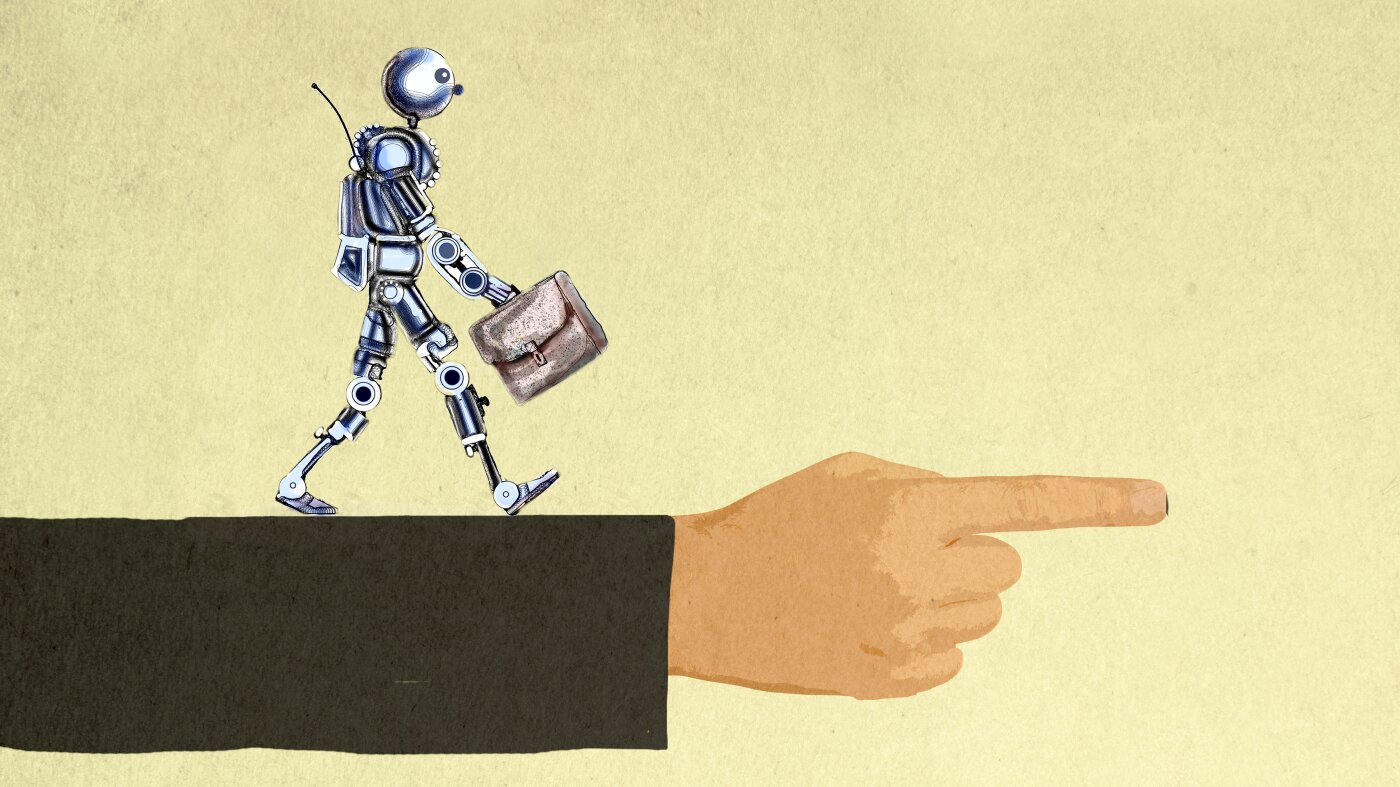
Exploring the Challenges of Job Hunting in the Age of AI
The journey from university to the workforce is often seen as a seamless transition, but recent graduates are finding this path increasingly complex. As technology evolves, many are questioning whether artificial intelligence (AI) is reshaping the job market, creating hurdles for those just starting their careers.
Irene Chang, a recent industrial and systems engineering graduate from Georgia Tech, has been actively seeking a data analyst position since last September. Despite submitting approximately 450 applications and partaking in 19 interviews, she remains without a job offer. “I wanted to work a job right after college,” she says.
Similarly, Jacqueline Kline, who holds a master’s degree in communications from Florida State University, has applied to over 500 entry-level positions since December. “It’s hard knowing that I’m doing everything that I can to be successful and feeling like that’s not enough,” Kline expresses.
Both Chang and Kline suspect that AI is partly responsible for their job hunting difficulties. “I feel like the entry-level skills that you have, they’re important, but also something that AI can do very efficiently,” Chang explains.
The Federal Reserve Bank of New York reports that the unemployment rate for recent graduates is 5.7%, surpassing the overall workforce’s 4.1%. A ZipRecruiter survey found that 47% of recent graduates believe AI has influenced hiring in their fields.
AI’s Influence on Entry-Level Positions
Erik Brynjolfsson, an economist at Stanford University, acknowledges AI’s impact on entry-level jobs, noting that it has contributed to a 16% decline in employment for young workers in AI-exposed roles since late 2022. These positions include software development and marketing management.
Brynjolfsson points out two main reasons for this trend. First, economic contractions typically affect younger workers more, as companies often cut junior roles first. Second, AI models are trained on written knowledge, which overlaps with the skills of inexperienced graduates.
In contrast, occupations that require hands-on experience, such as home health aides and construction workers, have remained stable or grown. Brynjolfsson emphasizes that senior workers possess tacit knowledge that AI cannot replicate, reducing competition from AI.
Remote Work: Another Factor in the Equation?
David Deming, an economist from Harvard University, suggests that remote work may be more responsible for the challenging job market than AI. He argues that the decline in junior hiring began before the release of ChatGPT, with remote work playing a more significant role.
An analysis by the New York Fed shows that remote job opportunities have increased, leading to higher unemployment among younger graduates. Deming notes that companies may hesitate to hire entry-level workers for remote positions, as training them remotely is more challenging.
Anders Humlum from the University of Chicago adds that AI-heavy companies haven’t reduced entry-level hiring. A study by Ramp and Revelio Labs found that companies investing in AI saw a 12% increase in entry-level employment over two years.
The Future of Work in an AI-Driven World
Despite differing views on AI’s current impact, economists agree that a significant employment shift is underway. Many have signed an open letter warning of AI’s transformative potential.
While acknowledging the challenges, Brynjolfsson, Humlum, and Deming remain optimistic about AI’s potential benefits. They advise recent graduates like Kline and Chang to “hang in there,” as the job market evolves amidst technological advancements.





Comments are closed.