
Escalating Tensions: Iran Defies U.S. Economic Threats

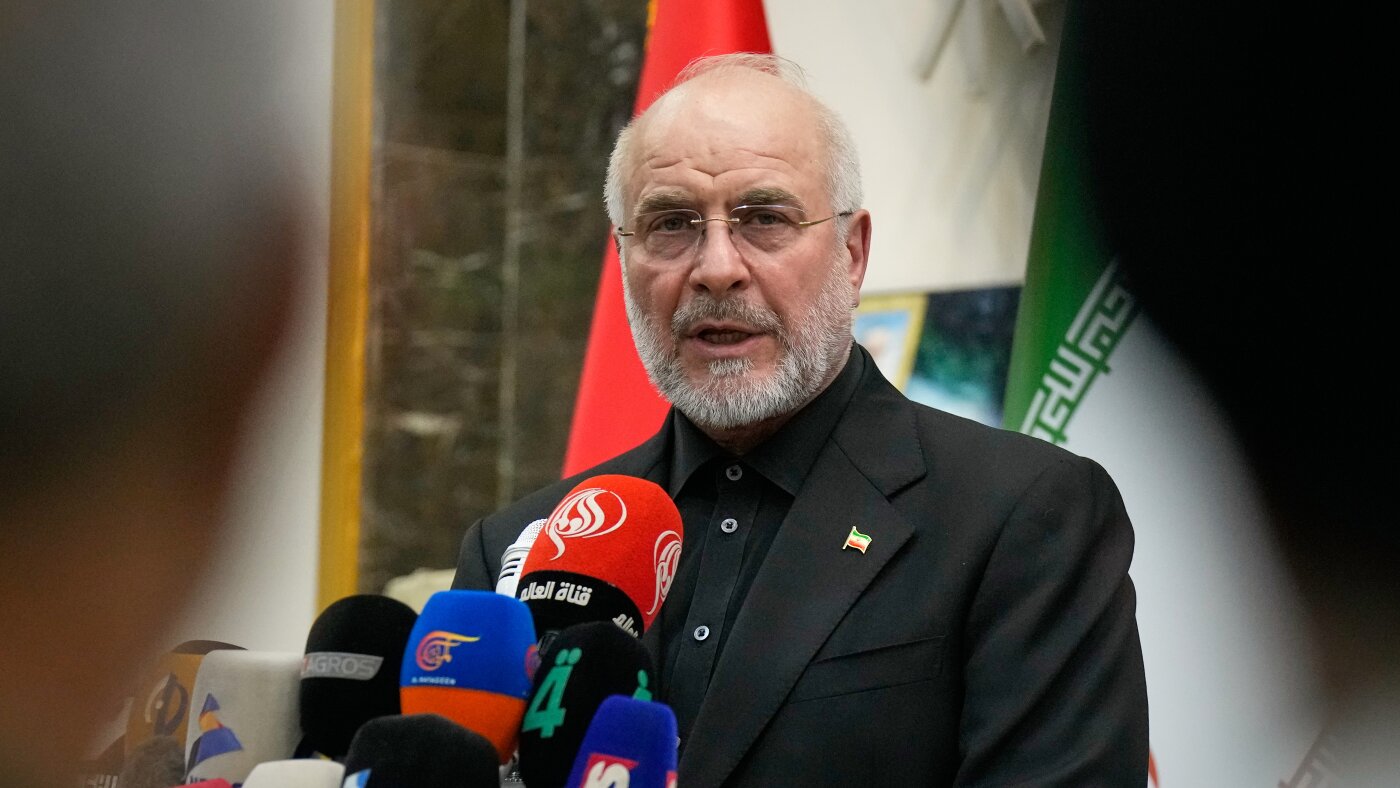
Iran’s Parliament Speaker Mohammad Bagher Qalibaf speaks during a 40-day commemoration ceremony for the late Iranian Supreme Leader Ali Khamenei at the Imam Hassan Mosque in Karbala, Iraq, Thursday, Aug. 20, 2026. Hadi Mizban/AP
The Iranian leadership has responded to President Trump’s recent warnings of intensified economic sanctions by downplaying the impact of such measures. Iran claims that years of U.S. sanctions have not deterred its objectives.
In a statement on Friday, Iran’s parliamentary speaker Mohammad Baqer Qalibaf criticized Trump’s threats of an “economic D-Day,” arguing that it demonstrates the U.S.’s inability to engage Iran militarily.
“The Americans and the Israelis have realised that they cannot handle Iran…in the field of a hard military war, so they have entered into a cognitive war and an economic war,” Qalibaf remarked during his visit to Iraq.
Echoing this sentiment, Iran’s Foreign Minister Abbas Araghchi condemned the pivot to economic warfare, labeling it as ‘economic terrorism’ intended to distract from U.S. domestic challenges. Araghchi expressed that adhering to unsuccessful U.S. policies would only heighten anti-American feelings.
Earlier in the week, Trump used Truth Social to announce plans for “the most crushing economic operation ever taken against any country” and urged global allies to join the U.S. in this effort.
These developments occur amidst stalled diplomatic attempts to renew peace discussions, following the lapse of a 60-day memorandum of understanding.
The U.S. continues to enforce a blockade, while Iran maintains tight restrictions on the Strait of Hormuz, a vital oil route. Existing U.S. sanctions already severely limit Iran’s trade with Western nations. In June, actions were intensified against refineries and businesses purchasing Iranian oil. Treasury Secretary Scott Bessent has hinted at further secondary sanctions targeting countries, not just businesses, maintaining commerce with Iran.
On Wednesday, Trump warned, “ANY country that allows its financial institutions, businesses, airports, or government entities to provide any type of lifeline to Iran will itself face TREMENDOUS Economic Consequences.”
In a CNBC interview, Bessent declared that Iran would encounter “the greatest coordinated economic isolation in the history of the world” and emphasized the need for global allies to decide their stance.
The potential for secondary sanctions has sparked concerns, particularly regarding China, a major buyer of Iranian oil. Bessent identified China as the largest consumer but refrained from confirming if it would be targeted.
A Chinese foreign ministry spokesman responded by advocating for negotiations over sanctions, stating, “sanctions and pressure tactics are not the solution.”
Bessent is slated to hold a press conference on Monday to outline the specifics of Trump’s “economic D-Day.”
Sina Toossi, a senior fellow at the Center for International Policy in Washington, commented on the situation, noting that ideological hardliners now control parts of Iran’s government, prioritizing survival over economic stability. “There’s this existential threat that the Iranians have been faced with. So they’re willing to bear much greater economic costs to kind of secure their survival,” she said.
Emily Feng in Washington DC and Kate Bartlett in Johannesburg contributed to reporting.


Comments are closed.