
Trade Tensions Rise as Canada Imposes New Tariffs on U.S. Goods

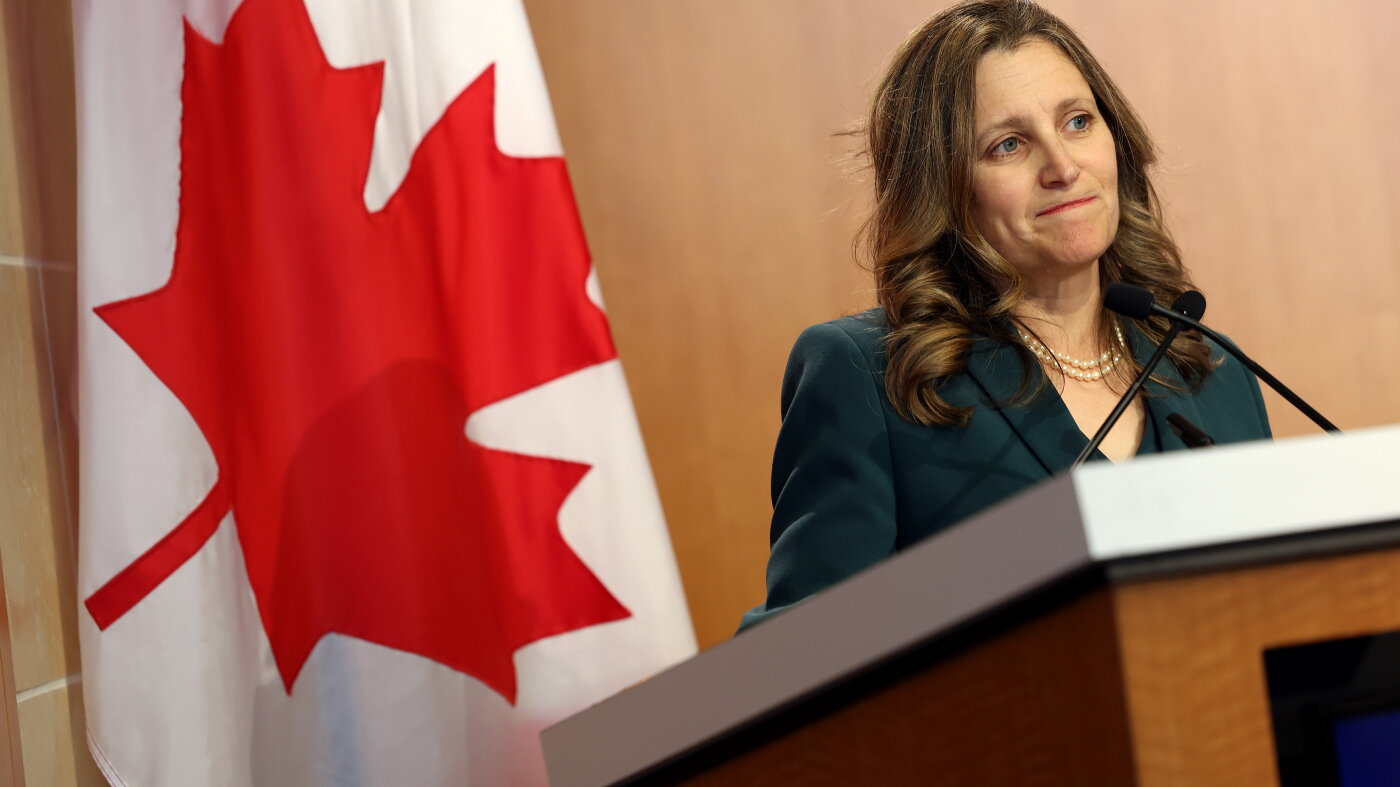
Former Canadian Finance Minister Chrystia Freeland speaks at the Peterson Institute for International Economics in Washington on April 12, 2023. Kevin Dietsch/Getty Images
On Tuesday, Canada took a significant step in its ongoing trade dispute with the United States by implementing tariffs of up to 50% on approximately $20 billion worth of American goods. This move represents a further escalation in tensions between the two countries, which have historically shared a close relationship.
The Canadian government, led by Prime Minister Mark Carney, introduced these tariffs in retaliation for similar measures imposed by the United States on Canadian products. While the Canadian tariffs match the U.S. tariffs in monetary value, they do not target the same products.
This trade conflict has stirred feelings of betrayal among many Canadians, who have expressed their discontent with the actions of a country they once considered a close ally. President Trump’s comments suggesting Canada should become the 51st state and his economic pressure tactics have only added to the tension. As a result, Canadians have reduced their travel to the U.S. and are boycotting American goods.
The economic entanglement between the two nations is complex. Since the trade tensions began, U.S. auto exports to Canada have decreased by 22%. Canada remains a crucial market, being the largest customer for 26 U.S. states and a top-three customer for 45 states.
Chrystia Freeland, who has played a pivotal role in trade negotiations, including the U.S.-Mexico-Canada Agreement, warns that the U.S. risks alienating its allies. “If Americans are concerned about China in the world, which I am, the best way to act on China is with an alliance with America’s traditional allies,” Freeland stated in an interview with NPR’s Morning Edition. “But it has to start with stopping punching your friends in the face, which is what Washington is doing right now.”
Freeland also addressed the perception that Canada’s smaller economy means it must yield to U.S. demands. Recalling previous trade negotiations, she noted, “That is not a way to have a partnership, and Canadians simply won’t stand for it.”
Listen to the full interview by clicking the blue play button above. Peter Armstrong contributed reporting from Toronto.
This article was originally written by www.npr.org




Comments are closed.