
The Monumental Ambitions of President Trump’s Second Term
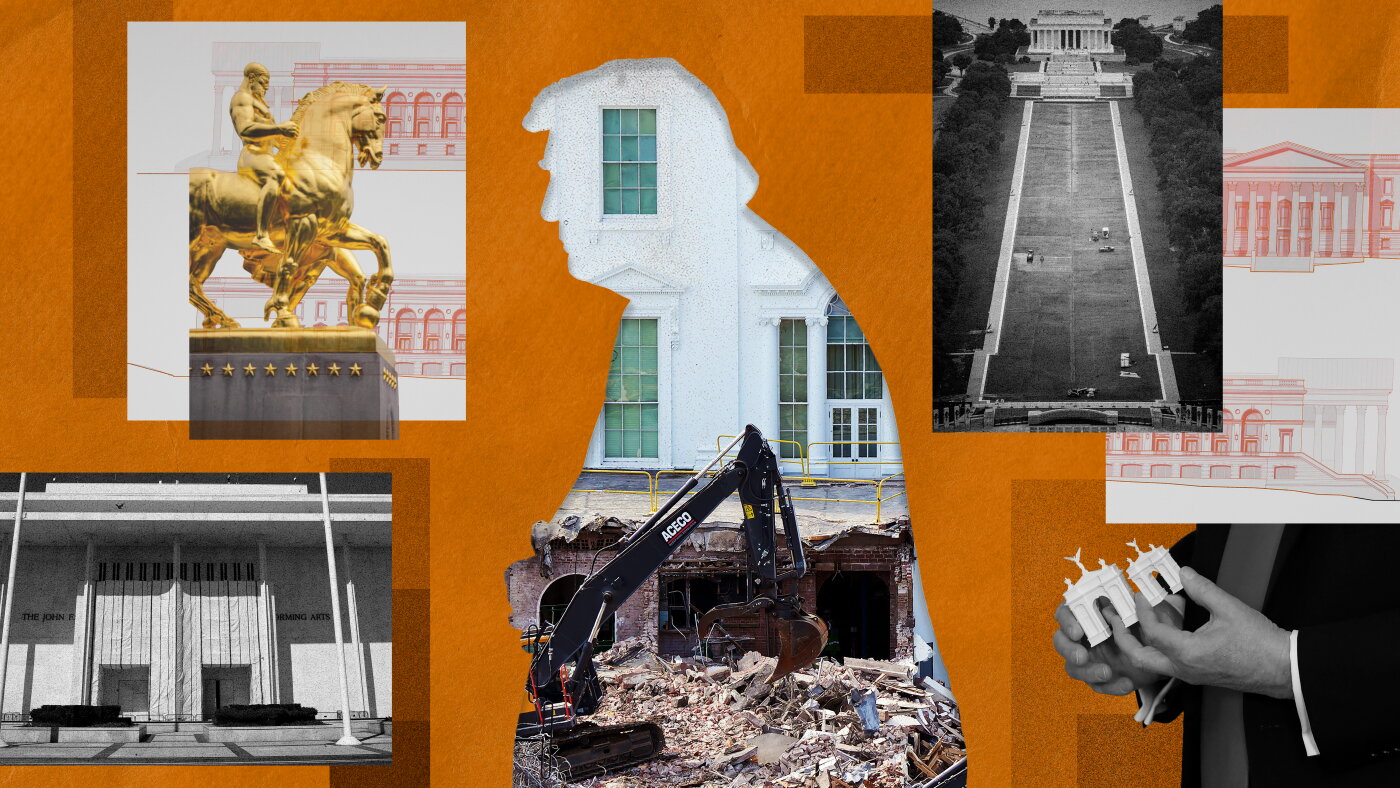
In his second term, President Trump has embarked on an ambitious construction spree in Washington, D.C., that has sparked both admiration and controversy. Describing himself as the “builder-in-chief,” Trump has undertaken numerous projects to leave his mark on the nation’s capital.
Trump has overseen significant modifications to the White House, including demolishing the East Wing to make way for an expansive ballroom and military complex beneath it. Among other alterations, he added a helipad to the South Lawn and repaved the Lincoln Memorial Reflecting Pool in a bold “American flag blue,” though the project remains incomplete due to setbacks.
His endeavors extend beyond the White House. He has initiated the installation and restoration of statues, with plans for a “national heroes” sculpture garden in West Potomac Park. Trump has also proposed converting the East Potomac Golf Links into a championship-level course and has expressed interest in attaching his name to the Kennedy Center or demolishing it.
While these projects have led to legal challenges and public protests, Trump’s administration defends them as part of a broader vision to enhance Washington’s grandeur. White House spokesperson Davis Ingle emphasized that Trump is fulfilling campaign promises while ensuring the capital remains in pristine condition for future generations.
Supporters see Trump’s construction efforts as a testament to his real estate acumen, honed over decades as a developer in New York City. However, critics argue that his approach disregards historic preservation and sets a concerning precedent for future presidents.
A History of Controversial Development
Trump’s reputation as a developer has been marked by both innovation and controversy. His early projects often faced legal hurdles, and his latest initiatives in Washington have reignited concerns about his approach to construction.
Barbara Res, a former executive at the Trump Organization, noted that Trump’s tendency to prioritize cost-cutting over quality has persisted into his presidency. She recalls his preference for reusing outdated equipment in new projects, a practice she found problematic.
These practices have drawn parallels to Trump’s past controversies, such as the demolition of New York’s Bonwit Teller building, where valuable art deco sculptures were destroyed despite plans to preserve them.
Acting Beyond the Role of Builder
Historians caution that Trump’s approach to his presidential role resembles that of a property owner rather than a steward of public assets. Unlike previous presidents who sought congressional approval for White House renovations, Trump has bypassed this process, raising concerns about the precedent it sets.
Tim Naftali, a historian at Columbia University, notes that Trump’s projects reflect his belief that he alone embodies the federal government. This approach contrasts with past presidents who sought to honor their predecessors through congressional collaboration.
Trump’s legacy-building efforts extend beyond physical structures. He’s the first sitting president to have an airport named after him and his face on currency, further highlighting his departure from traditional presidential norms.
As Trump races to complete his projects before potential shifts in Congress, observers worry about the enduring impact on Washington’s historic landscape and the separation of powers. The question remains whether Trump’s legacy will be defined by what he builds or by what is lost in the process.

Comments are closed.