
Promises and Politics: Trump’s Economic Proposals Stir Debate
In a recent Oval Office discussion, President Trump reiterated his intent to distribute $5,000 to every adult in America, contingent on the Republican Party’s success in the upcoming congressional elections. This proposal, unveiled at the Republican midterm convention, has sparked skepticism even among Trump’s supporters.
At the convention, Michael Duncan, co-host of the conservative Ruthless podcast, questioned the viability of the proposal, suggesting a $5,000 tax cut as a preferable alternative. “We don’t need helicopter money,” he remarked (source).
Josh Holmes, Duncan’s co-host, echoed these sentiments, expressing doubt about the necessity of bureaucratic processes to distribute such funds. Meanwhile, the satirical site Babylon Bee highlighted the irony of Trump’s wealth redistribution proposal in a headline that poked fun at the notion of combating socialism with a socialist-like strategy (source).
Despite his anti-communist rhetoric, Trump’s economic policies, often characterized by interventionist tactics, have raised eyebrows. His administration’s approach includes equity stakes in over 30 private companies, numerous tariffs, and attempts to influence interest rates. Scott Lincicome from the Cato Institute describes this as “transactional interventionism,” noting the absence of a cohesive economic philosophy.
“Transactional Interventionism”
While Trump’s policies aren’t aligned with traditional Republican free-market ideals, they also diverge from communism. Lincicome explains that Trump’s actions are driven by specific goals, whether boosting an industry through tariffs or promising monetary rewards for electoral support.
White House spokesman Kush Desai defended the administration’s approach, stating it combines free market policies with corrective measures against historical “America-Last” policies.
Jonathan Hillman from the Council on Foreign Relations notes the unprecedented number of deals under Trump’s administration, questioning the urgency of the current situation compared to past crises. Hillman points out the potential need for supply chain security but expresses surprise at the volume of governmental interventions.
Political Rhetoric and Its Implications
The label of “communism” is a strategic political tool for Trump, elevating the longstanding Republican critique of “socialism.” However, this rhetoric might be losing its sting, as evidenced by Gallup’s finding that 43% of Americans view socialism positively.
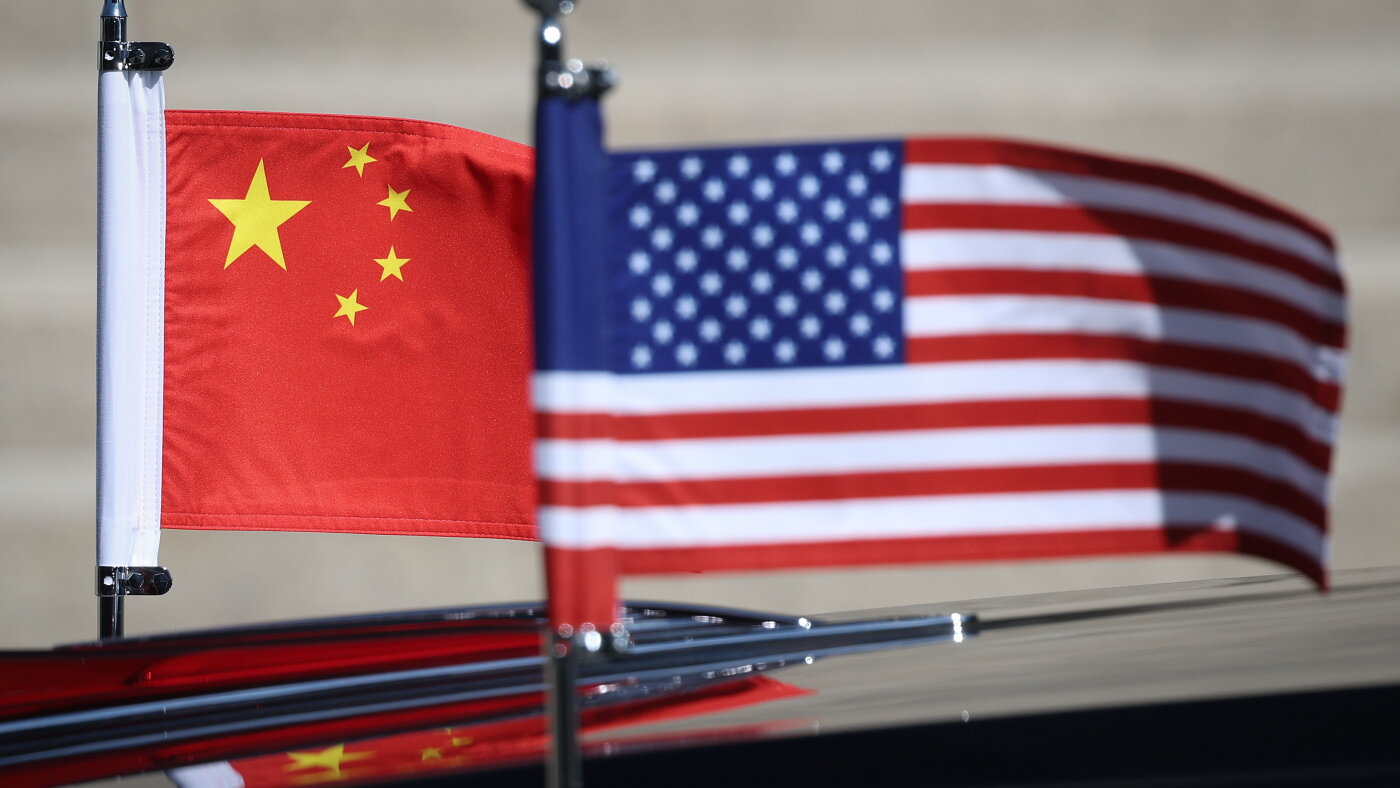
Despite his harsh words against communism, Trump’s actions sometimes contradict his rhetoric. He praised New York City Mayor Zohran Mamdani, a democratic socialist, and welcomed China’s President Xi Jinping, whom he described as “strong, vibrant, and fit” (source).
Sheri Berman of Barnard College points out that Americans have varying interpretations of socialism and communism. For some, Trump’s rhetoric resonates due to personal or familial experiences with authoritarian regimes.
As Trump’s term progresses, the impact of his policies and rhetoric on future administrations remains a topic of interest. Lincicome suggests that Trump’s actions have set new precedents, offering future leaders an expanded scope of power.


Comments are closed.