Proposed Budget Cuts Threaten the Future of U.S. Scientific Research
The Trump administration’s recent budget proposal has sent shockwaves through the scientific community. Significant reductions in funding for NASA and other scientific agencies have raised concerns about the potential impact on ongoing research and future technological advancements.

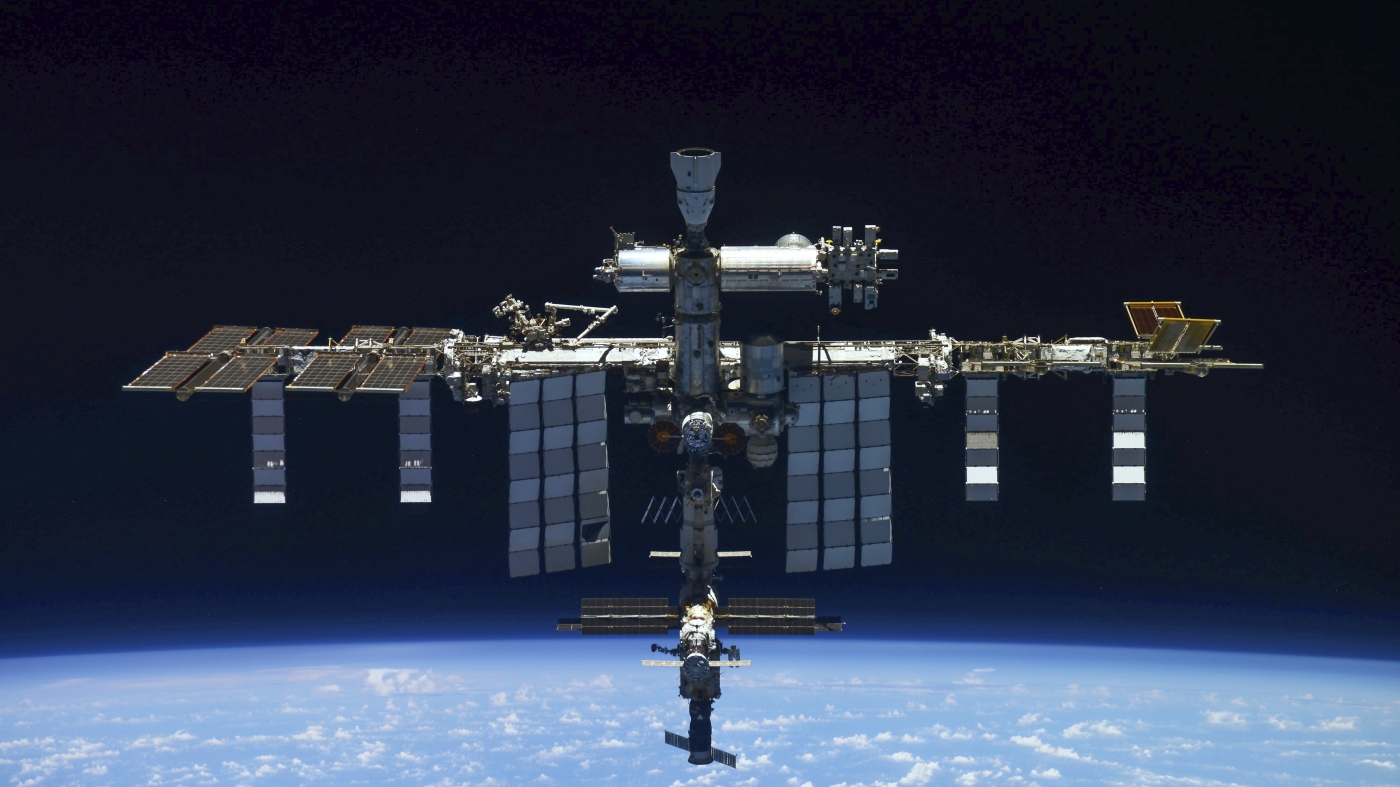
The International Space Station, a hub for scientific experiments, faces budget cuts of approximately $500 million. AP/Roscosmos Space Agency Press Service
Casey Dreier, from the Planetary Society, expressed shock at the proposed budget, calling it “the worst NASA budget I’ve seen in my lifetime.” The cuts could force NASA to deactivate spacecraft that still provide valuable data.
The proposed budget slashes not only NASA’s funding but also severely impacts other scientific bodies. The National Science Foundation (NSF) faces a 50% cut, the National Institutes of Health could lose $17 billion, and other agencies like the Department of Energy and NOAA would see significant reductions.
Sudip Parikh, CEO of the American Association for the Advancement of Science, warns that the cuts could devastate scientific research across the nation, affecting universities and labs everywhere. “It hollows out science across the country,” he said.

The aurora australis near the South Pole Atmospheric Research Observatory, operated by NOAA and NSF, both facing budget cuts. Patrick Cullis/AP/NOAA
Long-term Consequences
While the focus has been on tariffs, the proposed budget cuts reveal potential long-term economic risks. Economist Andrew Fieldhouse emphasizes that government-funded research has historically driven 20 to 25% of private-sector productivity growth in the U.S.
An example is the NSF grant awarded to John J. Hopfield in 1981, which funded research on artificial neural networks, now integral to the AI revolution. Richard Stern from the Heritage Foundation suggests that private industry should fund basic research, yet he acknowledges that cutting scientific research isn’t a priority.
Vasudeva Ramaswamy from American University argues that private sector investment in fundamental research is insufficient, with the economic benefits being too distant. If Congress implements these cuts, America’s GDP could shrink by over 4%, akin to the Great Recession’s impact.
These proposals, however, remain suggestions until Congress sets the budget. Ramaswamy warns, “The economy tomorrow is going to be smaller because you decided to cut that funding today.”