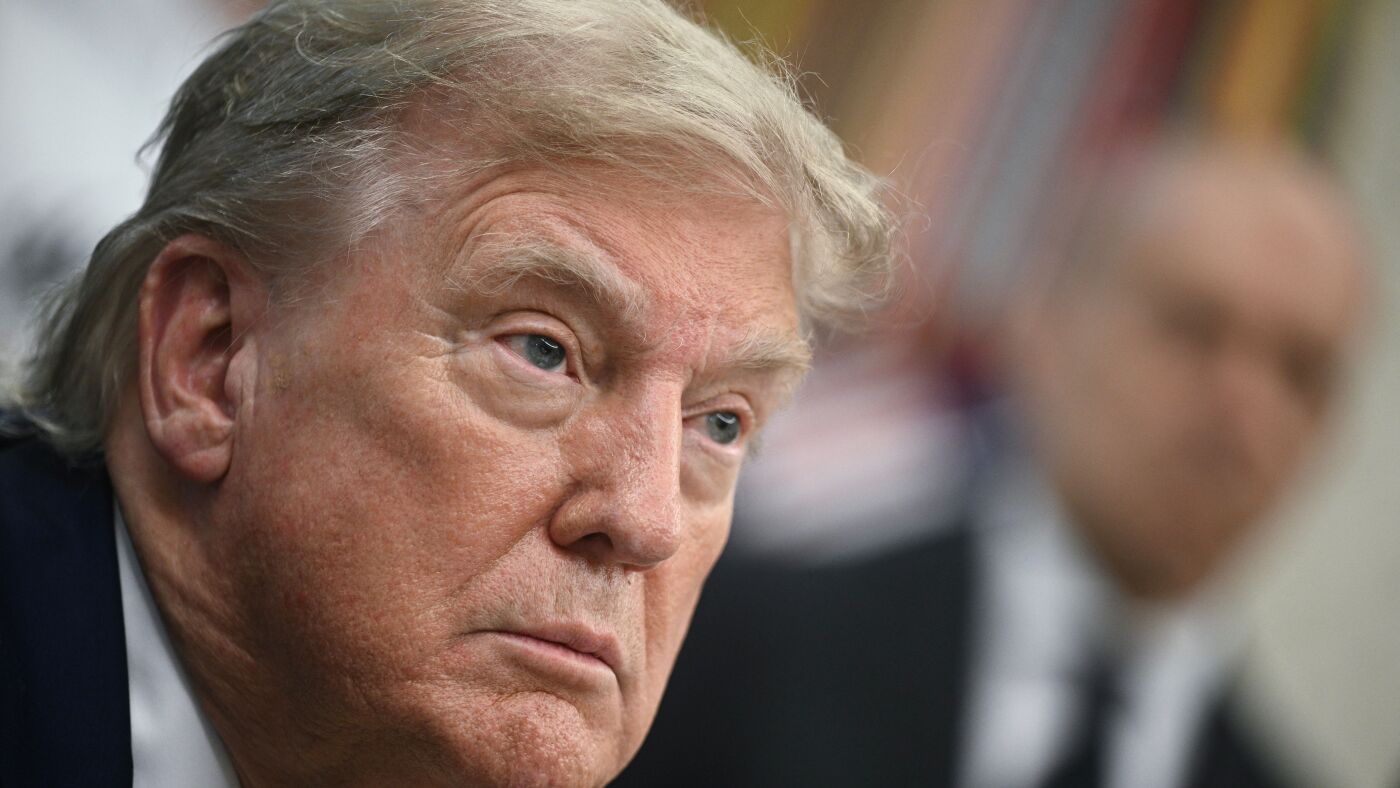

President Trump is rolling out changes that would make it easier to fire federal employees who currently have significant job protections.
Brendan Smialowski/AFP via Getty Images
hide caption
toggle caption
Brendan Smialowski/AFP via Getty Images
In a courtroom setting earlier this year, Justice Department lawyer Erez Reuveni found himself at the center of a contentious legal battle involving Kilmar Abrego Garcia, a man mistakenly deported to El Salvador. Reuveni faced difficult questions from the judge about the circumstances surrounding Abrego Garcia’s deportation. “So, Your Honor, my answer to a lot of these questions is going to be frustrating,” Reuveni admitted. “I am also frustrated that I have no answers for you on a lot of these questions.”
Despite his efforts to address the court’s inquiries, Reuveni was put on leave the following day and subsequently dismissed that month. He has filed an appeal against his termination.
Reshaping Federal Employment Practices
The case involving Reuveni is emblematic of broader changes President Trump is implementing within the federal workforce. With a focus on enhancing accountability and responsiveness, the administration aims to significantly alter hiring and firing protocols for federal employees.
A recent proposal from the Office of Personnel Management (OPM) seeks to redefine the employment landscape by creating a new category of federal employees who serve at the president’s discretion. This move is part of the proposed rule “Improving Performance, Accountability and Responsiveness in the Civil Service.”
Critics argue that these changes politicize the civil service, while the administration asserts that they are necessary for a more efficient government workforce.
Impact on Policy-Influencing Positions
Under the new rule, federal workers in roles deemed “policy-influencing” could lose longstanding job protections. This change raises concerns about the future of government positions that have traditionally operated with a degree of autonomy from political influence.
Former Justice Department employee Stacey Young, who resigned earlier this year, voiced concerns that removing job protections based on political considerations could negatively affect the public. “There wouldn’t need to be any reason given for just firing people,” Young warned.
Wider Implications for Government Operations
Economists and data analysts within federal agencies are also worried about the proposed changes. Erica Groshen, former Bureau of Labor Statistics commissioner, expressed concerns that the plan could reclassify employees in roles vital for policy formulation and economic analysis.
“It is not specific. Many of these words are open to interpretation,” Groshen noted. She emphasized the importance of maintaining the integrity of government data free from political interference.
Questions remain about how these new rules will affect statistical agencies and their employees, with significant potential impacts on economic data reliability and public trust.
Ensuring Alignment with Presidential Directives
The administration’s efforts to create an at-will employee category dubbed Schedule Policy/Career underline a commitment to aligning government operations with the president’s agenda. Office of Management and Budget Director Russell Vought emphasized the need for employees who support the president’s policies.
Despite assurances that the intention is not to indiscriminately dismiss civil servants, the proposal outlines provisions to remove employees who are perceived as undermining presidential directives or performing poorly.
Concerns Over Potential Partisan Loyalty
As agencies compile lists of positions for potential reclassification, some warn of a return to a system where political loyalty supersedes expertise. “It would demand a level of sycophancy that we have not seen since the 19th century,” Young cautioned.
With the Justice Department expected to be heavily impacted, Young highlighted the challenges faced by employees asked to compromise professional and ethical standards.
In response, the Justice Department reiterated its commitment to legal and ethical standards, emphasizing the need for a zealous defense of national interests and presidential policies.
Revamped Hiring Practices
The Trump administration is also revising its hiring approach, focusing on recruiting individuals who demonstrate enthusiasm for the president’s policies. A new hiring plan emphasizes merit and competence, while discouraging the use of demographic statistics in employment decisions.
Applicants are required to answer questions about their support for executive orders and policy priorities, a move some experts view as counterproductive for apolitical roles. Don Kettl, former dean of the University of Maryland School of Public Policy, argued that the focus should be on expertise rather than loyalty to a specific administration.