Trump Administration to Initiate New Tariffs on Imports
Amidst ongoing international trade tensions, the Trump administration plans to notify several countries of impending tariffs on their exports to the United States. These tariffs are set to commence on August 1, marking another significant move in the administration’s trade strategy.
President Trump, speaking to reporters on Sunday, mentioned, “We’re going to have a combination of letters, and some deals have been made.” This statement highlights the administration’s mixed approach, involving both written notifications and pre-arranged agreements.
While President Trump often describes tariffs as a tool to penalize other countries, the reality is that these tariffs are effectively taxes paid by U.S. companies on imported goods. Consequently, these costs are generally transferred to consumers, leading to higher prices in the domestic market.
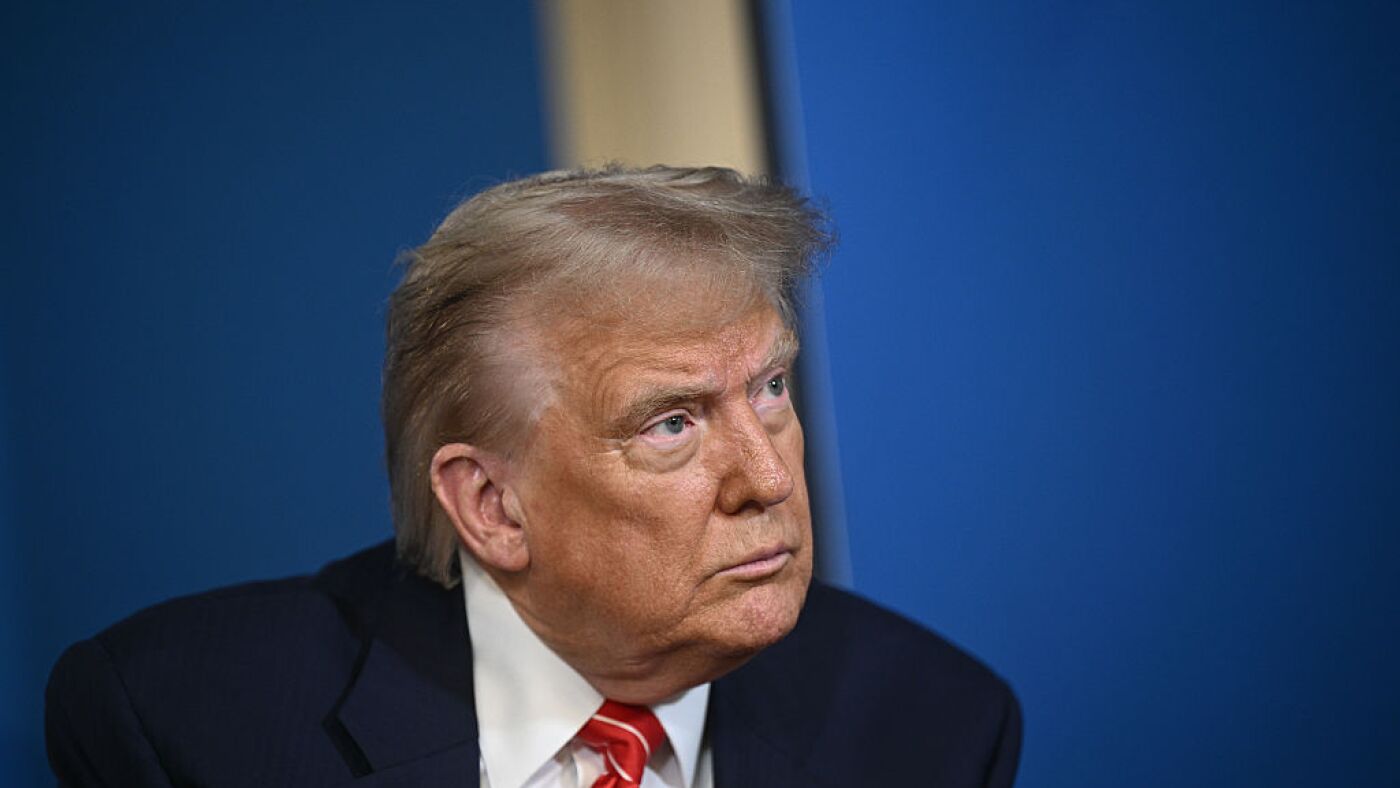
President Trump is pictured at the NATO summit of heads of state and government on June 25 in The Hague, Netherlands.
Brendan Smialowski/Pool/Getty Images
The upcoming tariff notifications follow a period of uncertainty after Trump announced tariffs on nearly all countries worldwide during an April 2 event, which he called “Liberation Day.” Major trading partners like Vietnam and Japan were among those affected by these high tariffs.
In response to market instability and warnings from economists, the President briefly reduced these tariffs to 10% for a 90-day period. However, they are scheduled to return to their original levels on July 9.
Despite promising numerous trade deals, only two agreements have been finalized — one with the UK in early June and another with Vietnam on July 2.
Trump’s preference for bilateral trade agreements, as opposed to complex multilateral deals like the Trans-Pacific Partnership, is evident in his strategy. While these bilateral negotiations progress faster, they carry their own set of challenges and economic implications.
The recent trade deal with Vietnam adjusted tariff rates to 20%, lower than the initial 46% but significantly higher than the pre-Trump period average of 3%. This change could lead to increased costs for U.S. consumers purchasing Vietnamese products.
Scott Lincicome, a trade expert at the Cato Institute, commented, “U.S.-Vietnam trade restrictions would today be very, very low if Trump hadn’t walked away from TPP in 2017.”
For more detailed insights on the impact of these tariffs, visit NPR.