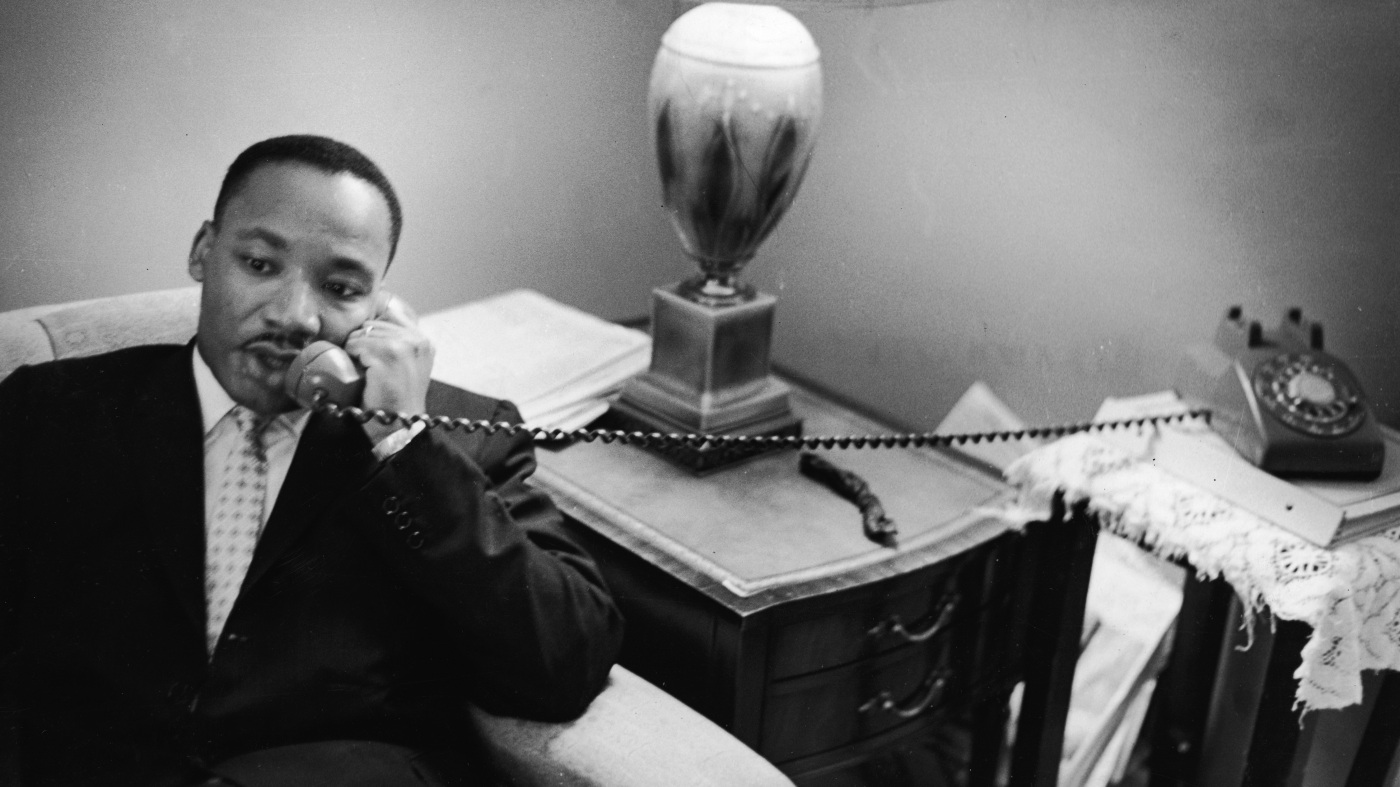

Dr. Martin Luther King, Jr. sits speaks on the telephone after encountering a white mob protesting against the Freedom Riders in Montgomery, Alabama, May 26, 1961. On Monday, the Trump administration released a trove of records about King’s assassination. Express Newspapers/Getty Images/Hulton Archive
This week, a significant release of documents by the National Archives has piqued the interest of historians and civil rights advocates alike. Thousands of newly digitized files related to the 1968 assassination of Dr. Martin Luther King, Jr. have been made public, fulfilling a mandate issued by President Trump.
The newly available documents are a result of an executive order signed by Trump early in his second term. This directive called for the release and declassification of records connected not only to King’s assassination but also to the deaths of former President John F. Kennedy and Robert Kennedy. The events have long been surrounded by public curiosity and conspiracy theories.
The release brings to light over 230,000 files, according to the Office of the Director of National Intelligence. Among the documents are details of the FBI’s investigation into King’s murder, including information concerning James Earl Ray, who was convicted for the crime.
“The documents include details about the FBI’s investigation into the assassination of MLK, discussion of potential leads, internal FBI memos detailing the progress of the case, information about James Earl Ray’s former cellmate who stated he discussed with Ray an alleged assassination plot, and more,” the ODNI statement said.
In response to the document release, King’s family emphasized the importance of understanding these files within their historical context. They highlighted the intense scrutiny and misinformation campaign King faced, orchestrated by J. Edgar Hoover’s FBI. The family stated, “While we support transparency and historical accountability, we object to any attacks on our father’s legacy or attempts to weaponize it to spread falsehoods,” as expressed by Martin Luther King III and Dr. Bernice A. King in a statement.
The family has maintained skepticism over Ray’s conviction, suggesting he was a scapegoat, a sentiment that was reiterated following the document release. They expressed intent to review the files to determine if they reveal any new insights.
Attorney General Pam Bondi, in announcing the release, stated, “The American people deserve answers decades after the horrific assassination of one of our nation’s great leaders.”
This release arrives amid mounting pressure on the Trump administration from supporters demanding transparency regarding other high-profile figures, such as the disgraced financier Jeffrey Epstein. Earlier in the year, the administration also made public numerous records concerning the JFK assassination.