Trump Calls for a New Census Amid Immigration Controversy
As preparations for the 2030 census commence, former President Donald Trump has announced a directive to initiate a “new” census. This move includes a contentious proposal to exclude millions of undocumented residents from the count.

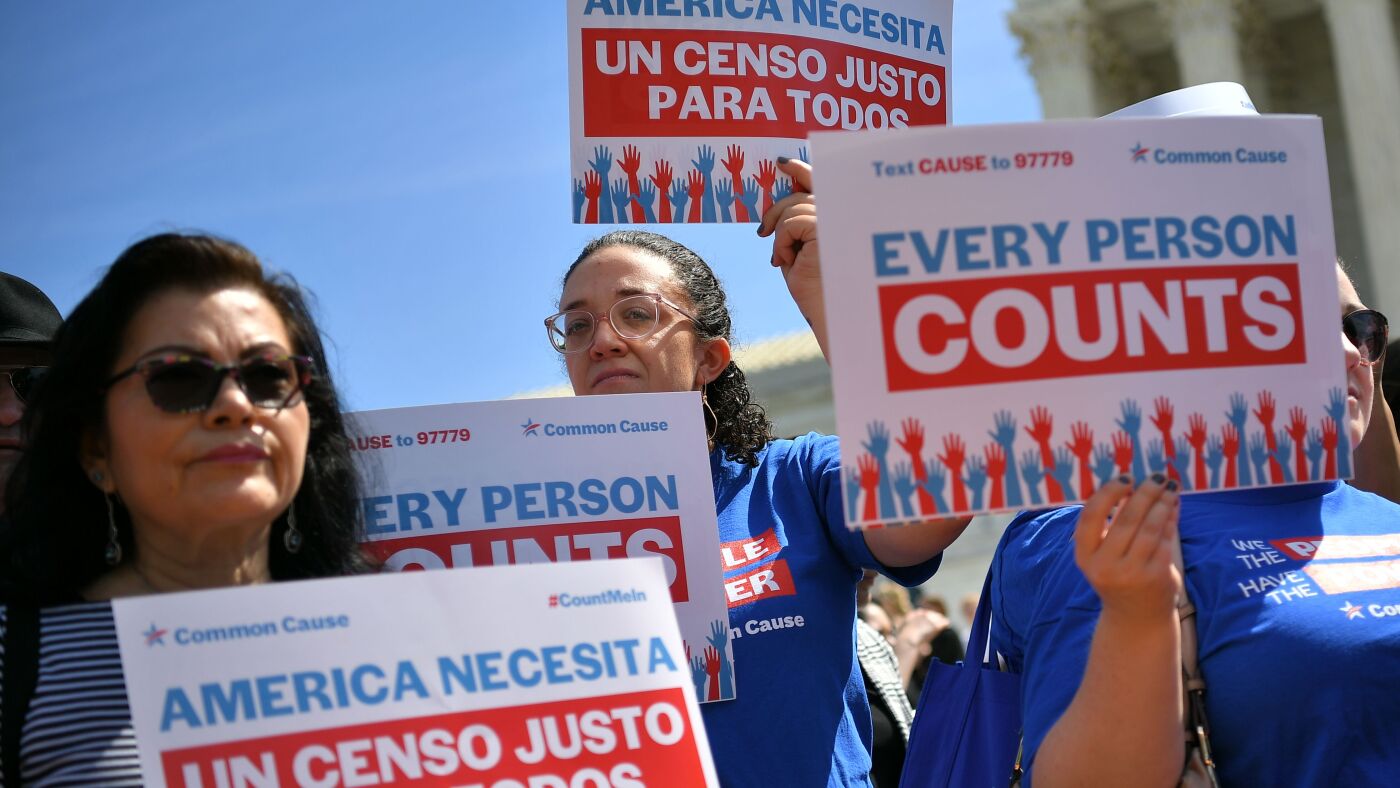
Demonstrators rally outside the U.S. Supreme Court in Washington, D.C., in 2019 to protest the first Trump administration’s failed push to add a question about a person’s U.S. citizenship status to 2020 census forms. Mandel Ngan/AFP via Getty Images
According to Trump, the Commerce Department, which oversees the Census Bureau, has been instructed to initiate the census process using “the results and information gained from the Presidential Election of 2024.” His statements about a new census emerge in the wake of his advocacy for the Republican Party to seize more congressional seats after upcoming elections through strategies like redistricting.
The 14th Amendment mandates the inclusion of the “whole number of persons in each state” for census data critical to the election of presidents and congressional members. However, the specifics of Trump’s latest census proposal remain ambiguous, especially whether it concerns the 2030 census or an earlier count.
Legal and Political Ramifications
Trump’s previous attempts to exclude undocumented residents from census counts, which faced legal challenges, are being reignited. The Supreme Court previously blocked a citizenship question from the 2020 census forms and did not decide on the exclusion of undocumented individuals from apportionment counts. The Biden administration later reinforced the inclusion of all residents in census counts through an executive order, though Trump has since rescinded it.
While the Census Bureau has not tested questions about immigration status, its research indicates that such inquiries could lead to inaccurate data, particularly affecting Latino and Asian American communities. Additionally, the cost and potential inaccuracy of gathering citizenship data at neighborhood levels have been highlighted by the bureau’s researchers.
The potential for further legal disputes looms as Trump’s new census initiative aligns with increasing Republican support for excluding non-citizens from apportionment counts. This plan could also contribute to a decline in participation, particularly among immigrant groups.
Historically, while some past censuses have asked about citizenship status, Trump’s proposal to directly inquire about the citizenship of every individual in every household is unprecedented. The legality and implications of such changes remain uncertain as the debate over census practices continues.