The House Oversight Committee to Receive Jeffrey Epstein Investigation Documents

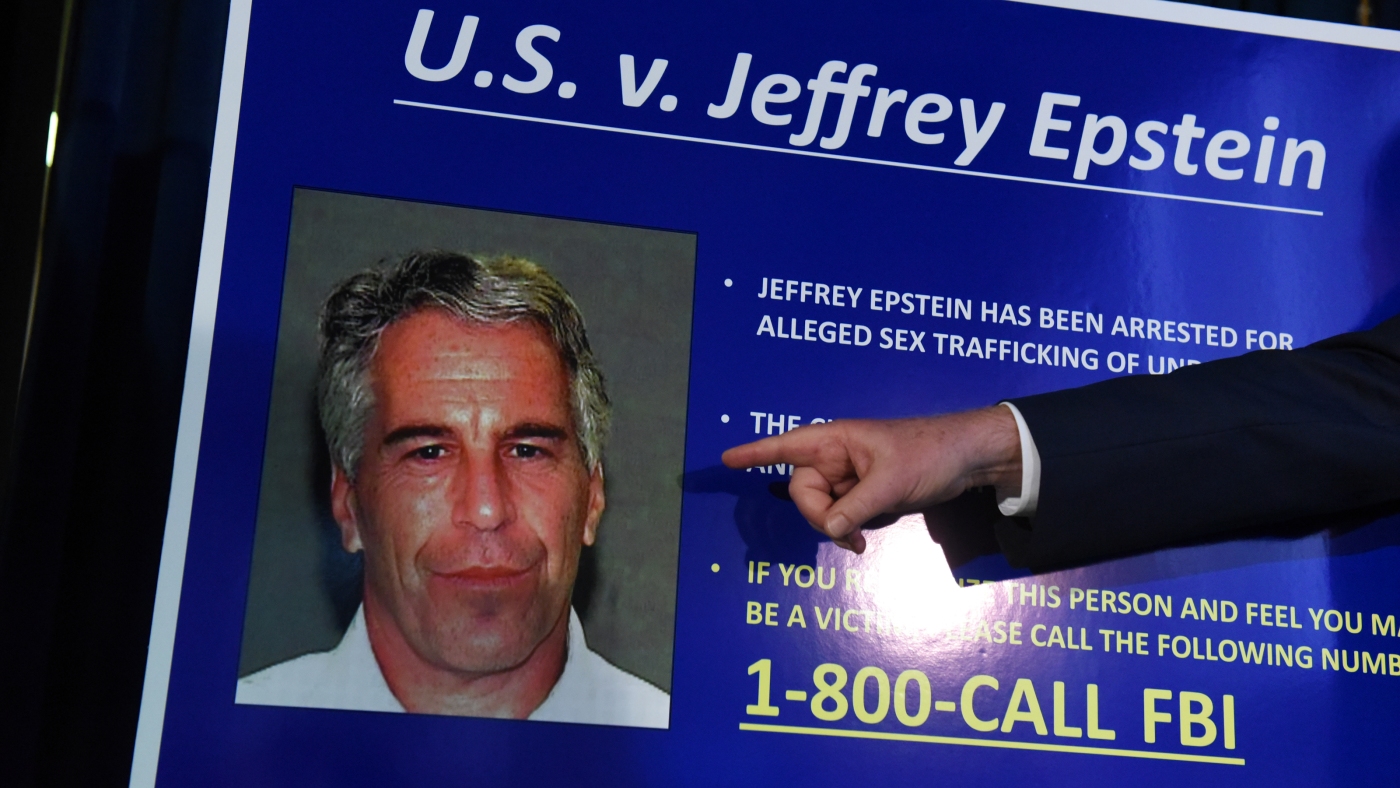
The chairman of the House Oversight Committee says the Justice Department will begin sharing files related to the Jeffrey Epstein investigation starting on Friday. Above, federal prosecutors announce charges against Epstein on July 8, 2019 in New York City.
Stephanie Keith/Getty Images
This Friday, the House Oversight Committee anticipates receiving a significant cache of documents concerning the Justice Department’s investigation into Jeffrey Epstein. This collection of documents is the result of a congressional subpoena issued earlier this month, demanding the DOJ provide records from its examination of both Epstein and his long-term associate, Ghislaine Maxwell. The documents are expected to be in response to the subpoena.
James Comer, R-Ky., chairman of the House Oversight Committee, has indicated that some of these files will eventually be released to the public. “We’re going to be transparent. We’re doing what we said we would do. We’re getting the documents,” Comer stated on Capitol Hill. He also expressed confidence that the White House would collaborate with the committee on this matter.
The handling of the Epstein case presents a complex challenge for congressional Republicans. While there is a demand from their base for transparency, the release of these documents could potentially unveil embarrassing information about the government’s management of the Epstein investigation, along with President Trump’s previous connections to the disgraced financier. Trump, however, has consistently claimed that his association with Epstein ended well before Epstein’s indictment in 2006.
Earlier this month, Comer issued subpoenas for 11 individuals, demanding DOJ files and testimony from prominent figures, including Ghislaine Maxwell, former President Bill Clinton, former Secretary of State Hillary Clinton, and key law enforcement officials from past administrations, such as ex-FBI Directors James Comey and Robert Mueller, as well as former Attorneys General Merrick Garland and Bill Barr.
Epstein committed suicide in prison six years ago while awaiting trial on sex trafficking charges, fueling conspiracy theories of a cover-up. On the campaign trail, Trump and other Republicans pledged to release the Epstein files if they secured power. Yet, the administration has faced criticism since July when Attorney General Pam Bondi declared that neither the DOJ nor the FBI found evidence of Epstein having a “client list” or blackmailing notable associates.
The Committee’s Review
Comer mentioned he wasn’t certain about what the committee would receive from the DOJ on Friday but anticipated a substantial volume of information to scrutinize. “I’m confident there are hundreds and hundreds of pages because you have two people that were charged, so there has to be a lot of evidence there,” he noted.
The Justice Department will conduct its review to determine what needs redaction, and the committee plans to carry out its own evaluation. However, some critics, including Republicans, have expressed concern that the release will not be comprehensive. Democrats argue that the public release will be limited and carefully curated by Republicans.
Rep. Robert Garcia, D-Calif., emphasized that the panel supported a bipartisan vote for full compliance with the subpoena for DOJ records. “Releasing the Epstein files in batches just continues this White House cover-up,” Garcia remarked. “Handpicked, partial productions are wholly insufficient and potentially misleading.”
The Unsuccessful Push for Grand Jury Testimony
Last month, Trump sought the public release of grand jury transcripts related to the case. However, three federal judges rejected the request. The most recent ruling by U.S. District Judge Richard Berman indicated there wasn’t enough justification to unseal the records, suggesting that the thousands of pages held by the government could provide more public insight than the materials requested to be unsealed.
Aside from the Oversight Committee’s efforts, Rep. Thomas Massie, R-Ky., plans to push for a House vote on releasing the records when Congress returns after Labor Day. Massie, along with Rep. Ro Khanna, D-Calif., is preparing to hold a press conference with Epstein survivors to highlight their bipartisan efforts.