The White House Targets the Smithsonian’s Art Collection
In an assertive move, the White House has released a newsletter titled “President Trump Is Right About the Smithsonian,” critiquing several of the institution’s artworks and exhibitions. Among those highlighted are pieces focused on themes of race, immigration, slavery, and sexuality, displayed in renowned museums like the National Museum of African American History and Culture and The National Portrait Gallery.
This scrutiny comes promptly after a request from the White House for detailed plans from eight Smithsonian museums, aiming to align their exhibits and materials with President Trump’s cultural directives. The administration insists on revising content to replace what they consider divisive language with more unified and historically accurate narratives.
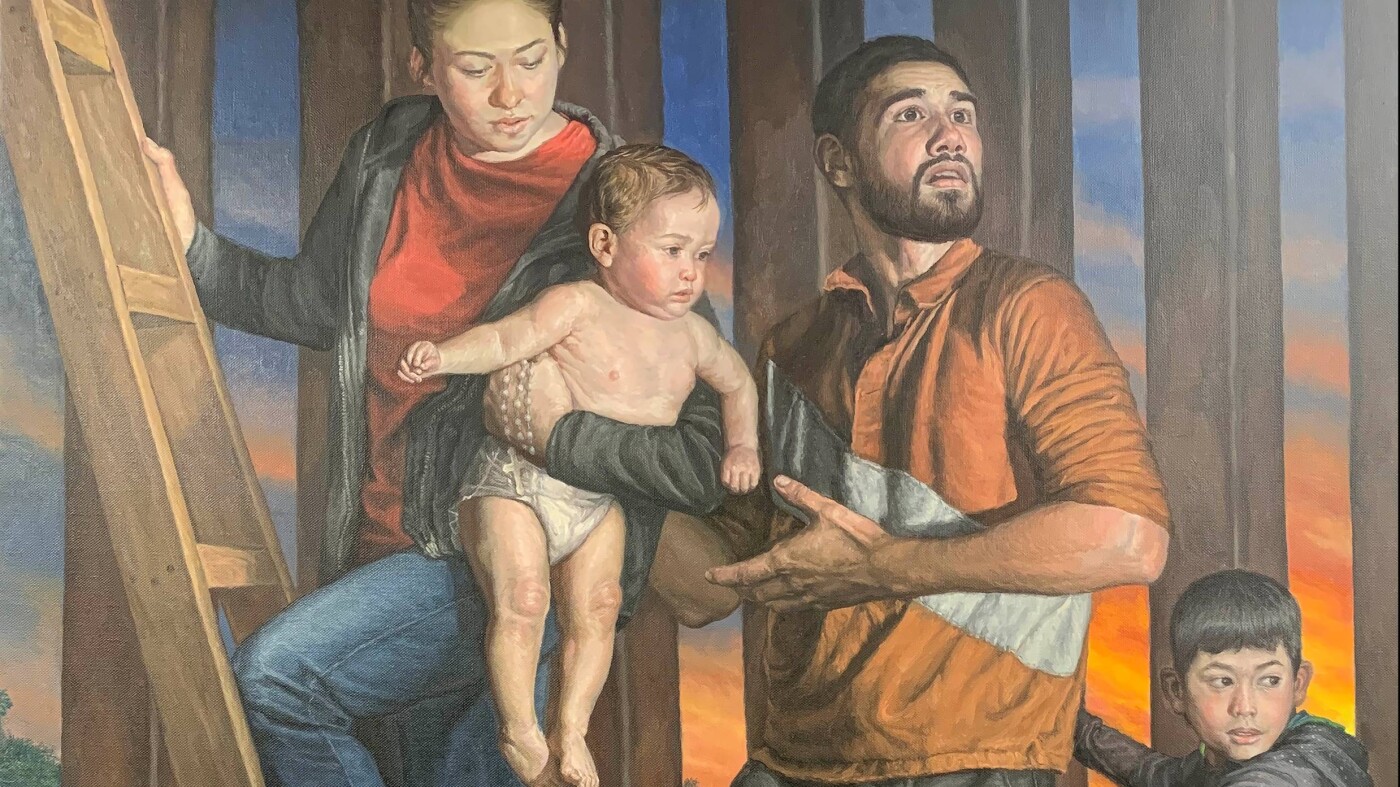
One of the artworks spotlighted by the White House is Rigoberto Gonzalez’s 2020 painting, “Refugees Crossing the Border Wall into South Texas.” The artwork, which became a finalist at The National Portrait Gallery in 2022, portrays an immigrant family’s perilous journey across the U.S.-Mexico border. Gonzalez emphasizes that his work reflects the realities faced by immigrants rather than endorsing illegal crossings.
Another focus of the newsletter is Ibram X. Kendi, a historian and author labeled as a “hardcore woke activist.” His book, “How to be an Anti-Racist,” and its educational series featured by the Smithsonian, have been criticized for their progressive stance on racial topics. Kendi argues that such labeling is an attempt to undermine his scholarship and distract from his academic contributions.
The newsletter also mentions Amy Sherald, who recently canceled an exhibition at the Smithsonian’s National Portrait Gallery. Sherald, known for her portrait of Michelle Obama, expressed concerns about how Trump’s rhetoric affects her work, emphasizing the importance of her art in countering attempts to erase parts of American history.
Hugo Crosthwaite’s animated portrayal of Dr. Anthony Fauci is another piece under scrutiny. The artwork, commissioned by the National Portrait Gallery, reflects Fauci’s career in tackling health crises. Crosthwaite believes that the attention from the White House might inadvertently draw more public interest to his work.
Patricia Cronin’s “Memorial to a Marriage,” showcasing a same-sex couple, is part of the National Portrait Gallery’s collection. Although not currently on the White House’s list, Cronin fears her work could become a target, reflecting broader concerns about censorship and erasure of LGBTQ history.
Art historian Richard Meyers from Stanford University draws parallels between the current situation and past instances of censorship in American art history. He warns of the potential for self-censorship among emerging artists, which could stifle creative expression and limit the diversity of voices in the art world.
The political climate surrounding art and culture remains tense, with uncertainties about the future of public art displays and the freedom of artistic expression. For more details on the ongoing developments, visit the White House article and the related NPR report.