Maine’s Political Arena: Janet Mills Challenges Susan Collins for Senate Seat

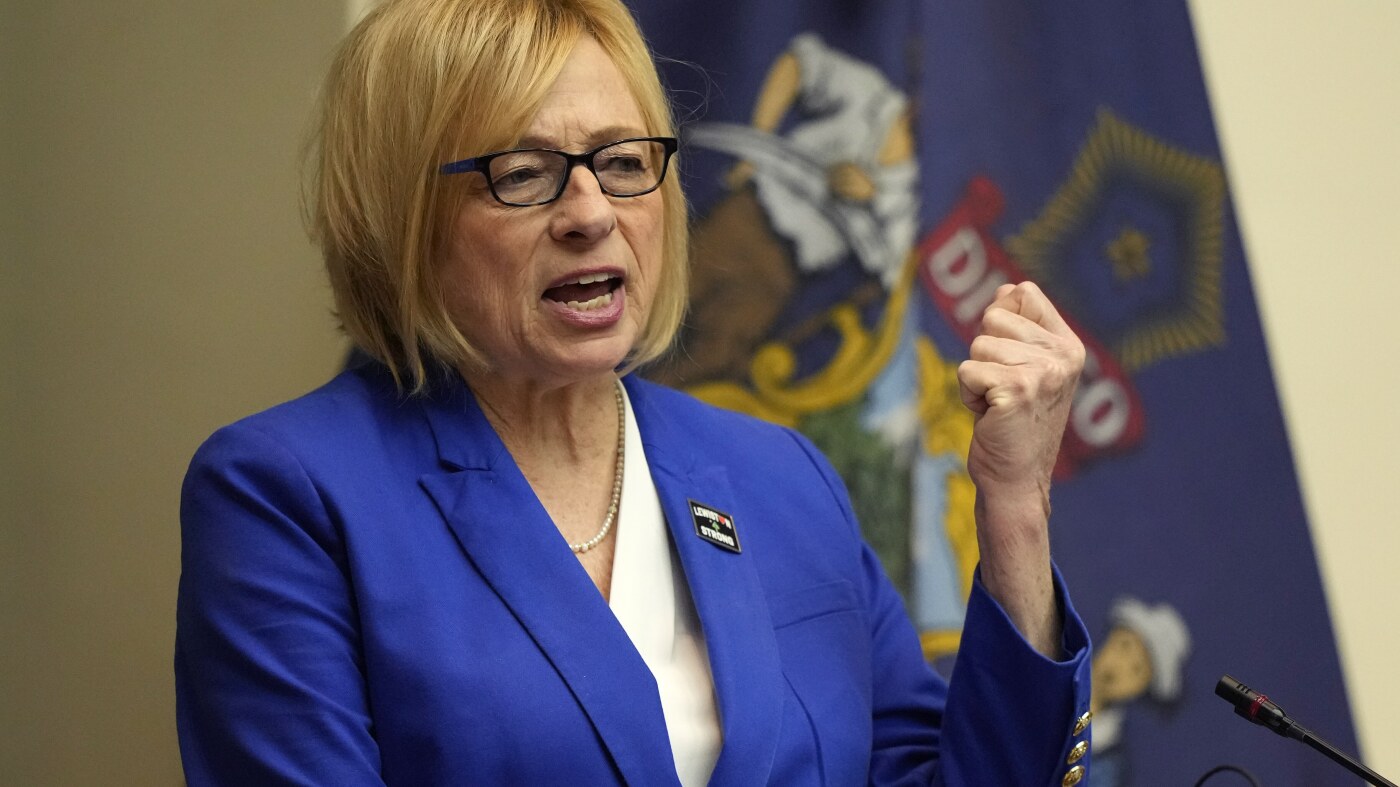
Democratic Gov. Janet Mills delivers her State of the State address, Jan. 30, 2024, at the State House in Augusta, Maine. Mills has announced a run to unseat Susan Collins in the U.S. Senate. Robert F. Bukaty/AP
In a bold political move, Maine Governor Janet Mills has declared her candidacy for the U.S. Senate, aiming to unseat the long-serving Republican Senator Susan Collins. This announcement comes as a strategic effort by Democrats to reclaim the Senate, targeting Collins as a pivotal figure in this endeavor.
Mills’ decision to run was influenced by a notable altercation with former President Trump regarding policies on transgender athletes. This confrontation, which resulted in retaliatory actions from Trump’s administration, serves as a focal point in her campaign launch ad. “My life’s work has prepared me for this fight and I’m ready to win,” Mills declares in the promotional video, urging Mainers to choose between submission or resistance.
Reflecting on her exchange with Trump, Mills described it as a “jaw-dropping” moment that revealed Trump’s monarchical tendencies, prompting her to consider a Senate run. She emphasized the importance of standing up to bullies, a lesson she learned from her father during her childhood in Farmington, and criticized Congress, and Collins, for not opposing Trump effectively.
Despite her determination, Mills faces a challenging path ahead, including a crowded Democratic primary with contenders like Jordan Wood and Graham Platner. Platner, with backing from Senator Bernie Sanders, represents a progressive challenge, criticizing the Democratic establishment’s reliance on conventional strategies and Mills’ candidacy as part of this trend.
Mills, who will turn 78 in December, enters the primary race with a strong gubernatorial record, having expanded Medicaid, increased education funding, and championed abortion rights in Maine. She asserts that her experience and accomplishments set her apart from her opponents.
A Steep Climb for Democrats
The Senate race in Maine presents a formidable hurdle for Democrats, who haven’t secured a Senate victory in the state since 1988. Collins, a political mainstay since 1996, has proven resilient, as demonstrated by her 2020 victory despite significant Democratic efforts.
However, Democrats believe Collins is more vulnerable now, citing her diminished influence as the Senate Appropriations Committee chair and her alignment with Trump’s controversial appointments. Mills has also criticized Collins for not leveraging her committee position to counter Trump’s efforts to consolidate power.

Sen. Susan Collins, R-Maine, departs the U.S. Capitol on Sept. 30. Democrats say Collins has lost influence as an appropriator and have attacked her votes to confirm Trump’s controversial cabinet picks. Kent Nishimura/Getty Images
If successful, Mills would become the oldest freshman senator elected in modern history. She acknowledges that age might be a factor for some voters, yet she is confident that her extensive experience will resonate, particularly in the Democratic primary.
A Crowded Primary Field
Mills’ entrance into the race might deter other Democrats from joining, although Wood and Platner have pledged to remain. Platner, an oyster farmer and military veteran, is committed to reshaping the Democratic Party and has garnered significant grassroots support, including a large volunteer base and substantial fundraising.
With a background as a former prosecutor and Maine’s attorney general, Mills has a history of political tenacity, notably clashing with former Governor Paul LePage, who shared similarities with Trump. Her confrontations with LePage paved the way for her notable exchange with Trump, where she defied his executive order on transgender athletes, stating, “See you in court.”
This Senate race in Maine is part of a broader movement among Democrats embracing economic populism, a vision championed by Sanders. Platner has criticized the influence of national Democrats, advocating for a campaign driven by Mainers for Mainers to secure victory in the state.