Redistricting Debate Heats Up in California Amid National Political Tensions
In the small town of Loomis, California, a pivotal election is set to reshape political boundaries. Nestled near Sacramento, this town of 7,000 faces suburban challenges such as traffic congestion and rising gas prices. Although traditionally represented by a Republican in Congress, the upcoming vote could redraw district lines, potentially favoring Democratic representation in the U.S. House.
The ballot question has sparked concern among local residents. Amanda Cortez, a Republican on the Loomis Town Council, expressed apprehension about merging their community with Sacramento’s urban needs. “We want to keep our communities that are alike together, right? And so if we get sucked into Sacramento or, you know, somewhere, we don’t share the same needs, right?” she said.
This decision, part of the redistricting debate ignited by President Trump’s national push, could alter congressional representation not only in Loomis but across the state. California’s Proposition 50 aims to redraw lines to create up to five new Democratic seats, a move initiated by Democratic Governor Gavin Newsom following Republican-led redistricting in Texas.
Republican voters like Mike Murray believe the proposition will fragment their community’s influence by dividing their county into separate districts. “If we wanted to live in an urban community with the problems and the benefits of an urban community, we would. But we choose to live here. And when we choose to live here, we hope that somebody will represent us in our way of life,” noted Murray.
California’s Ballot Reflects National Redistricting Battles
California’s redistricting proposal comes in response to a national movement initiated by President Trump, aimed at bolstering GOP prospects in upcoming elections. States like Missouri and North Carolina have followed suit, while Trump has encouraged further redistricting efforts in Indiana and Kansas. Critics argue this approach undermines minority voting strength.
Eric Schickler from the University of California, Berkeley, highlighted opposition concerns that Proposition 50 would bypass the state’s independent redistricting commission, which has historically ensured fair representation. “The basic argument made by opponents of Prop 50 is that the non-partisan process that was set up in 2008 for the legislature and 2010 for Congress has worked well for the state. It’s giving rise to more competitive elections,” Schickler explained.
Democrats Eye Congressional Control Amidst Trump’s Agenda
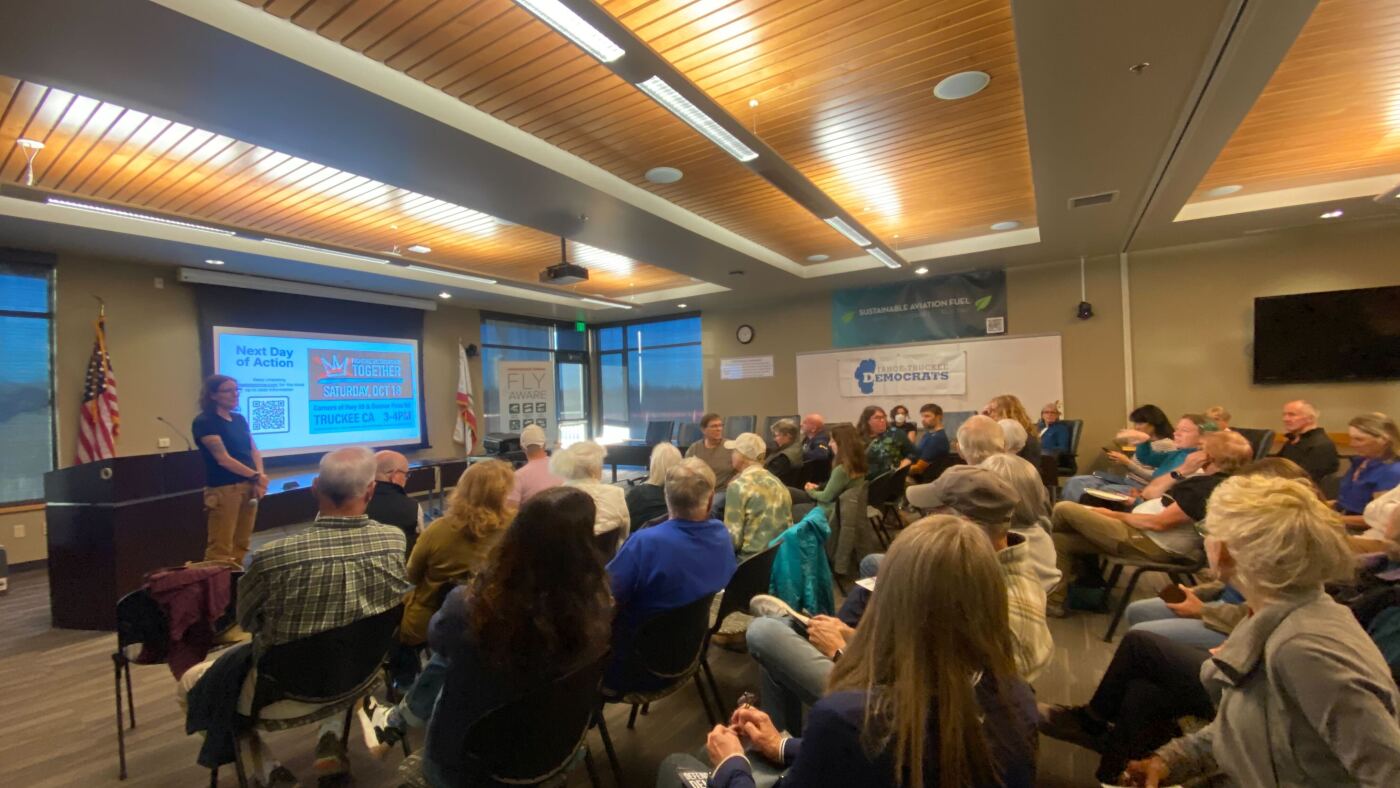
For Democrats, the special election represents an opportunity to counterbalance the Trump administration. Cyan Samone, a resident of Truckee, California, views the redistricting as a means to oppose immigration policies. “I have a lot of friends who are immigrants from different countries who have left authoritarian regimes,” she said, emphasizing the need to prevent similar circumstances stateside.
Ben Woodard, Samone’s husband, sees the redistricting as a chance for Democrats to elect representatives attuned to local needs. “The Democratic Party representative would do that,” Woodard said, stressing the impact of federal cuts on rural healthcare services.
As election day nears, supporters of the redistricting measure appear optimistic, buoyed by California’s predominantly Democratic electorate. Many view the vote as part of a broader national debate.
Laura Fitzgerald covers California state politics for CapRadio.