Trump’s Crime Crackdown: A Nationwide Deployment of Troops
As President Trump intensifies his efforts to tackle crime across the nation, his administration has taken a bold step by considering the deployment of more than just the National Guard to several U.S. cities. This initiative is part of a broader strategy to reinforce his stance on law and order, an issue he deems crucial for the upcoming elections.
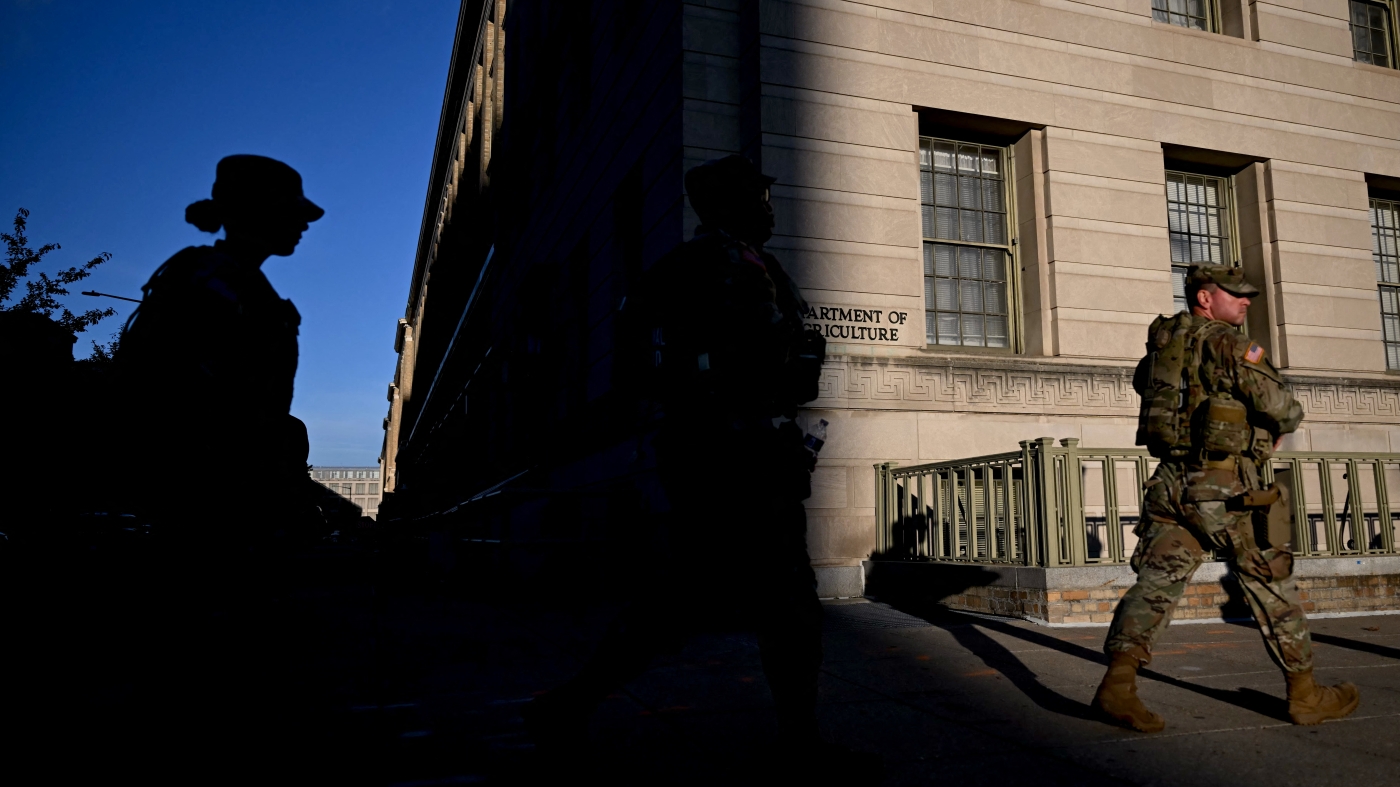
During a speech to U.S. troops aboard an aircraft carrier in Japan, Trump expressed his determination to address what he describes as urban unrest. “We’re sending in our National Guard, and if we need more than the National Guard, we’ll send more than the National Guard, because we’re going to have safe cities,” he stated aboard the USS George Washington at the Yokosuka Naval Base. “We’re not going to have people killed in our cities. And whether people like that or not, that’s what we’re doing.”
What initially began as a focused initiative to address crime in Washington, D.C., has evolved into a nationwide campaign. The White House’s efforts aim to project Trump and the Republicans as resolute crime fighters, contrasting them with Democrats, who they accuse of being lenient on crime. Notably, violent crime in Washington, D.C., was at a 30-year low before the National Guard’s deployment.
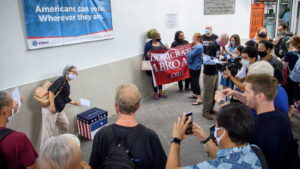
The administration’s actions have also extended to cities such as Los Angeles, Chicago, Memphis, and Portland, sparking protests and legal challenges. Critics, particularly from the Democratic side, argue that the White House is overstating the issue to justify what they see as an unlawful military presence in civilian areas. However, Trump believes these measures will bolster his and the Republican party’s appeal in the approaching midterm elections.
At an August cabinet meeting, Trump emphasized the political advantage of focusing on crime rather than social issues like transgender athletes in sports or even immigration. Jon McHenry, a Republican pollster with North Star Opinion Research, noted, “Crime is probably the issue that he fares best on, certainly better than handling inflation or trade or even international relations, despite some of the successes that he’s had recently.”
Despite the FBI reporting a 4.5 percent decrease in violent crime last year, public perception tells a different story. A recent Gallup poll reveals that nearly half of Americans—49 percent—believe crime has risen over the past year, while only 33 percent think it has decreased.
The poll also highlights potential political risks for Trump, as more Americans oppose the use of federal troops for domestic crime control than support it. The divide, however, is pronounced along party lines, with Republicans largely in favor and Democrats opposed.
Jillian Snider, a member of the Council on Criminal Justice and a retired New York police officer, cautions against viewing crime through a partisan lens. “That is the real problem here, that general community members, they don’t care as much to be schooled by what the stats show us,” she said. “They just care about how they feel in their communities.”
While Republicans have traditionally focused on law and order, veteran political strategist Alex Conant observes that Trump has adopted an unprecedented approach by deploying troops in cities. “He told his base he was going to get crime in American cities under control. And now, when you turn on the TV at night, U.S. troops are trying to do exactly that,” Conant commented. “Now, obviously, there’s going to be a lot of opposition to it, especially amongst Democrats, people who live in some of those neighborhoods. But this is what he told his base he would do, and now he’s delivering it. And, he’s proud of it.”