Senate Moves Forward on Ending Record Government Shutdown
The United States Senate has taken a significant step toward ending the longest government shutdown in the nation’s history, which has stretched into its 41st day. On Monday, the Senate voted 60 to 40 in favor of a continuing resolution aimed at reopening the government. This measure, available for review here, seeks to fund most government operations until January 30 and extend funding for certain agencies until September 2026.
However, the shutdown’s conclusion is not immediate. The House of Representatives must still approve the legislation, a step that is not assured, before President Donald Trump can sign it into law. While seven Democrats and one independent joined nearly all Senate Republicans in support of the bill, the path forward remains uncertain.
Senator Rand Paul of Kentucky was the only Republican to oppose the bill, reflecting the complexity of negotiations. The bipartisan agreement to end the shutdown emerged over the weekend after weeks of challenging discussions. A procedural vote on the bill garnered the necessary 60 votes late Sunday, enabling Monday’s decisive action.
The proposed funding package includes provisions to reverse federal employee reductions initiated by the Trump Administration during the shutdown. It also offers protections against further layoffs through January’s end, ensures backpay for federal workers, and includes three appropriations bills. Notably, it provides full funding for the Supplemental Nutrition Assistance Program (SNAP) through September 30, 2026.
A Deal Excludes Health Care Subsidies
Despite these advancements, the deal does not address the extension of Affordable Care Act (ACA) health insurance premium subsidies set to expire soon. The absence of a solution for subsidies has been a sticking point for many Democrats, who have insisted on a commitment to maintaining these subsidies.
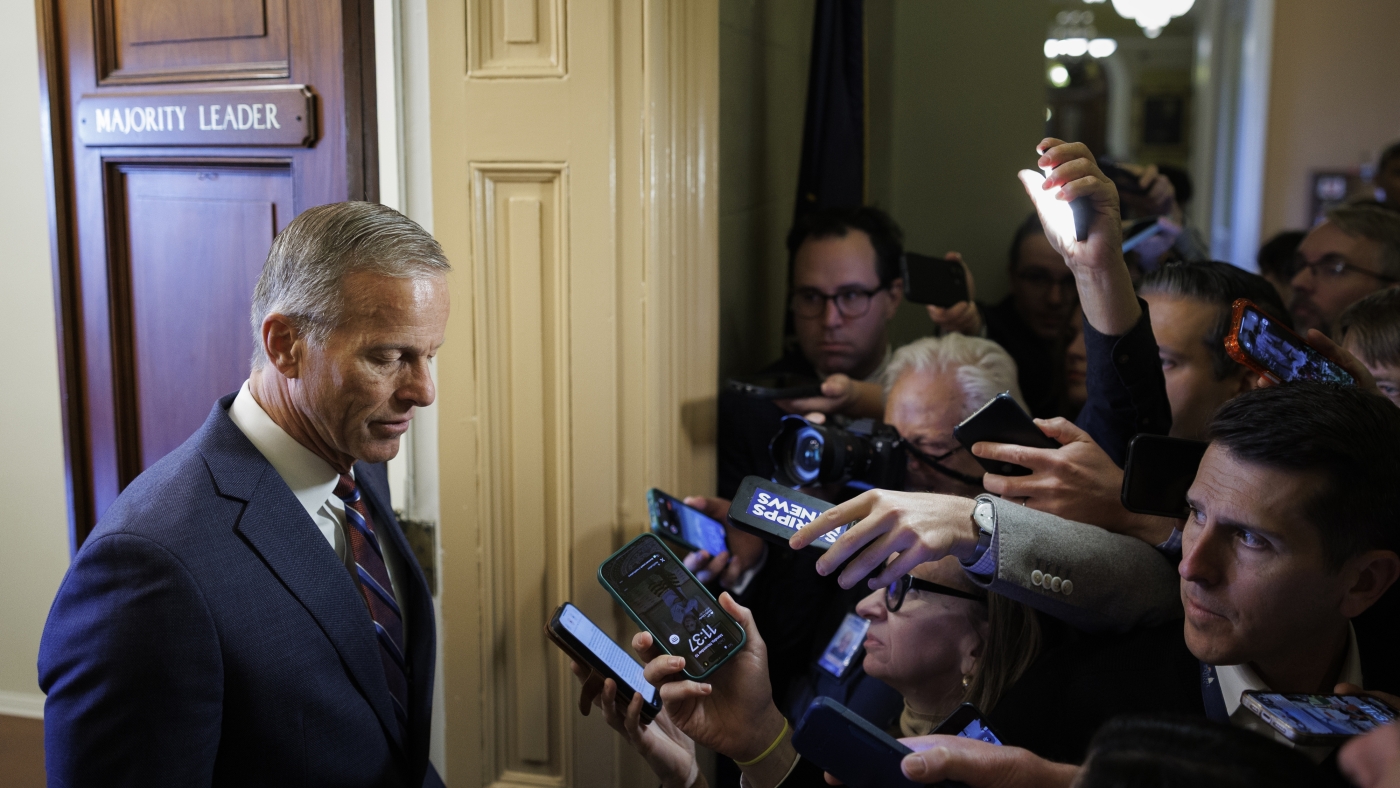
Senate Majority Leader John Thune, a Republican from South Dakota, indicated that a vote on a measure to extend these subsidies could occur by mid-December. Thune emphasized that Republicans would only engage in subsidy negotiations once the government is operational.
“This deal guarantees a vote to extend Affordable Care Act premium tax credits, which Republicans weren’t willing to do,” stated Senator Tim Kaine, a Democrat from Virginia. “Lawmakers know their constituents expect them to vote for it, and if they don’t, they could very well be replaced at the ballot box by someone who will.”
Despite Kaine’s statement, doubts linger among Senate Democrats regarding the efficacy of the deal. Some members believe it was a strategic mistake to relent, particularly after Democratic victories in the recent elections. Top Democrat on the Appropriations Committee, Senator Patty Murray of Washington, expressed, “As long as there is still any time left to reverse the MAGA health care hike, I believe we must do everything we can to force Republicans to the negotiating table.”
The comprehensive funding measures encompass allocations for agriculture, military construction, veterans affairs, and the legislative branch. These represent only three of the 12 appropriations bills Congress must pass before the continuing resolution’s expiration in January.
Awaiting House Action
House leadership has informed members they will receive a 36-hour notice to reconvene for a vote on the legislation. The House has been largely inactive since passing its version of a continuing resolution in September, although Speaker Mike Johnson has held frequent press briefings.
Johnson communicated confidence that the House could pass the measure, noting that President Trump is prepared to sign it. However, he has refrained from committing to a House vote on ACA subsidies should the Senate pass such a bill.
Securing House approval may require substantial negotiation. Some Democrats have voiced opposition to the current deal, and certain hard-line Republicans may also resist it. Nevertheless, Johnson remains optimistic about its passage.