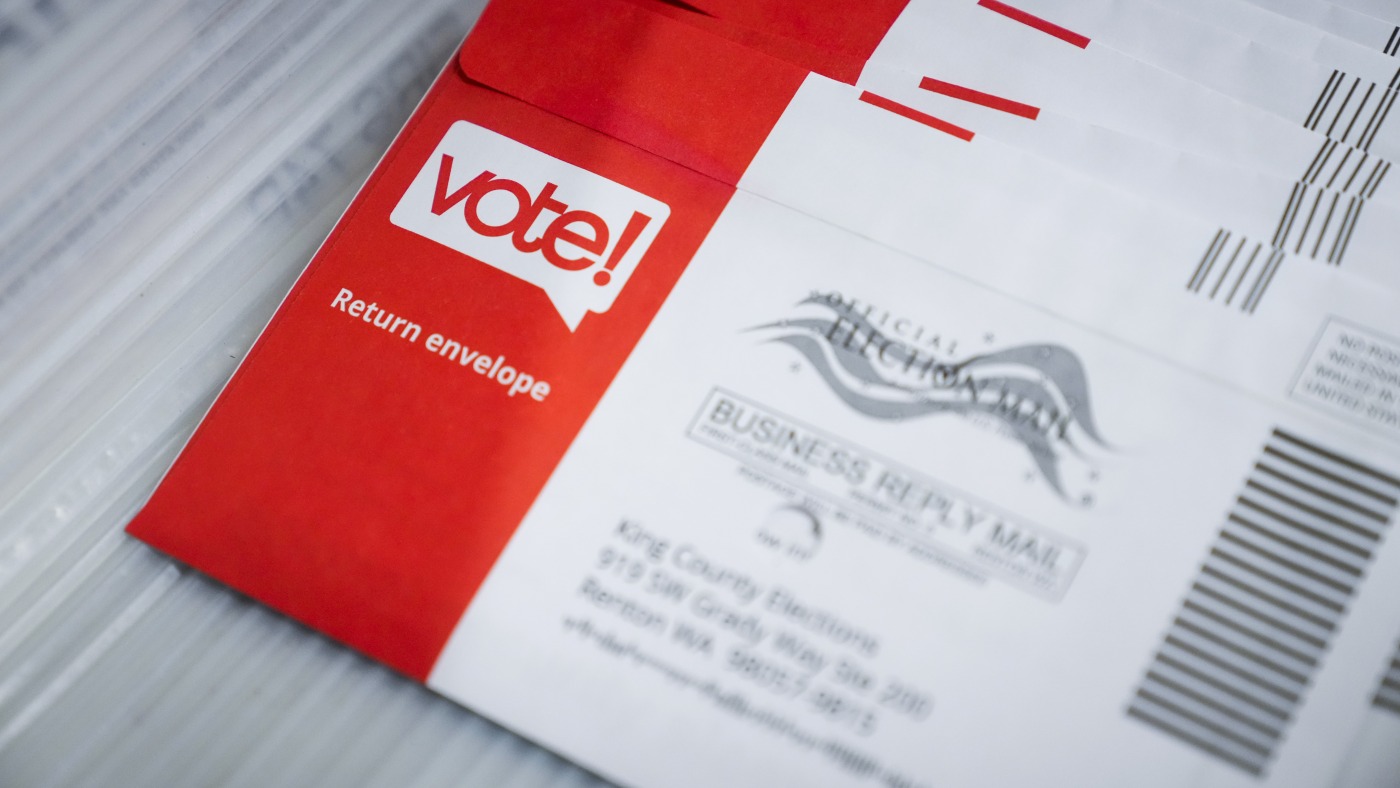

A tray of mail-in ballots is seen at King County elections headquarters on Nov. 5, 2024, in Renton, Wash.
Lindsey Wasson/AP
hide caption
toggle caption
Lindsey Wasson/AP
The U.S. Supreme Court is set to examine a pivotal case that could reshape how states handle mail-in ballots arriving after Election Day. Currently, approximately 20 states and territories, including Mississippi, allow postmarked ballots to be counted if they arrive late.
In a recent move, Mississippi’s chief election official requested the Supreme Court to deliberate on a lawsuit initiated by the Republican National Committee. The lawsuit challenges the state’s five-day grace period for counting mail ballots, claiming it breaches federal law. This comes after an appeals court ruled in favor of the RNC, although the ruling hasn’t been enforced yet.
Sixteen states plus Guam, Puerto Rico, the Virgin Islands, and Washington, D.C., currently permit counting of mail-in ballots that arrive post-Election Day, provided they are postmarked on or before Election Day. Additional grace periods are available for military and overseas voters in several states.
These grace periods provide flexibility for voters who may face postal delays, adverse weather, or other unexpected challenges preventing timely ballot submission.
The Republican Party argues that Congress should exclusively determine the conclusion of elections, emphasizing that a uniform Election Day has already been established by Congress. Ahead of the 2024 election, the RNC contested several state grace period laws, including those in the battleground state of Nevada. Consequently, some GOP-dominated states, such as Utah, have scrapped their mail ballot grace periods. Moreover, former President Trump has attempted to abolish these periods nationwide through executive action.
Throughout the 2024 election, numerous ballots submitted after Election Day were still counted. For instance, in Washington state, where mail-in voting is predominant, over 250,000 ballots postmarked timely were received post-Election Day, according to state officials.
Joyce Vance, a law professor at the University of Alabama, commented last year on the GOP’s push for counting only those ballots cast on Election Day. She remarked, “It doesn’t reflect the modern reality where we have early voting days and have mail-in voting days precisely to accommodate the fact that not everybody can get away during normal business hours on a Tuesday to vote.”
The Supreme Court’s decision to hear this Mississippi case marks the third voting-related case in its current term. Additionally, the justices are examining another case concerning candidates’ rights to challenge voting regulations and a significant dispute involving the Voting Rights Act.