G20 Summit in South Africa Proceeds Amid High-Profile Absences and Controversies
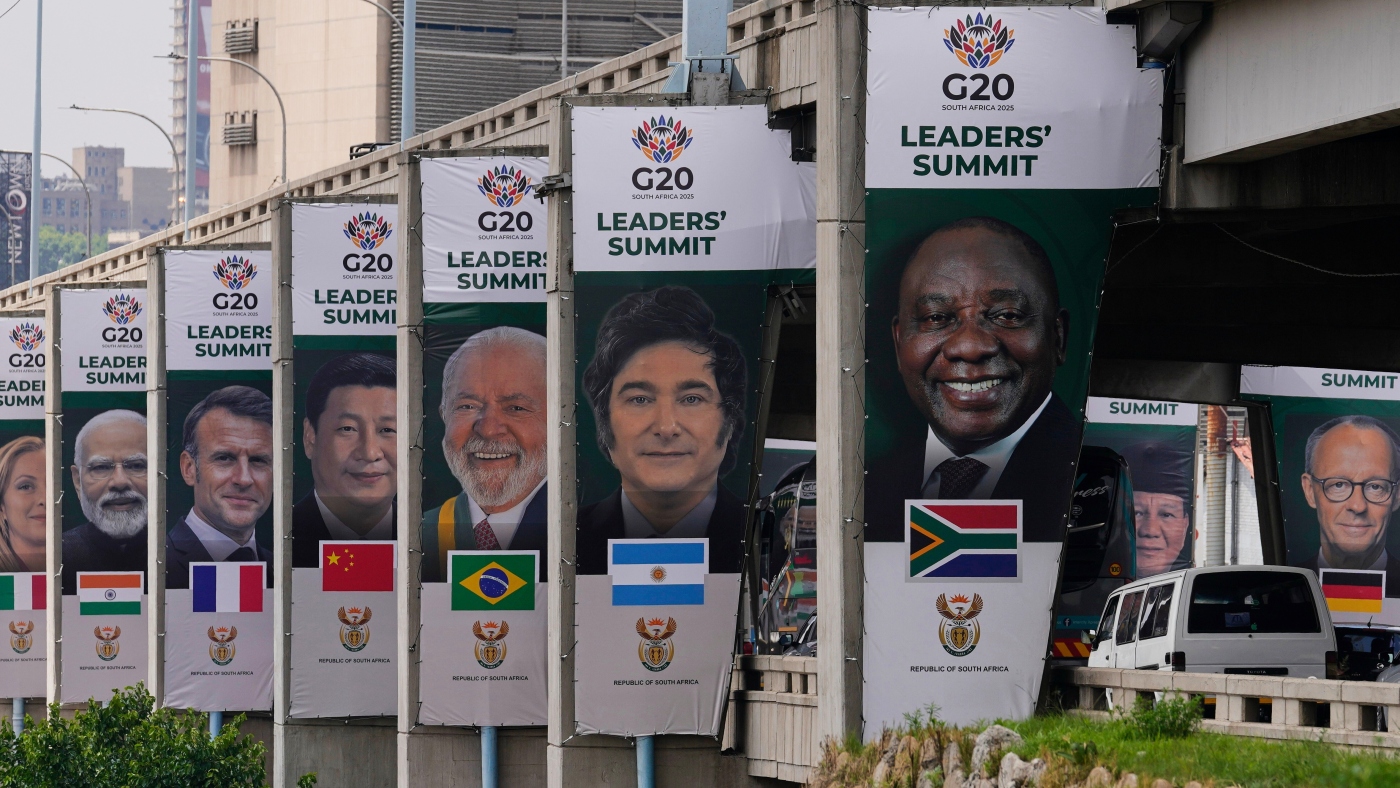
The G20 Leaders’ Summit, hosted by South Africa, faces a notable absence of key global leaders, including the United States. As the event unfolds, the summit becomes a backdrop for international tensions, domestic challenges, and contrasting narratives.
JOHANNESBURG, South Africa — The United States, the world’s largest economy, has opted out of the G20 Leaders’ Summit, citing objections to the event’s focus on diversity, equity, and inclusion (DEI). The Trump administration has accused South Africa of race-based policies, claiming land confiscation and violence against white Afrikaners, despite repeated denials from the South African government.
“You know we have a G20 meeting in South Africa, South Africa shouldn’t even be in the Gs anymore, because what happened there is bad,” Trump remarked earlier this month.
South African President Cyril Ramaphosa, although reserved in his response, remarked, “Their absence is their loss,” emphasizing the impact on South Africa’s international standing.
Argentina’s President Javier Milei also announced his absence in solidarity with Trump. Meanwhile, Chinese President Xi Jinping and Russian President Vladimir Putin will not attend due to personal and legal reasons, respectively.
According to William Gumede, an associate professor at Johannesburg’s Witwatersrand University, the summit reflects the current fractured global landscape, describing it as “almost an alternative summit without China and without America.”
Despite the controversy, countries like Germany have endorsed the summit’s themes of solidarity, equality, and sustainability. However, U.S. Secretary of State Marco Rubio criticized South Africa’s “DEI and climate change” agenda.
U.S. Spat Deepens
As international leaders, including Britain’s Prime Minister Keir Starmer, arrive in South Africa, tensions between the U.S. and South Africa escalate. Ramaphosa revealed an unexpected U.S. request to participate in the summit, stating, “We have received notice from the United States…about a change of mind about participating in one shape, form or another in the Summit.”
White House press secretary Karoline Leavitt responded assertively, emphasizing the U.S.’s non-participation in official talks and criticizing Ramaphosa’s comments.
The U.S. plans to send the embassy’s chargé d’affaires for the symbolic handover of the G20 rotating presidency, a move Ramaphosa’s spokesman dismissed, asserting, “The president won’t hand over to a chargé.”
Tensions at Home
Domestically, the summit has sparked dissatisfaction among Johannesburg residents, who criticize the city’s infrastructure improvements only for the event. Journalist Redi Tlhabi noted, “Oh they are fixing, the traffic lights are up…the grass has been cut, all for? G20… You’re showing off for visitors but you have no regard for the people that live in that city,” in her popular podcast.
Additionally, thousands of women marked a day of action against gender-based violence, organized by the group Women for Change, highlighting South Africa’s pressing social issues as the summit convenes.
The summit has also highlighted racial tensions within South Africa. A right-wing Afrikaans rights group displayed billboards labeling the country as “the most race-regulated” due to affirmative action laws. In contrast, a progressive Afrikaner association celebrated diversity with billboards featuring South Africa’s rugby team, the Springboks, using the tagline, “Terrible things are happening in South Africa,” as a tongue-in-cheek reference to Trump’s comments.