Exploring Political Narratives in 2025’s Cinema Landscape
Amidst a backdrop of heightened political tension and division in 2025, filmmakers have ventured into the complex terrain of political storytelling, resulting in a diverse array of narratives. This year, James L. Brooks made a return to cinema with “Ella McCay,” a political rom-dramedy that attempts to nostalgically reflect on 2008. The film, featuring stars like Jamie Lee Curtis and Albert Brooks, has been critiqued for its lack of specificity and perceived nostalgia, with its protagonist navigating an undefined political landscape.
In contrast, other films have engaged more directly with contemporary issues. Mainstream movies such as “Wicked: For Good” and “The Running Man” offer anti-authoritarian narratives, yet their radical ideas are often simplified. Meanwhile, films like “The Mastermind” and “Wake Up Dead Man”, both starring Josh O’Connor, subtly weave political themes into emotionally impactful stories.
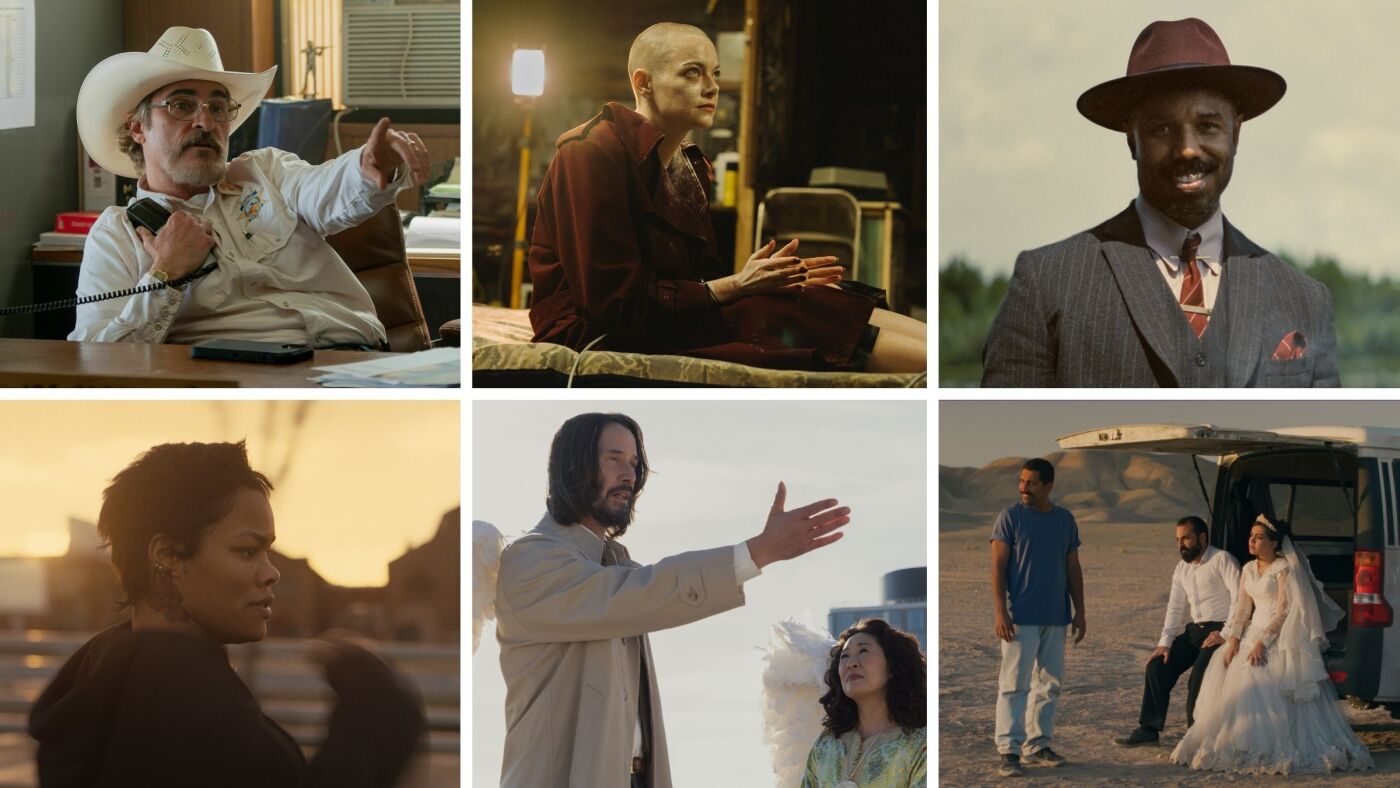
Luca Guadagnino’s “After the Hunt” and Ari Aster’s “Eddington” challenge audiences with their ambiguous storytelling. “Eddington,” featuring Joaquin Phoenix, captures the pandemic’s early chaos, while “Bugonia” by Yorgos Lanthimos presents an eccentric plotline involving conspiracy theories and alien abductions, echoing real-world phenomena like Pizzagate.
Aziz Ansari’s “Good Fortune”, his directorial debut, takes a comedic approach to exploring wealth inequality. The film, starring Keanu Reeves as a guardian angel, critiques economic disparities through the lens of a gig economy worker. Despite its humor, it ultimately falls short of a profound critique, echoing similar limitations seen in Spike Lee’s “Highest 2 Lowest”.
Paul Thomas Anderson’s “One Battle After Another” presents a narrative resonant with historical cycles, focusing on themes of migration and nationalism. However, its exploration of Black radicalism, particularly through the character Perfidia, played by Teyana Taylor, has drawn criticism for its lack of depth and coherence.
Films like Ryan Coogler’s “Sinners” and Kleber Mendonça Filho’s “The Secret Agent” deliver pointed critiques of systemic exploitation and political oppression. Coogler’s work, in particular, addresses the historical exploitation of Black Americans with rich narrative depth.
Jafar Panahi’s “It Was Just an Accident” stands out for its immediacy and relevance, especially given Panahi’s own political struggles in Iran. The film delves into themes of justice and retribution, exploring the moral dilemmas faced by its characters. The narrative resonates with clarity and purpose, prompting questions about justice and forgiveness in a politically charged world.
As political discourse becomes increasingly polarized, the role of cinema in making sense of these complexities remains critical. The films that succeed in navigating this landscape offer audiences not just entertainment, but a means of understanding the world around them.