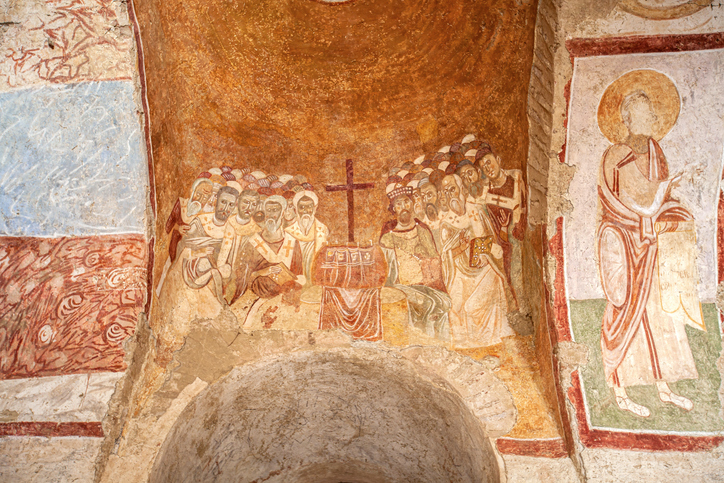

In several European nations, December 31 carries a unique significance, often recognized as St Sylvester’s Day or simply Sylvester. This day, which aligns with New Year’s Eve, honors a historical figure from the era of the Council of Nicaea. But who was Sylvester, and how did his legacy intertwine with the celebrations of the year’s end?
New Year’s Eve Traditions
Globally, New Year’s Eve is celebrated with parties and spectacular fireworks. However, in many European countries with a predominantly Catholic history, the day is referred to as Sylvester. Languages across the region reflect this: in German, Slovak, and Slovenian it’s Silvester; in Hungarian, Szilverster; in Czech, Silvestr; in Polish, Sylwester; in Croatian, Silvestrovo; in French, la Saint-Sylvestre; and in Italian, San Silvestro.
The Historical Sylvester
Details about Sylvester’s early life remain sparse. Born between AD 250 and 285, his origins trace back to Rome or near Naples. His parents were Rufinus and Justa. Sylvester eventually became a Benedictine abbot and priest before ascending to the role of bishop of Rome, or Pope, in AD 314. This period was transformative, as Emperor Constantine’s conversion to Christianity in 312 and the Edict of Milan in 313 ended church persecution, granting it legal recognition.
Papal Influence
Pope Sylvester held the papacy from 314 to his death, overseeing a significant era where Christianity shifted from persecution to becoming the imperial faith. His tenure saw the Council of Arles in 314, which opposed Donatism. The formulation of the Nicene Creed in 325, an event he endorsed through legates, marked another milestone.
Legends and Legacy
Two notable legends surround Sylvester and Constantine. One claims that Sylvester cured Constantine of leprosy through baptism, reminiscent of Naaman’s healing in the Jordan (2 Kings 5:10). A small pilgrimage church, “Santuario di San Silvestro Papa,” near Naples, commemorates this legend. Another legend suggests Constantine granted Sylvester temporal authority over Rome, a claim used by later popes to justify their power. Despite these stories, Sylvester maintained a positive relationship with Constantine, becoming the first Pope to enjoy imperial support.
Architectural Contributions
During Sylvester’s papacy, Constantine funded the construction of significant Roman churches: the Basilica di Santa Croce in Gerusalemme, San Giovanni in Laterano, and the original Basilica di San Pietro, which later evolved into today’s St Peter’s Basilica.
Final Resting Place
Pope Sylvester passed away on December 31, 335, and was initially interred in the catacomb of Priscilla. In 762, his remains were moved to San Silvestro in Capite in Rome. Known as St Sylvester posthumously, he became associated with stonemasons due to the construction projects during his papacy. Despite not being formally canonized, his sainthood was recognized, with his feast day celebrated on his death anniversary.
The Order of St Sylvester
St Sylvester is the patron of the papal order of chivalry, “Militia Aurata” or “Golden Spur,” purportedly founded by Constantine. In 1841, Pope Gregory XVI established the Order of Pope St Sylvester. By 1905, Pope St Pius X had delineated its structure into four classes: Knight/Dame, Knight/Dame Commander, Knight/Dame Commander with Star (Grand Officer), and Knight/Dame Grand Cross.
Cultural Celebrations
St Sylvester’s Day became synonymous with New Year’s Eve in Catholic tradition, especially after the calendar reform by Pope Gregory XIII in 1582 that established January 1 as New Year’s Day. This change reinforced December 31 as the year’s end, celebrated with events like the Polish “bal sylwestrowy” (Sylvester Ball).
In contrast, Protestant regions, such as Scotland, moved away from celebrating saints’ days, with New Year’s festivities evolving into what is known as Hogmanay.
Entertainment Traditions
In Germany and Scandinavia, an English comedy sketch titled “Dinner for One” has become a New Year’s Eve staple. The 1963 sketch by Freddie Frinton and May Warden is beloved, with its repeated line, “Same procedure as every year,” becoming a cultural touchstone.
As the 1,700th anniversary of the Council of Nicaea approaches, reflecting on Pope Sylvester’s role in the Church’s evolution and his endorsement of the Nicene Creed underscores his enduring influence. In much of central Europe, New Year’s Eve remains a time to honor his legacy.
This article was originally written by www.christiantoday.com