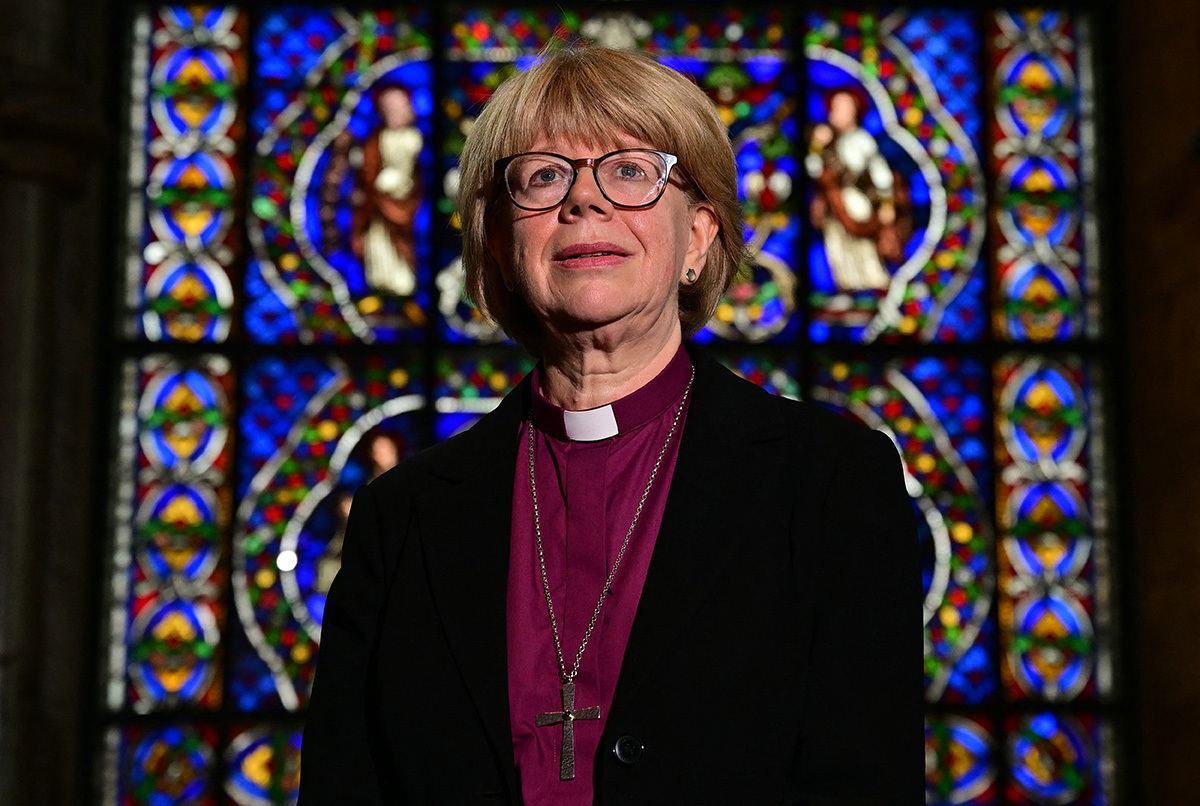
Controversy Surrounds New Archbishop’s Stance on Assisted Suicide
Dame Sarah Mullally, the incoming Archbishop of Canterbury, has publicly opposed the legalization of assisted suicide as the U.K. Parliament deliberates the contentious issue. Her remarks come at a time when the Terminally Ill Adults (End of Life) Bill is under review by the House of Lords, following a narrow approval in the House of Commons.
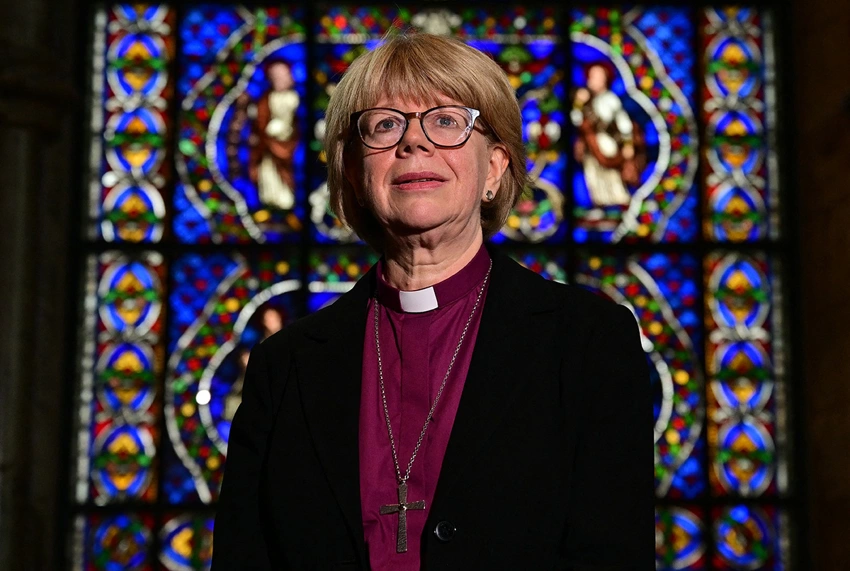
During a recent appearance on BBC’s “Today” program, Mullally, who has a background in nursing and priesthood, articulated her “principled view against assisted dying” in dialogue with former U.K. Prime Minister Theresa May. She emphasized the importance of providing adequate palliative care instead of promoting assisted suicide as an option for terminally ill patients.
Mullally stated, “I think that we need to care for the most vulnerable in our society, we need to have a view where everybody’s made in the image of God.” She expressed concerns that the lack of proper funding for palliative care might coerce individuals into considering assisted dying due to insufficient support.
According to Mullally, the proposed legislation lacks necessary safeguards to protect vulnerable populations who might feel pressured into choosing assisted dying. She highlighted the plight of individuals who, due to societal inequalities, face more significant health challenges and might be steered towards assisted dying as an alternative to treatment options like chemotherapy.
Echoing similar concerns, actress and disability rights advocate Liz Carr has criticized the potential risks of legalizing assisted suicide. In her BBC documentary “Better Off Dead?,” Carr shared experiences of disabled individuals who felt pressured by societal attitudes that suggested they would be “better off dead.” She warned that without robust safeguards, vulnerable people could opt for assisted death not out of genuine choice but due to inadequate social and medical support.
The Terminally Ill Adults (End of Life) Bill, now under consideration, would permit adults in England and Wales with terminal illnesses to declare their intent to end their life, subject to approval by a medical professional and an Assisted Dying Review Panel. However, the bill explicitly states that participation in assisted suicide is not mandatory for doctors, and any coercion or falsification related to the process is deemed an offense.
The bill narrowly passed the House of Commons with a vote of 314-291, largely along party lines, and is now in the House of Lords for further scrutiny.
Mullally’s stance on assisted dying is part of a broader context of criticism she faces for her progressive views on various social issues. Leaders from the global Anglican community, including the Most Rev. Laurent Mbanda and Archbishop Henry Ndukuba, have expressed concerns about her appointment, questioning her alignment with traditional doctrines and her position as the first female Archbishop of Canterbury.
This article was originally written by www.christianpost.com