House Republicans Pursue Legal Action Against Clintons Over Epstein Ties
In a move stirring political debate, the House Oversight Committee, led by Republicans, is considering contempt of Congress charges against former President Bill Clinton and potentially former Secretary of State Hillary Clinton. This action follows their refusal to comply with subpoenas for testimony related to their associations with convicted sex offender Jeffrey Epstein.
Committee Chairman James Comer, a Republican from Kentucky, announced the potential contempt charges after President Clinton did not appear for a scheduled deposition. Hillary Clinton was likewise expected to testify but did not attend. Comer clarified, “No one’s accusing the Clintons of any wrongdoing,” yet expressed surprise at their absence and the lack of attendance by Democrats interested in the Epstein inquiry.
Photographic evidence within recently released files from the Justice Department shows Epstein traveling with President Clinton. Clinton has maintained he was unaware of Epstein’s criminal activities and severed connections with him years ago.

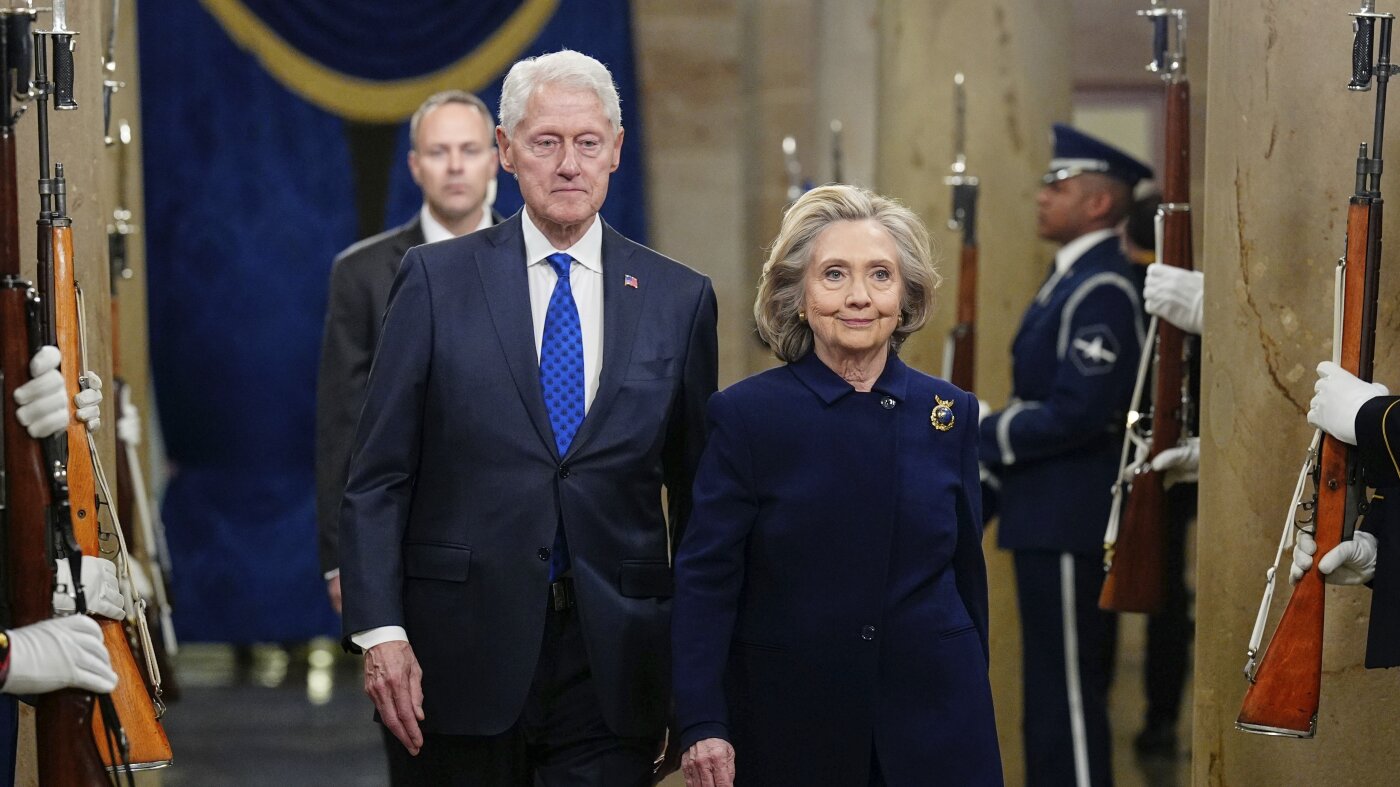
Former President Bill Clinton and former Secretary of State Hillary Clinton arrive for the inauguration in the rotunda of the U.S. Capitol on Jan. 20, 2025. House Republicans are seeking testimony from the Clintons about their past ties with Jeffrey Epstein. Melina Mara/The Washington Post via AP
In a written response, the Clintons deemed the subpoenas legally invalid and stated they had already shared the limited information they possess. They argued the action aims to embarrass political opponents, stating, “Every person has to decide when they have seen or had enough and are ready to fight for this country, its principles and its people.”
While Democrats on the committee agreed to the subpoenas, they noted that many others on the list were not compelled to testify. University of Kentucky Law professor Jonathan Shaub highlighted the political nature of such subpoenas, asserting that they have increasingly become tools for political leverage rather than genuine legislative inquiry. He remarked, “In recent decades, it’s become more and more about scoring political points or exposing embarrassing material for the other side and less about getting information that Congress actually needs to legislate.”
If the House approves a contempt resolution and the Justice Department prosecutes, it could lead to a significant legal challenge due to limited precedent in congressional contempt cases. Shaub warned, “When you have cases like this, where there’s very little, if any, veneer of a legislative interest, it could end up undermining oversight power at a time where Congress has ceded so much authority to the executive branch.”

House Oversight Committee Chairman James Comer, R-Ky., speaks to reporters after former President Bill Clinton and his wife, former Secretary of State Hillary Clinton, refused to appear for a deposition as part of the panel’s investigation into Jeffrey Epstein at the Capitol on Tuesday. J. Scott Applewhite/AP
Meanwhile, the Justice Department has yet to release a substantial volume of documents related to Epstein, despite a December deadline mandated by Congress. This delay has prompted Representative Robert Garcia, a Democrat from California, to question, “WHERE ARE THE EPSTEIN FILES,” on social media.
The potential contempt of Congress charges could become a notable legal instrument, albeit one rarely employed. This follows the case of Steve Bannon and Peter Navarro, close allies of former President Trump, each sentenced to four months in prison for failing to cooperate with an investigation into the January 6 Capitol attack.