Legal Hurdles for Trump’s Voter Data Collection Persist
The Trump administration’s efforts to obtain comprehensive voter data from states have encountered significant legal resistance. This week, a federal judge in California blocked the Department of Justice’s attempt to access unredacted voter information, marking a critical setback in the administration’s broader campaign.
Federal district Judge David O. Carter dismissed the lawsuit which aimed to allow the DOJ access to California’s full voter file, including sensitive personal data like Social Security numbers and driver’s licenses. Similarly, an Oregon judge has indicated plans to follow suit, reflecting widespread judicial resistance.
This legal pushback comes as the DOJ has filed lawsuits against 23 states and Washington, D.C., predominantly Democratic-leaning or states that Trump lost in the 2020 election, for denying these data requests.
The Justice Department claims that this data is essential for verifying states’ compliance with federal voter registration laws. However, officials from both parties have voiced concerns about the unprecedented nature of this request and potential misuse of the data.
“The government’s request is unprecedented and illegal,” Judge Carter wrote. “The DOJ’s request for the sensitive information of Californians stands to have a chilling effect on American citizens like political minority groups and working-class immigrants who may consider not registering to vote or skip casting a ballot because they are worried about how their information will be used.”
Judge Carter, appointed during President Bill Clinton’s administration, labeled the DOJ’s efforts as a “telltale ‘fishing expedition.'” He emphasized that the government cannot initiate a lawsuit, gather evidence, and establish claims retrospectively.
Historically, states have managed their elections independently, with minimal federal interference, as outlined by the U.S. Constitution. Previous attempts by the Trump administration to collect similar data during his first term were uniformly rejected. Notably, one Republican state official suggested the administration “go jump in the Gulf of Mexico” in response to such requests.
Despite these setbacks, the landscape is changing. At least eight Republican-led states have either provided or committed to providing their voter registration data to the Trump administration in his second term, according to data tracked by the Brennan Center for Justice.
These data transfers have often been processed through a revamped Department of Homeland Security system designed to identify noncitizens. NPR reported that despite millions of records being scrutinized, no significant voter fraud has been uncovered.
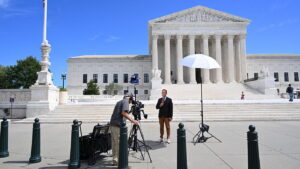
Judge Carter’s ruling is the first among several voter data-related cases nationwide. He anticipates that his decision will likely be appealed, with the potential to escalate to the Supreme Court, as noted in a recent hearing transcript.