Escalating Tensions Between Armenian Government and National Church
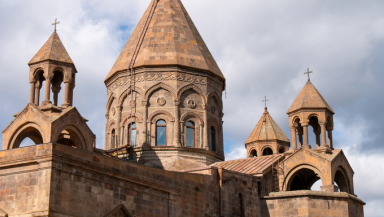
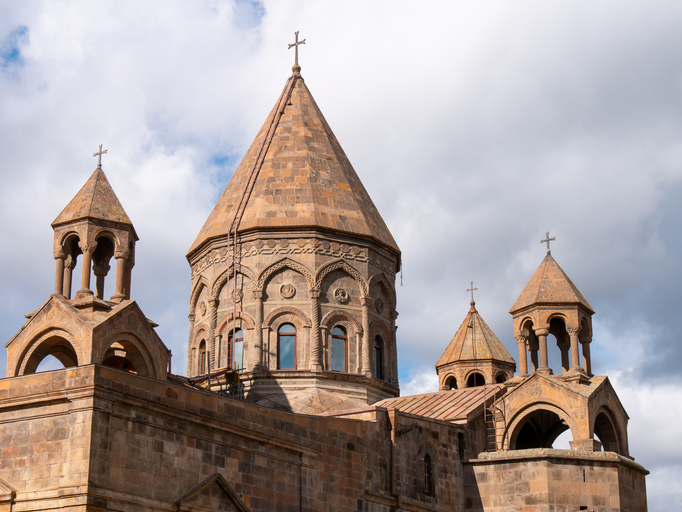
(Photo: Getty/iStock)
Recent findings from a report by Christian Solidarity International (CSI) raise serious concerns about the Armenian government’s treatment of the Armenian Apostolic Holy Church (AAHC). This report, penned by Dr Peter Flew, an international lawyer and historian, follows his investigative visit to Armenia. The document highlights issues related to religious freedom and judicial independence, coinciding with key European diplomatic meetings in Yerevan.
Allegations have surfaced against Prime Minister Nikol Pashinyan’s government, accusing it of employing various coercive measures such as arrests and public denouncements to exert pressure on the AAHC and its leadership.
CSI President Dr John Eibner emphasizes that the Armenian government is attempting to wield “the coercive power of the state” to control the Church politically. He advises Western nations to carefully consider this troubling report when engaging with Yerevan.
Dr Flew asserts that Armenia is “systematically violating the freedom of religion or belief.” He claims that Pashinyan has used antagonistic language to erode the Church’s authority, with bishops and parishioners facing legal challenges and detentions.
The conflict focuses on Catholicos Karekin II, the spiritual head of the Armenian Church. The report alleges that Pashinyan’s Civil Contract party is seeking to remove him and alter the Church’s governance, potentially bringing it under state control.
Dr Flew describes this move as “unconscionable,” likening it to a secular leader attempting to overthrow a figure like the Pope. The report suggests that the party’s election manifesto risks violating legal and constitutional boundaries by turning internal church matters into state policy.
Additional details in the report describe efforts to weaken the Catholicos’ power through public statements and government-supported campaigns to foster dissent among bishops. These actions, according to the report, aim to undermine the Church’s authority from within.
The report claims state interference in Church affairs, citing instances where civil courts reinstated removed bishops, clergy faced criminal charges, and travel bans hindered Church leaders from attending significant events abroad.
Legal criticisms in the report are anchored in Armenia’s Constitution, the European Convention on Human Rights, and case law from the European Court of Human Rights. It argues for state neutrality toward religious communities, free from interference in ecclesiastical governance.
This church-state conflict is also framed within Armenia’s broader geopolitical challenges following the Nagorno-Karabakh conflicts. Dr Eibner highlights the Church’s historical role as a defender of Armenian identity, describing it as “the sturdiest bulwark of the Armenian nation since its founding 1,700 years ago.”
Despite government claims portraying the Church as a security threat with alleged Russian connections, the report dismisses these, noting a lack of evidence supporting foreign-directed activities.
The report outlines several cases, including the detention of Archbishop Bagrat Galstanyan and travel restrictions on other clergy, alongside incidents involving parishioners during services.
It lists individuals considered prisoners of conscience, facing travel bans or other forms of state supervision. While the British government acknowledges these violations and expects Armenia to uphold its legal duties, the report criticizes the response as insufficiently addressing the severe religious freedom violations.
The report concludes that these issues are part of a “coordinated campaign” undermining church-state separation and violating the Church’s autonomy. It warns of the human toll, with clergy and laypeople enduring intimidation and legal actions.
The report calls for immediate action, urging Armenian authorities to halt political attacks on the Church. It also encourages Western governments, including the US, to link stronger ties with Armenia to upholding religious freedom and democratic principles, advocating for the release of detained clergy and engaging with human rights groups monitoring the situation in Armenia.
This article was originally written by www.christiantoday.com