(Photo: Getty/iStock)
Each year, December 26 marks a significant day known as St Stephen’s Day across many countries, coinciding with what is also celebrated as Boxing Day. St Stephen holds the distinction of being the first Christian martyr, and his story is one of faith, courage, and ultimate sacrifice.
The Significance of the Name Stephen
The English name Stephen is derived from the Greek Στέφανος (Stephanos), meaning wreath or crown. Variations of the name appear worldwide, such as Steven and Stefan in English, Étienne in French, and Esteban in Spanish. The name holds historical significance, having been borne by a king of England and numerous kings and popes across Europe.
Stephen’s Role in Early Christianity
Stephen emerges in the New Testament in the Book of Acts, chapters 6 and 7. During the early growth of the Church, Stephen was selected as one of seven men to aid in the fair distribution of resources to widows, particularly among Greek-speaking Jews, also known as Hellenists. His reputation as “a man full of faith and of the Holy Spirit” (Acts 6:5) made him a pivotal figure.
From Deacon to Martyr
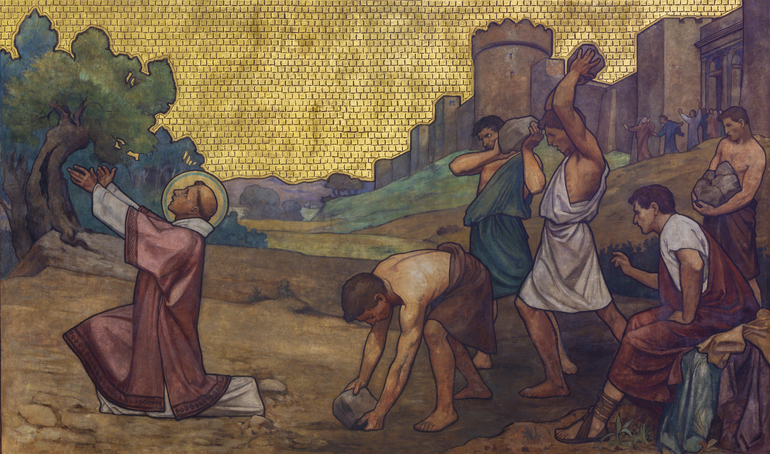
Stephen’s ability to perform miracles and his compelling teachings led to his arrest by Jewish authorities who accused him of blasphemy. His eloquent defense before the Sanhedrin included a retelling of Israel’s history, emphasizing God’s transcendence beyond a single land or building, and accused his accusers of resisting the Holy Spirit. This provoked the authorities, leading to his execution by stoning.
The Aftermath of Stephen’s Martyrdom
Following Stephen’s death, persecution against Christians intensified, prompting many to flee Jerusalem. This dispersion fulfilled Jesus’s prophecy about the challenges his followers would face. Notably, a young man named Saul, who witnessed Stephen’s stoning, later converted to Christianity and became known as St Paul, a transformative figure in the faith.
Legacy and Commemoration
St Stephen is celebrated as the patron saint of deacons and stonemasons, with numerous churches dedicated to him globally. His feast day is recognized on December 26 in the Western Church, marking it as a public holiday in countries like Austria, Germany, and the Czech Republic. The day also draws a parallel with the carol “Good King Wenceslas,” which highlights the tradition of aiding the poor, akin to Stephen’s deeds.
St Stephen’s Prayer
The traditional Anglican prayer for St Stephen’s Day reflects on his steadfast faith and plea for forgiveness for his persecutors, drawing inspiration from his martyrdom and example of loving those who wronged him.
This article was originally written by www.christiantoday.com