In a stark display of religious tensions in India, a grave desecration incident in Chhattisgarh’s Bastar District has cast a shadow over the Christian community. Nearly two decades after being interred, the remains of a tribal Christian were exhumed, incinerated, and their ashes dispersed, sending a chilling message to local Christians. This event was highlighted at a recent public hearing in New Delhi.
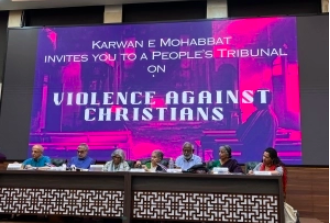
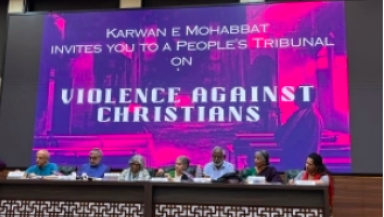
Organized by Karwan-e-Mohabbat, the People’s Tribunal on Violence Against Christians in India brought together over 200 participants, including survivors and human rights advocates, to discuss rising hostilities. The hearing, held on June 1, was the second of its kind since the Kandhamal massacres of 2008, a period marked by severe violence against Christians in Odisha state.
Veteran journalist John Dayal, in his opening remarks, drew parallels between past and present religious violence, referencing the tragic 1999 murder of missionary Graham Staines and his sons. He emphasized that systemic issues have long plagued Christian communities, with past judicial inquiries at times appearing to blame victims.
Vidya Dinker, a social activist on the tribunal panel, called for stronger leadership from Christian leaders, urging them to stand firm amidst growing threats. She pointed out that many survivors felt abandoned by religious institutions during times of violence.
When the Dead Cannot Rest
Syeda Hameed, a former Planning Commission member, expressed sorrow over the desecration of graves, describing it as a profound violation against the community. Father Ajay Singh highlighted the distress caused by obstructed funeral rites, which he termed a severe humiliation for Christians.
Irfan Engineer, a panelist and director of the Centre for Study of Society and Secularism, warned against the misuse of the term ghar wapsi, often used to justify forced reconversions of Christians and Muslims in India.
Prayer Meetings as ‘Crimes’
A.C. Michael of the United Christian Forum described how peaceful Christian gatherings are increasingly portrayed as illegal under anti-conversion laws in several states. Despite legal interventions, such as the Supreme Court’s dismissal of flawed anti-conversion cases, challenges persist for many Christians.
Historian Tanika Sarkar noted a pattern where newer churches and small congregations face heightened hostility compared to established institutions.
Minorities Enjoy ‘Full Freedom’
In contrast to the tribunal’s findings, Minority Affairs Minister Kiren Rijiju asserted that minorities in India have full freedom, dismissing reports of persecution as propaganda. However, recent data from the Pew Research Center and Open Doors’ World Watch List suggest otherwise, highlighting challenges faced by Christian and Muslim communities.
The Evangelical Fellowship of India’s Vijayesh Lal emphasized the gap between constitutional promises and the lived realities of vulnerable communities. He noted the importance of ensuring that even the most marginalized citizens can freely exercise their rights.
Harsh Mander, the tribunal’s organizer, vowed to continue advocating for justice and awareness, referencing past efforts to support victims of religious violence across India. He called for urgent collective action to uphold the constitutional rights of all citizens.
© Christian Daily International
This article was originally written by www.christiantoday.com