Federal Test Scores Reveal Mixed Progress Among Students
Amidst a backdrop of educational challenges, recent federal test scores indicate strides among younger students in reading and math. However, older students continue to face hurdles that highlight ongoing educational disparities.
Newly released data from the National Assessment of Educational Progress (NAEP) shows that reading and math scores for 9-year-olds have increased from 2022 to 2025. Matthew Soldner, acting commissioner of the National Center for Education Statistics, expressed optimism about these developments, describing the report as “an optimistic release.”
The long-term trend (LTT) report, published on Wednesday, delivers a comprehensive national analysis of student progress. This assessment, administered to over 30,000 students between October 2024 and March 2025, is part of the NAEP and offers insights into learning trends for students aged 9 and 13.
Solid Gains for Nine-Year-Olds
The report highlights significant gains for 9-year-old students in both reading and math, with improvements noted across various performance levels. “It is just so encouraging,” Soldner noted, emphasizing that even lower-performing students showed upward trends.
A potential factor contributing to these gains is the students’ age. Many of these children started school after full-time, in-person instruction resumed following pandemic disruptions, which may have minimized their exposure to foundational literacy and math interruptions.
Challenges Persist for Thirteen-Year-Olds
In contrast, the report presents a concerning picture for 13-year-olds, who have not shown notable progress in reading or math since the last assessment. Average reading scores remain below pre-pandemic levels, mirroring performance metrics from 1971.
Lesley Muldoon, executive director of the National Assessment Governing Board, highlighted the need for action, stating, “The lack of progress in 13-year-olds raises huge questions and ought to serve as a catalyst for change.” Many of these students experienced key educational disruptions during crucial developmental years due to the pandemic.
Decline in Reading for Pleasure
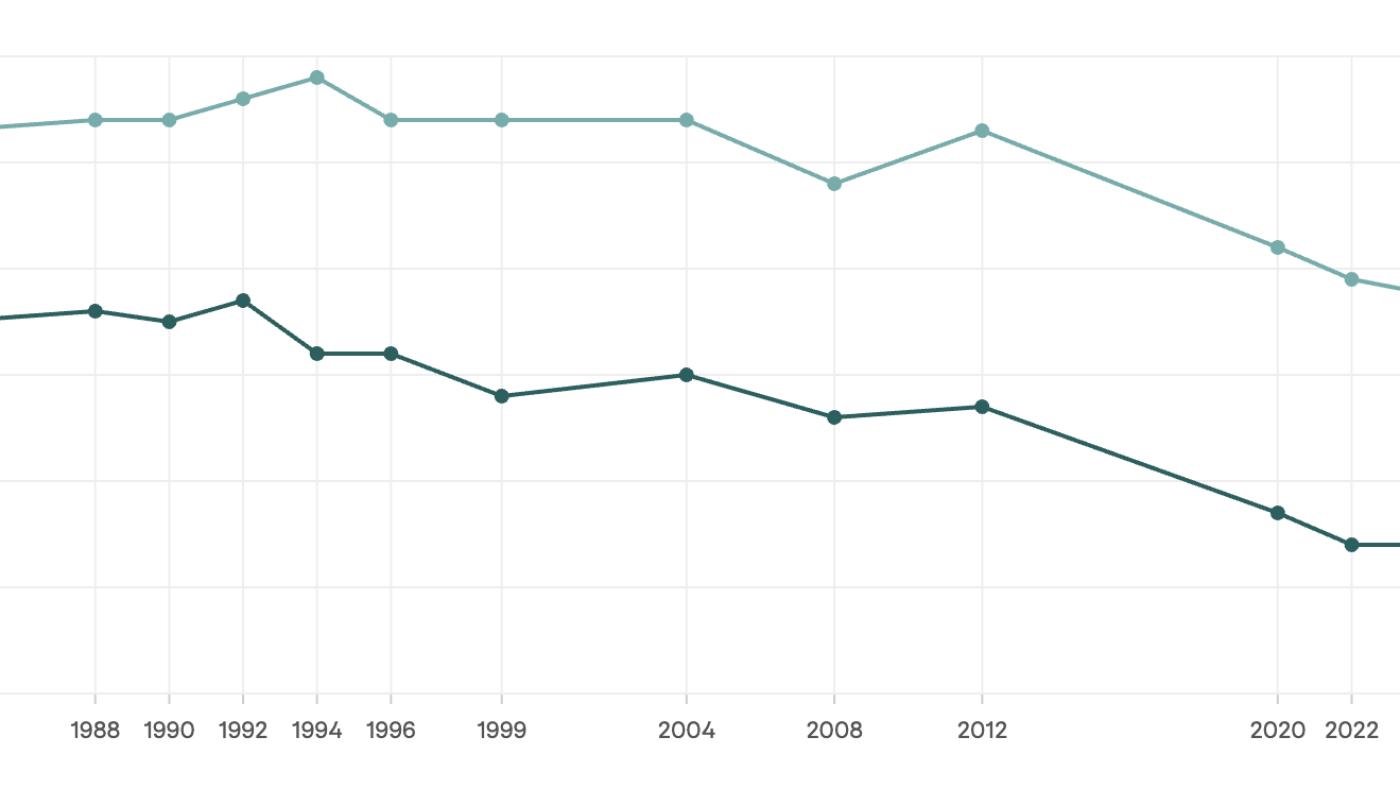
Alongside academic performance, the report underscores a decline in reading for pleasure among students. Only 14% of 13-year-olds reported daily reading for fun in 2022 and 2025, a sharp drop from 35% in 1984. Similarly, 9-year-olds also showed a decline in leisure reading habits.
Math Gains Reversed for Older Students
While math scores for 13-year-olds had previously shown significant improvement from 1978 to 2012, this report reveals that much of that progress has been undone. The lowest-performing students now demonstrate no gains compared to the 1978 scores.
Muldoon emphasized the need for a focused approach to middle school education, asserting, “It’ll take a lot of collective work, but we’ve seen progress before, and it’s possible to see it again.”
Future of Long-Term Trend Reports
This NAEP LTT report is the first since significant budget cuts to the U.S. Education Department in 2025, which resulted in workforce reductions at the Institute of Education Sciences. These cuts also led to the cancellation of numerous national and state assessments, including the next round of these tests.
The long-term trend report will not be administered again until 2033, leaving a significant gap in data collection and analysis for the foreseeable future.