A New Era for Head Start: Proposed Changes Aim to Revamp the Program

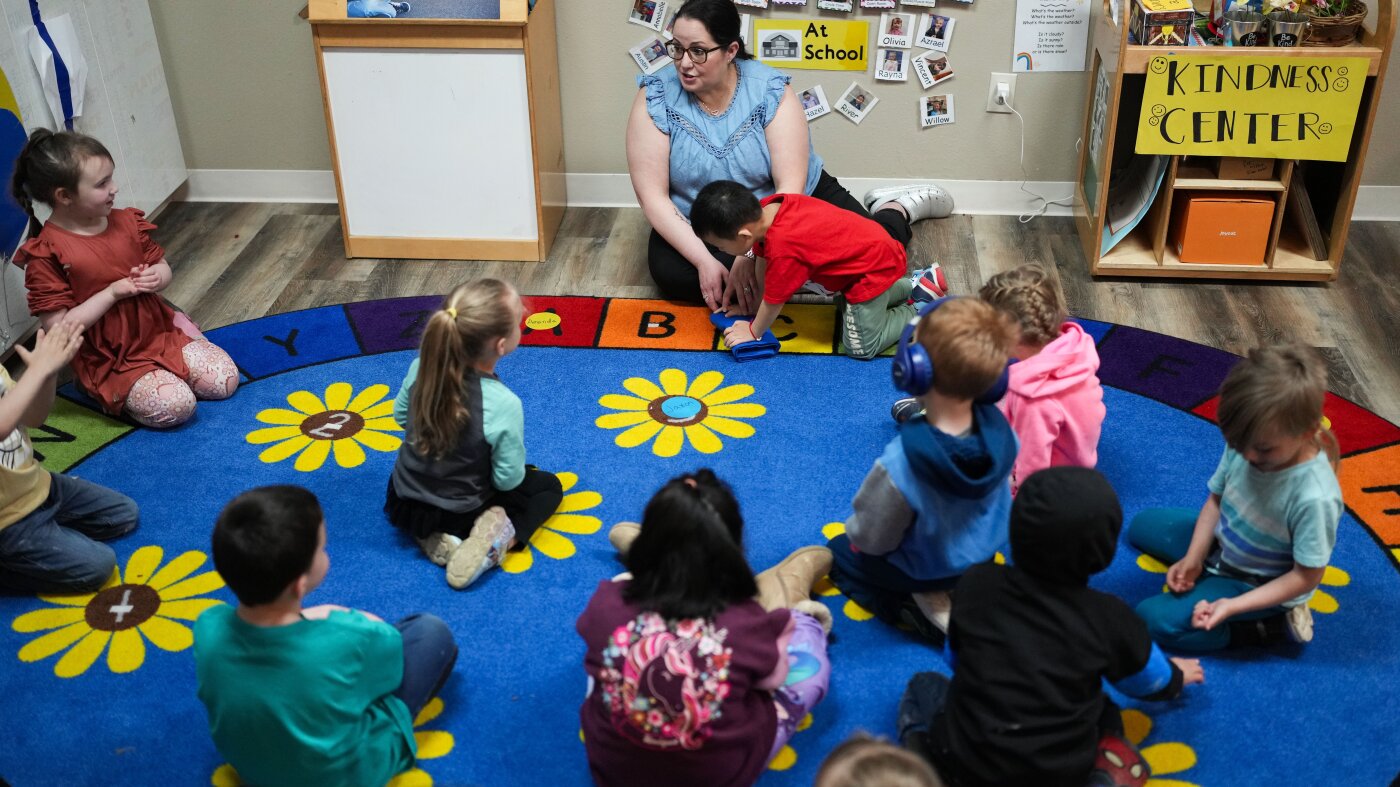
Family educator Lisa Benson-Nuyen addresses her students in a circle in the Northern Lights classroom at the Meadow Lakes CCS Early Learning, a Head Start center, in Wasilla, Alaska, in 2024. The center has since closed because of a lack of staff and money.
AP Photo/Lindsey Wasson
toggle caption
AP Photo/Lindsey Wasson
Catch up on what you missed with our Education newsletter, sent weekly.
The Trump administration has introduced plans to reform Head Start, a crucial early education initiative for children from low-income families. The proposed modifications intend to reduce federal oversight, providing states and parents with increased control over the program.
“We have 1,600 Head Start providers across the country,” stated Alex Adams, the U.S. Department of Health & Human Services’ assistant secretary for family support. “And one-size-fits-all mandates from Washington cannot fully account for the realities facing these 1,600 grantees.”
Head Start plays a vital role by offering preschool education, childcare, meals, and additional support services to over 700,000 children annually, from birth to age five.
Since its inception in 1965, this $12 billion program has generally received bipartisan support, with many lawmakers praising its impact. However, criticisms have emerged, particularly from conservatives, who argue that Head Start wastes money and fails to have a lasting impact on students.
Aiming to cut costs
The new proposal aims to decrease administrative costs at Head Start centers by lowering the cap from 15% to 5%. According to Adams, this change could save the government $2.2 billion, which would be reinvested to create 200,000 additional spots for children.
To achieve these savings, the administration plans to reduce regulations and shift certain standards, including student-teacher ratios and education requirements, back to state control.
Childcare providers have expressed concerns about the proposal. Yvette Sanchez Fuentes, senior vice president with Start Early, remarked, “If we look at the previous actions of the administration, what they have done is not in favor of expanding the program.”
“Is it enough to just bring kids in the door if we’re not actually giving kids and families what they need?” Fuentes questioned. She emphasized that administrative funds often cover essential services, particularly for children with disabilities.
The administration’s proposal also emphasizes parents’ roles as primary educators and seeks to incorporate more parental input into classroom structure and curriculum, with a focus on nutrition and exercise.
Loosening the standards
Head Start’s guidelines are outlined in a comprehensive 133-page manual, employed by both program centers and numerous private childcare facilities nationwide.
These standards include safety protocols and eligibility criteria, such as the requirement for children to brush their teeth daily with fluoride toothpaste.
Erica Phillips, executive director for the National Association for Family Child Care, highlighted the importance of consistent, evidence-based standards. “It can be helpful to have a nationally recognized benchmark,” she said.
Phillips expressed concern about potential disparities across states, fearing that “quality is now dependent on your ZIP code or on your geography.”
The Trump administration, however, views the changes as offering flexibility. “Flexibility is permission. It’s not a mandate,” Adams explained. “The opportunity for these programs to make a different decision does not necessarily mean they must make a different decision.”
The Heritage Foundation has long criticized Head Start, suggesting in its Project 2025 policy blueprint that the program should be eliminated.
Some advocates perceive the proposed changes as a step toward dismantling the program by eroding quality and lowering standards.
A long runway
The announcement marks the start of a lengthy process involving public comments and stakeholder consultations, which could take six months to a year before any new standards are implemented.
“I just really want folks to know Head Start is open,” said Tommy Sheridan, deputy director at the National Head Start Association (NHSA). “The quality of Head Start children and families truly comes from the people that are running Head Start programs.”
The NPRM will be published in the Federal Register and open to public comment for 60 days.
Edited by: Natalie Escobar