Capitol Hill’s New Proposal: A Balancing Act Amidst DHS Funding Crisis
As tensions rise at airports across the nation due to TSA officer shortages, a new proposal is emerging in Congress aimed at funding vital functions of the Department of Homeland Security (DHS). This initiative comes amidst a prolonged shutdown and ongoing debates between top Senate Republicans, President Trump, and Senate Democrats.
Republicans have been pushing for a comprehensive funding agreement for DHS since the department’s funding lapsed in mid-February. In response, a plan was introduced to finance most of DHS, excluding the Immigration and Custom Enforcement’s (ICE) enforcement and removal operations.
Despite these efforts, Democrats remain reluctant to approve additional funding for ICE without significant reforms, especially after concerns over the agency’s enforcement tactics following two fatal shootings in Minneapolis. President Trump, on the other hand, is seeking an agreement that includes the SAVE America Act, an overhaul of federal elections. “I think any deal they make, I’m pretty much not happy with it,” Trump expressed.
Seeking Reforms and Stalemates
The current DHS shutdown, now at 40 days, has left federal employees, crucial to airport security and cybersecurity, unpaid. Ha Nguyen McNeil, TSA’s acting administrator, emphasized the potential long-term impacts on the workforce and security during a House hearing.
Proposed changes to ICE operations, such as body cameras and reduced detention-center bed capacity, had been included in a House-passed funding bill that stalled in the Senate. However, Democrats demand more, including warrants for immigration agents to enter premises and a ban on face coverings.
“We need reforms,” said Senate Minority Leader Chuck Schumer, D-N.Y., vowing to propose further amendments. Additionally, Sen. Tim Kaine, D-Va., urged Republicans to fund other agencies and resolve TSA line issues. He pointed out that ICE officers are still being paid due to a separate $75 billion fund from Congress.
Reconciliation and the SAVE America Act
Some Republicans are hesitant about a path that doesn’t include Trump’s desired election reform. The strategy involves funding ICE separately and passing parts of the SAVE America Act using reconciliation. Yet, success remains uncertain.
The SAVE America Act, which lacks sufficient Democratic support, requires voter ID and proof of citizenship for registration and voting. Democrats argue it would disenfranchise voters, noting that approximately half of Americans lack a passport.
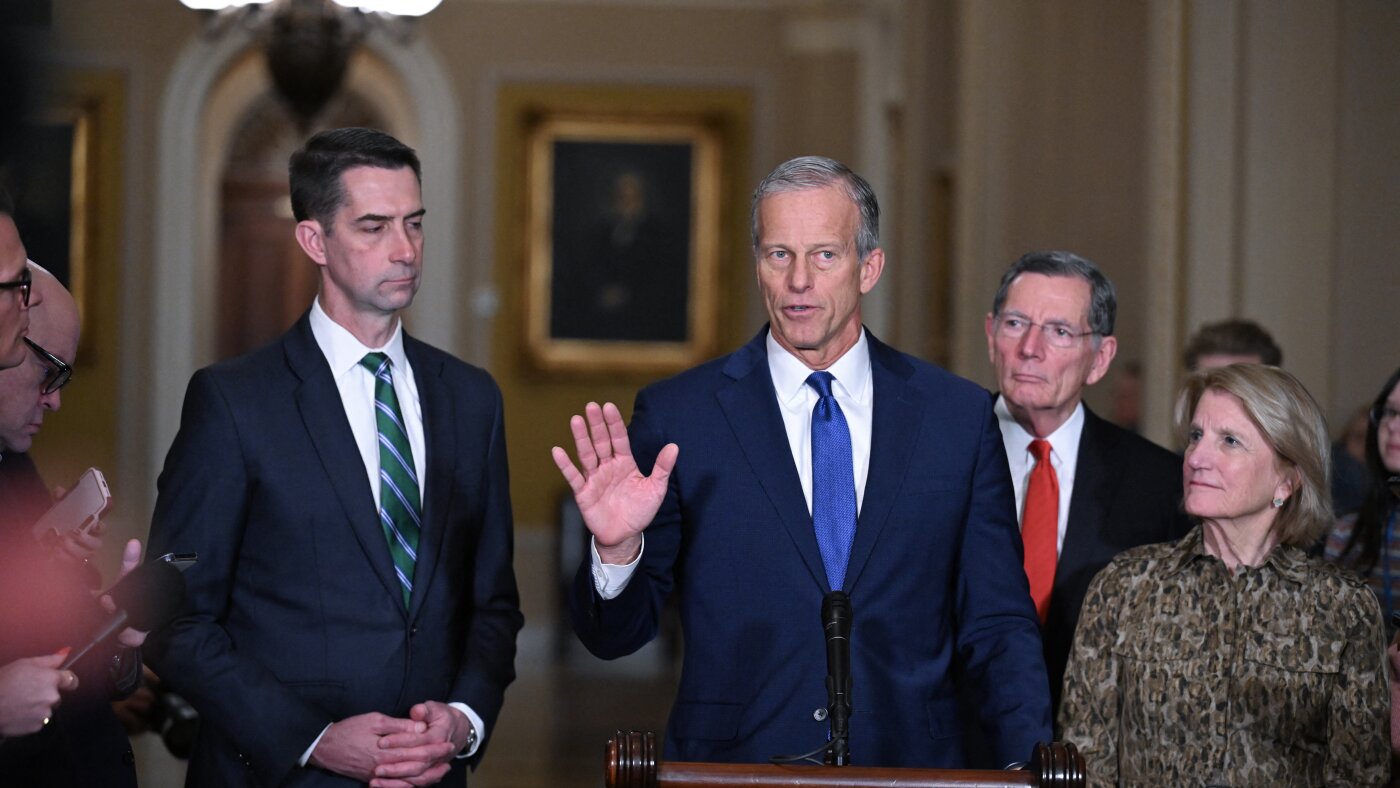
Reconciliation provisions must have a budgetary impact, and the Senate parliamentarian’s decisions are crucial. “The parliamentarian has a role to play in that process, and in the past, we have respected it,” noted Senate Majority Leader John Thune, R-S.D.
While some GOP senators doubt the bill’s passage through reconciliation, Senate Budget Chair Lindsey Graham announced plans to draft a reconciliation bill. Graham stated, “The purpose of the second reconciliation bill is to make sure there is adequate funding to secure our homeland and to support our men and women in the military.”