Unprecedented Events Mark G20 Summit in South Africa
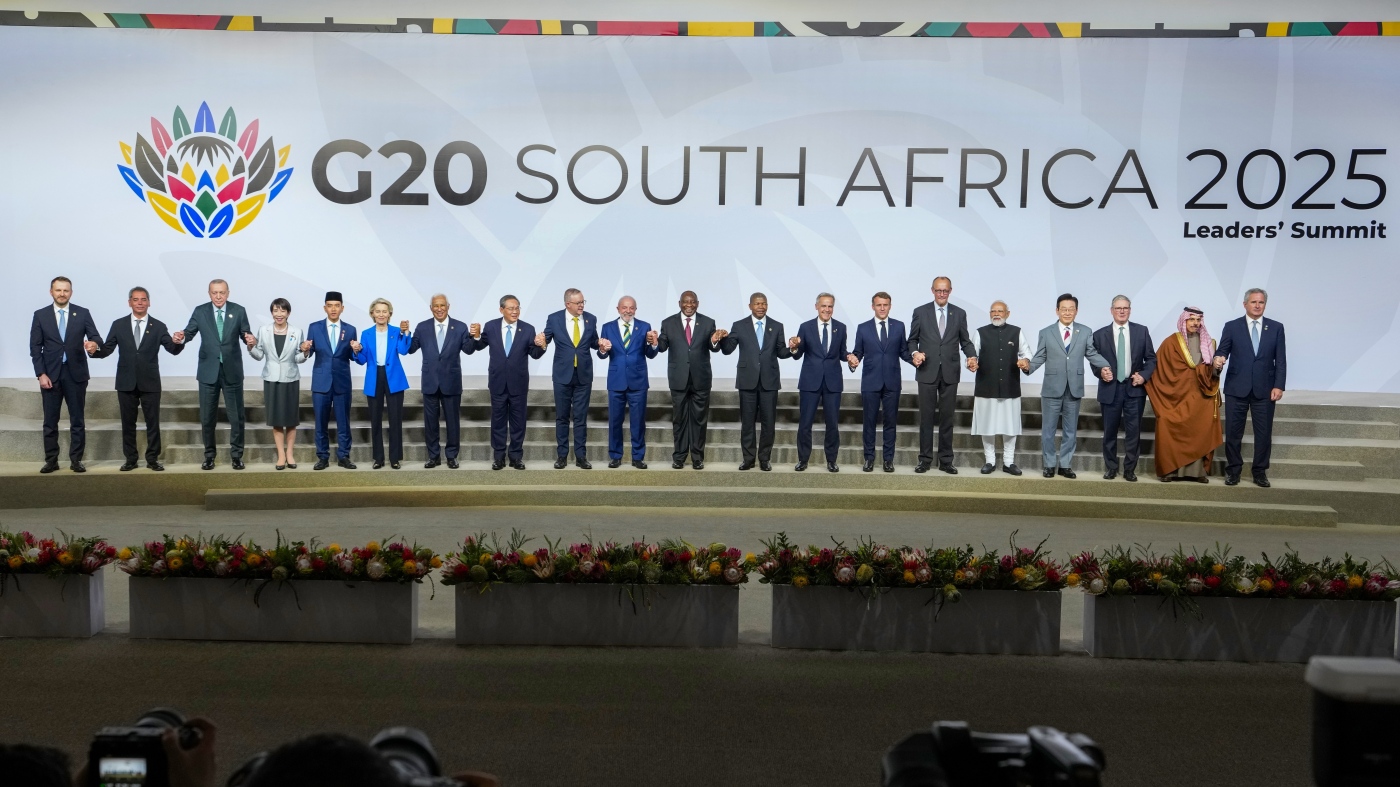
The G20 Leaders’ Summit held in Johannesburg, South Africa, over the weekend was notable for several groundbreaking reasons. It was the first time the G20 was hosted on African soil, and the United States chose to boycott the meeting, setting a precedent in the summit’s history.
The summit commenced with an unusual agreement on a declaration, which typically concludes such meetings, and the customary handover ceremony between the outgoing and incoming G20 chairs was notably absent.
The Trump administration’s decision to skip the event followed President Trump’s unsubstantiated claim that South Africa was seizing land owned by white farmers and enabling violence against white Afrikaners. The U.S. also disagreed with the summit’s focus on diversity, equity, and inclusion (DEI).
Despite attempts to disrupt the proceedings, South African International Relations Minister Ronald Lamola expressed satisfaction with the summit’s outcome, stating, “In a nutshell … this has been a great success for our country.”
President Cyril Ramaphosa officially concluded the meeting with a symbolic gavel strike, acknowledging the transition of the G20 presidency to the United States for next year’s summit. However, the traditional handover was postponed, as the South African hosts declined to pass the gavel to a junior U.S. embassy official in President Trump’s absence.
Joint Declaration Defies U.S. Stance
Contrary to U.S. suggestions, South Africa issued a joint declaration at the summit’s commencement without American input. Ramaphosa had previously stated that “we will not be bullied,” emphasizing the decision to proceed with a consensus-driven statement.
Although G20 declarations lack binding force, White House spokesperson Anna Kelly criticized the approach, accusing Ramaphosa of obstructing a smooth G20 presidency transition. President Trump aims to host the next meeting in Florida, focusing on “restoring legitimacy” to the group.
The declaration included DEI-focused language, highlighting climate change threats, gender equality, and the debt challenges of poorer nations, which were points of contention for the Trump administration. While Argentina’s delegation, led by Trump ally President Javier Milei, voiced some objections, the declaration was still adopted.
Global leaders praised South Africa’s leadership, with French President Emmanuel Macron warmly embracing Ramaphosa, though he acknowledged ongoing divisions within the summit.
Ramaphosa emphasized the summit’s role in highlighting issues crucial to developing economies and the Global South. However, global conflicts, particularly the U.S.’s new Ukraine peace plan and its implications, dominated discussions on the sidelines. European leaders expressed concerns about the plan’s perceived favorability toward Moscow.
Additionally, Brazilian President Luiz Inácio Lula da Silva raised alarms over the U.S. military’s actions near Venezuela.