https://npr.brightspotcdn.com/dims3/default/strip/false/crop/2000×1333+0+0/resize/800/quality/85/format/jpeg/?url=http%3A%2F%2Fnpr-brightspotcdn.com%2Fd7%2F5a%2F6e65de10422aae36105ff0959c21%2F021025-capitol-zayrharodriguez-4-1.jpg 800w,
https://npr.brightspotcdn.com/dims3/default/strip/false/crop/2000×1333+0+0/resize/900/quality/85/format/jpeg/?url=http%3A%2F%2Fnpr-brightspotcdn.com%2Fd7%2F5a%2F6e65de10422aae36105ff0959c21%2F021025-capitol-zayrharodriguez-4-1.jpg 900w,
https://npr.brightspotcdn.com/dims3/default/strip/false/crop/2000×1333+0+0/resize/1200/quality/85/format/jpeg/?url=http%3A%2F%2Fnpr-brightspotcdn.com%2Fd7%2F5a%2F6e65de10422aae36105ff0959c21%2F021025-capitol-zayrharodriguez-4-1.jpg 1200w,
https://npr.brightspotcdn.com/dims3/default/strip/false/crop/2000×1333+0+0/resize/1600/quality/85/format/jpeg/?url=http%3A%2F%2Fnpr-brightspotcdn.com%2Fd7%2F5a%2F6e65de10422aae36105ff0959c21%2F021025-capitol-zayrharodriguez-4-1.jpg 1600w,
https://npr.brightspotcdn.com/dims3/default/strip/false/crop/2000×1333+0+0/resize/1800/quality/85/format/jpeg/?url=http%3A%2F%2Fnpr-brightspotcdn.com%2Fd7%2F5a%2F6e65de10422aae36105ff0959c21%2F021025-capitol-zayrharodriguez-4-1.jpg 1800w” sizes=”(min-width: 1025px) 650px, calc(100vw – 30px)” class=”img” type=”image/jpeg”/>

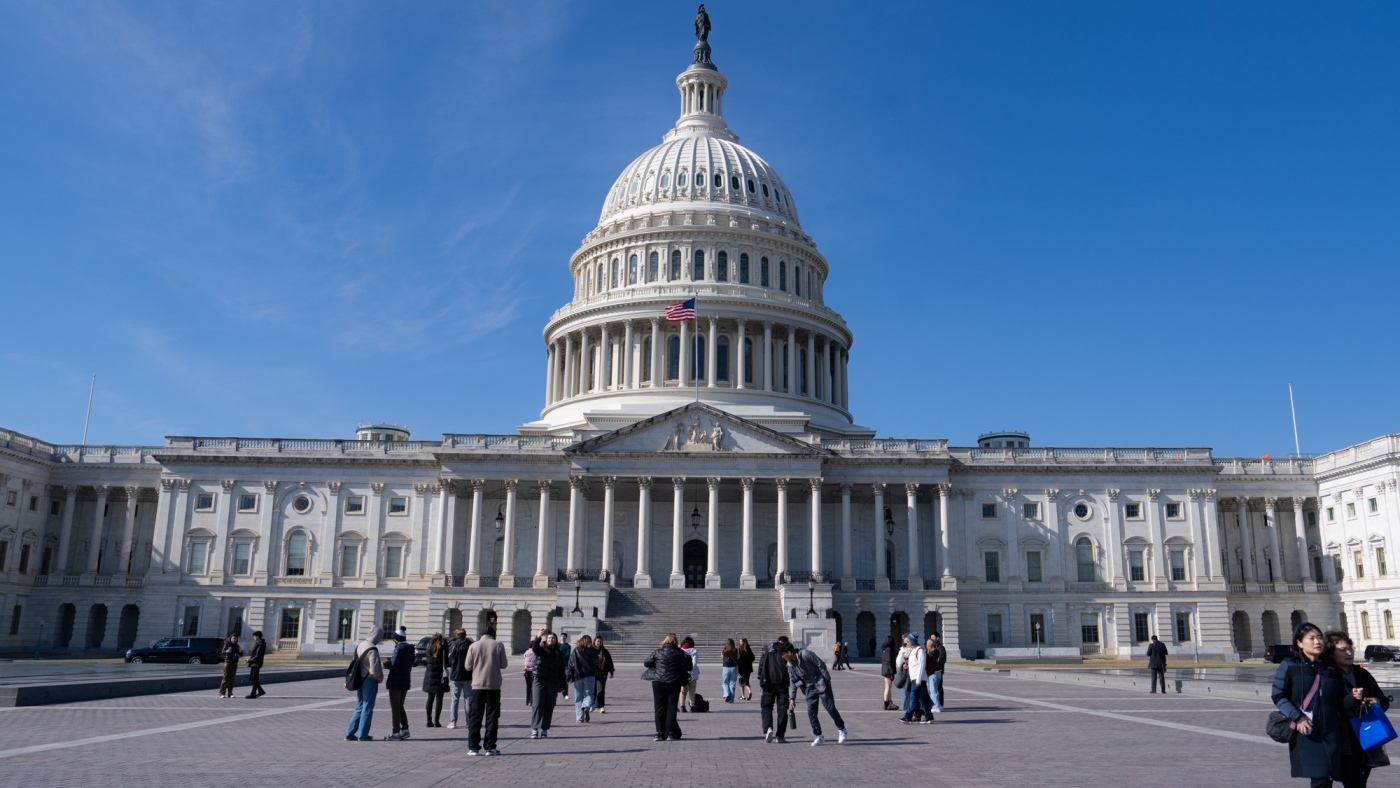
Republicans in Congress have shown some willingness to push back on President Trump but it is not clear how far they are willing to push back against the leader of their own party.
Zayrha Rodriguez/NPR
hide caption
toggle caption
Zayrha Rodriguez/NPR
The Republican-majority Congress has largely supported President Trump, even when his actions have blurred the lines of constitutional powers.
However, a number of Republican lawmakers are starting to assert their independence.
Recently, a second Pentagon strike targeting individuals on an alleged drug boat in the Caribbean drew concern from some Republicans.
“Somebody made a horrible decision,” stated Sen. Thom Tillis, R-N.C. “Somebody needs to be held accountable. This is our job. This is part of oversight. That’s pretty straightforward.”
Such military actions aren’t the only instances prompting Republicans to distance themselves from the Trump Administration. For example, some have criticized Trump’s tariffs. Sen. Susan Collins, R-Maine, vocalized concerns about the impact on local industries.
“Our lobsterman, our blueberry growers, our potato farmers will pay the price,” Collins warned before a vote to roll back tariffs on Canada.
As the deadline for enhanced health care subsidies looms, Trump’s indifference has prompted concerns from Sen. Josh Hawley, R-Mo., who warns of a “massive crisis unless Congress acts.”
Congressman Don Bacon of Nebraska has been vocal about Trump’s handling of Russian President Vladimir Putin’s actions in Ukraine, describing Trump’s approach as too lenient.
“The velvet glove, red carpet treatment for Putin and then the condescending, boorish behavior that the president and the vice president has done towards Zelenskyy – it’s a contrast,” Bacon told Nebraska Public Media earlier this year.
Additionally, Senators have shown resistance to Trump’s calls to dismantle the filibuster. “You’d have to be smoking wizard weed to vote for that,” commented Sen. John Kennedy (R-La.) during a lengthy government shutdown.
Trump’s hesitance to release files related to Jeffrey Epstein has also caused tension with Rep. Marjorie Taylor Greene, R-Ga., who stated, “He called me a traitor for standing with these women.”
Moments of GOP resistance or a growing trend?
The White House’s dominance over Congress concerning tariffs, appropriations, and military decisions has seen restrained resistance, notes former Sen. Jeff Flake (R-Az.).
Flake observes that this shift coincides with Trump’s declining approval ratings and Republican setbacks in recent elections.
“There was a lot of fear about what he could do to you electorally,” Flake said. “That’s diminishing.”
Flake, who chose not to run for re-election in 2018 partly due to his refusal to fully support Trump, believes more lawmakers are now voicing opinions previously kept private.
“Obviously behind the scenes, it’s a whole different ballgame,” he noted. “This migration is happening and when Republicans get there, they’ll get to a new-old place where they were on some of these threshold issues that have animated conservatives for decades.”
However, past predictions of a new era have been premature, as Trump has reasserted his influence over Congressional Republicans, especially post-January 6th attack on the Capitol.
“A lot of us have been wrong on how long this has endured,” Flake admitted.
Those Republicans voicing dissent are often retiring, hail from competitive regions, or are centrist. Some disagreements with Trump relate more to his populist platform than traditional Republican values.
Sen. Lisa Murkowski, R-Alaska, pointed out Congress’s efforts to counter the White House, such as opposing tariffs and military actions, but finds them inadequate.
“I’d like to see more, and I believe that if we don’t stand up for our powers under the Constitution, nobody else will,” Murkowski told NPR.
Constitutional role of Congress
The framers entrusted Congress with the authority to allocate funds, declare war, and impose taxes, including tariffs.
Senate Majority Leader John Thune, R-S.D., contends that Congress has not abdicated its role as an independent branch.
“I don’t know how much different this one is,” Thune told NPR. “A lot of times if I have differences with the administration, I don’t litigate it in public. But we do have a responsibility as partners to try to get an agenda done for the American people that they voted for.”
Molly Reynolds from the Brookings Institution explains that Congress’s power shift toward the executive and judicial branches has been ongoing for decades.
“And in some cases, Congress has been a willing and eager participant in sacrificing its own power to the other branches,” she noted.
Reynolds highlighted that this trend didn’t start with Trump’s actions but intensified due to his unilateral approach during his second term. House Speaker Mike Johnson (R-La.) humorously remarked on The Katie Miller Podcast, “We have this joke that I’m not really a Speaker of the House.”
Reynolds, a self-proclaimed advocate for the legislative branch, emphasizes that the Constitution’s framers placed Congress in Article 1 to signify its closeness to the people. The principles of separation of powers and checks and balances are central to American governance.
Reynolds cited historical instances, such as the post-Watergate reforms, when Congress reasserted its authority.
“It was in a really different political moment than the one we’re living in now,” Reynolds said, highlighting today’s polarization. “Which is part of what makes it challenging to see the prospects for a similar burst of institutional patriotism.”