
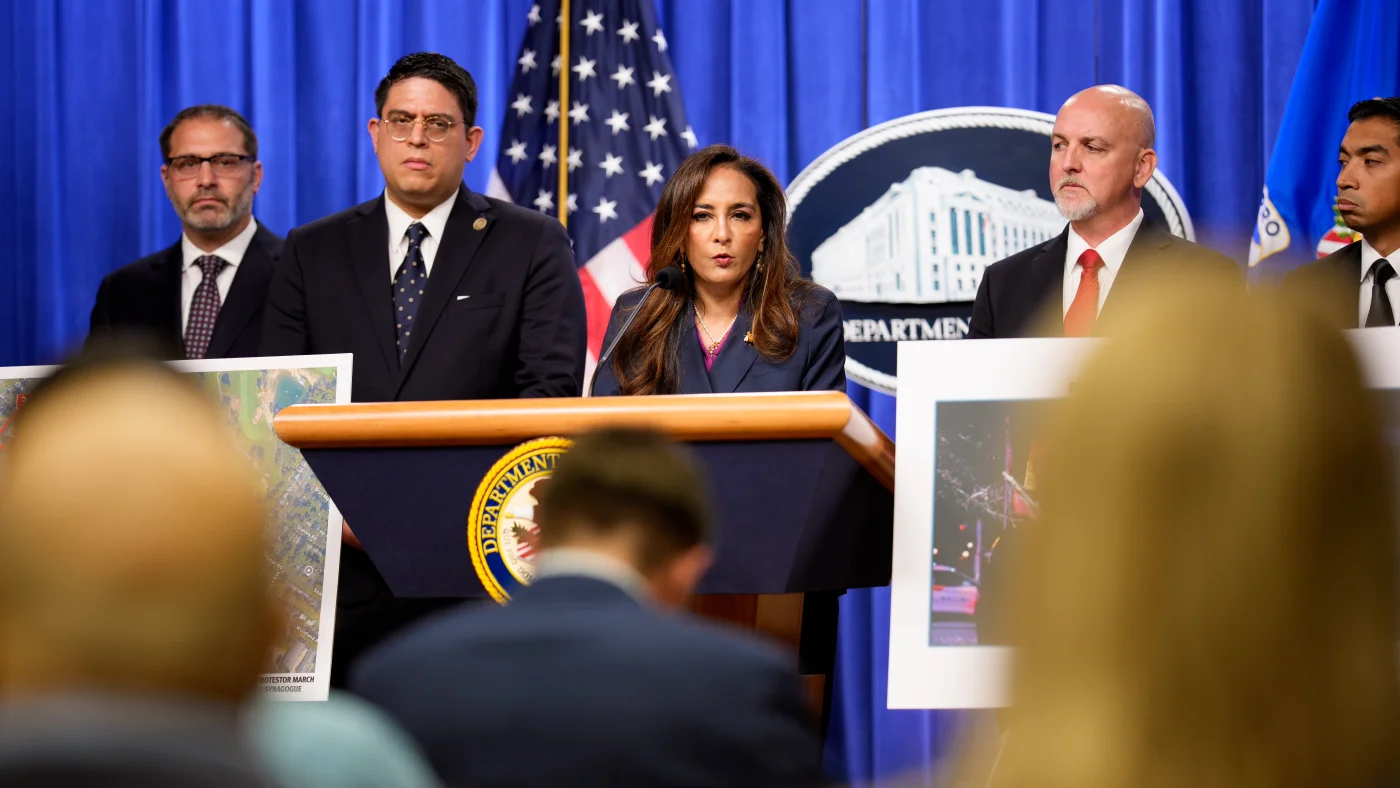
Leadership Shakeup at Justice Department’s Civil Rights Division
In a significant turn of events, Harmeet Dhillon, the head of the Justice Department’s Civil Rights Division, has resigned after 18 months characterized by considerable changes and controversy. Her tenure saw the division’s mission redefined, a mass departure of seasoned staff, and a fervent push to align with President Trump’s agenda.
Dhillon’s departure marks the first major exit from the Trump administration following the Democrats’ takeover of both the House and Senate in the recent midterm elections. Attorney General Todd Blanche expressed gratitude for Dhillon’s service, stating on X, “She has defended the civil liberties of every American and enforced the law without fear or favor. The Department is grateful for her dedicated public service, and we wish her every success in her future endeavors.”
Reflecting on her tenure, Dhillon described the role as “the honor of a lifetime” and noted achievements such as challenging illegal DEI practices and advocating for women’s sports. She emphasized her commitment to the mission, stating, “We ushered in the downfall of illegal DEI, we fought to protect women in girls’ sports, and so much more.”
Dhillon’s leadership was marked by sweeping changes in the division, including the departure of approximately 300 career attorneys and the recruitment of new staff aligned with her conservative ideology. Her approach marked a distinct shift from the division’s historical focus on racial desegregation and broad civil rights protection.
Under Dhillon, the division’s priorities shifted towards enforcing Trump’s executive orders, including efforts to end what was described as “radical indoctrination” in educational institutions, defending against “gender ideology extremism,” and addressing antisemitism and perceived anti-Christian bias.
Notably, the division engaged in legal actions against states, demanding voter information to support Trump’s voter fraud claims. However, these efforts faced resistance from election officials and were dismissed by the courts. Additionally, the division targeted universities, including UCLA and Harvard, with accusations of discrimination and antisemitism.
In an email to division staff, Dhillon announced her intention to return to private practice, expressing pride in the division’s accomplishments. “I’m proud of all we’ve accomplished during this time to ensure our nation’s civil rights laws protect every American,” she stated. Her departure has been welcomed by some division veterans who criticized her leadership.
Stacey Young, a former division attorney, shared her critical view, stating, “Harmeet Dhillon has been the most destructive, lawless, and hateful head of the Civil Rights Division in DOJ history.” Young highlighted Dhillon’s use of the department’s power in cases against universities and election officials, noting the limited success in court.
As the Civil Rights Division looks to the future, the departure of its controversial leader raises questions about its direction and priorities. The division’s legacy of championing civil rights will continue to be a focal point for scrutiny and discussion.





Comments are closed.