The Enigma of Jimmy Hoffa: A Mystery That Endures
In the annals of American history, few disappearances have sparked as much intrigue and speculation as that of James Riddle Hoffa. Known widely as Jimmy, his story is woven into the fabric of labor movements and pop culture alike. His sudden disappearance on July 30, 1975, remains an enduring mystery that continues to captivate imaginations.
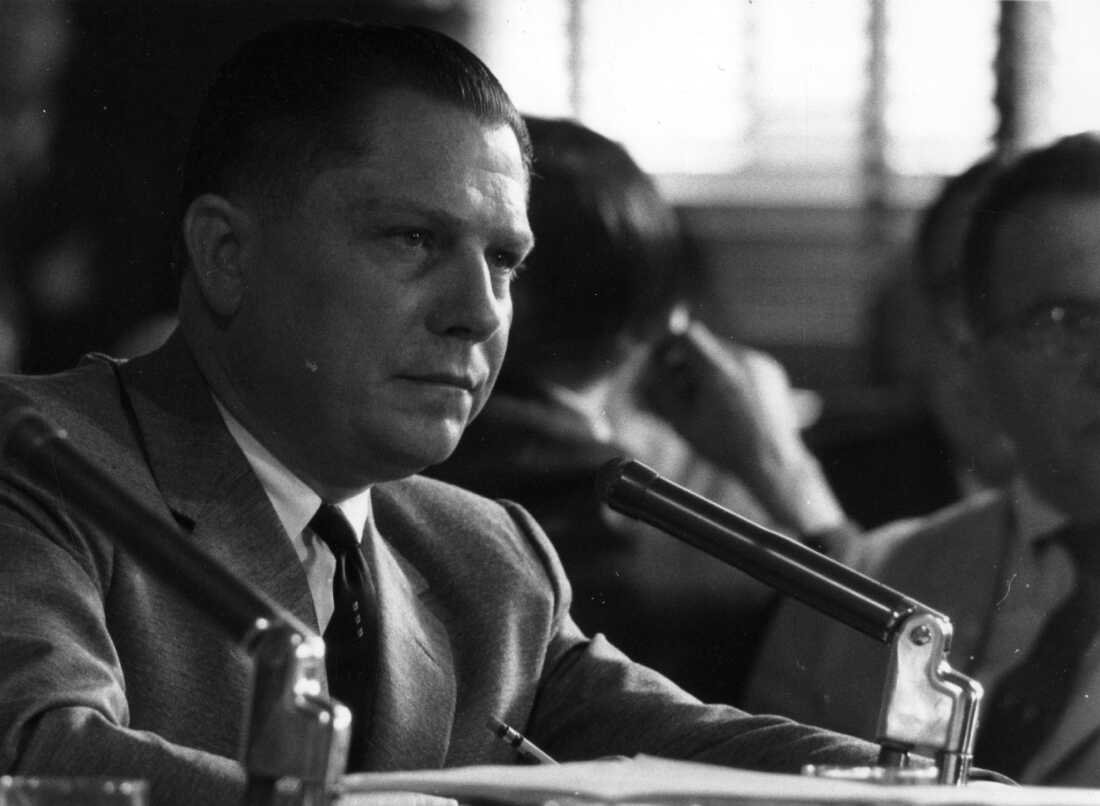
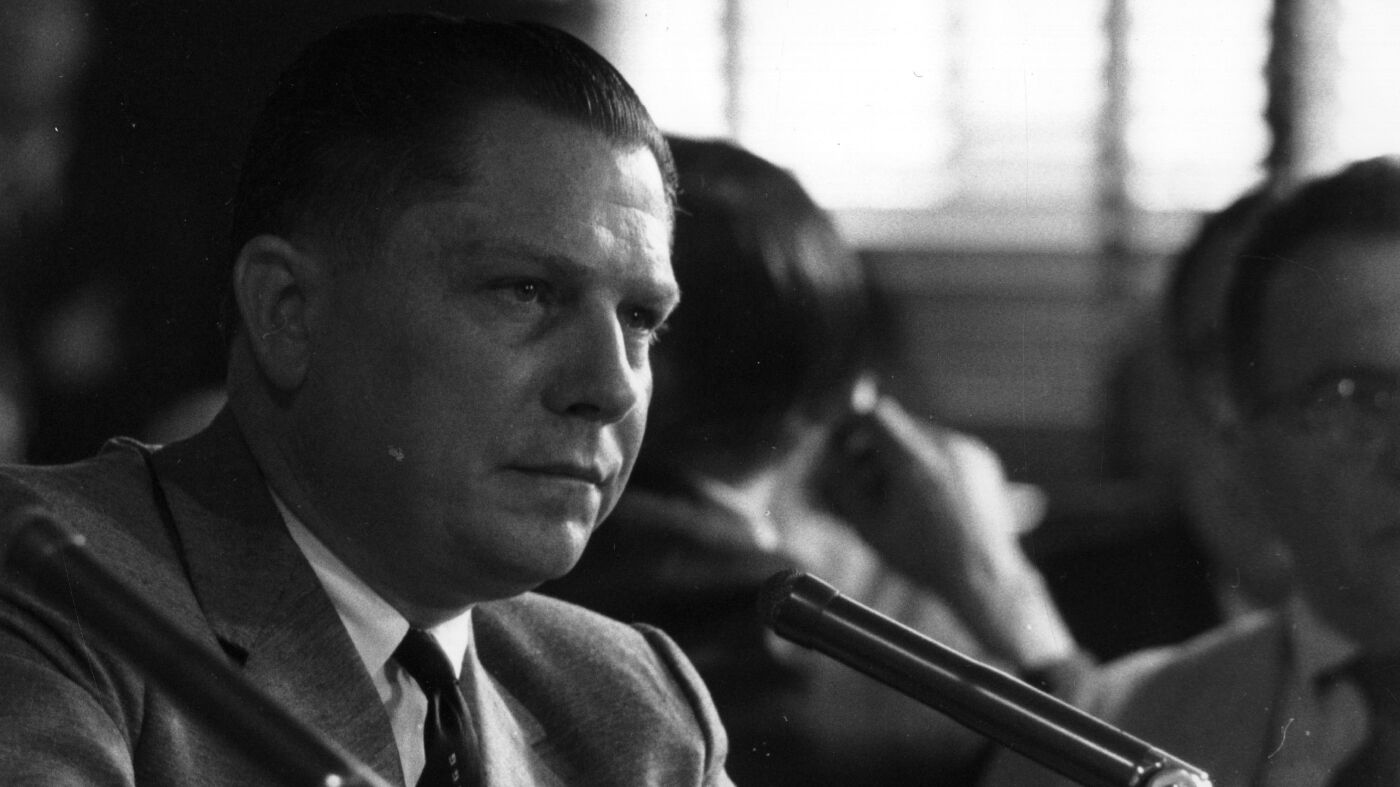
In this file photo from August 1958 American labor leader Jimmy Hoffa, President of the Teamster’s Union, testified at a hearing investigating labor rackets. Hoffa disappeared in 1975 and no body has ever been found.
Keystone/Getty Images/Hulton Archive
Jimmy Hoffa, a formidable figure in the world of labor organizing, made headlines throughout his career, but it was his disappearance that cemented his place in history. By the time he vanished, Hoffa was a 62-year-old ex-president of the Teamsters Union, a man determined to regain his leadership position. Despite serving time in federal prison for bribery, his influence and legacy in the labor movement were undeniable.
Growing up in Detroit, Hoffa was drawn to union organizing as a teenager in the grocery business. His strategic acumen and resilience propelled him through the ranks of the Teamsters, earning him the loyalty of many workers. By 1957, he had ascended to the presidency of the International Brotherhood of Teamsters, despite the union’s deep-seated corruption.
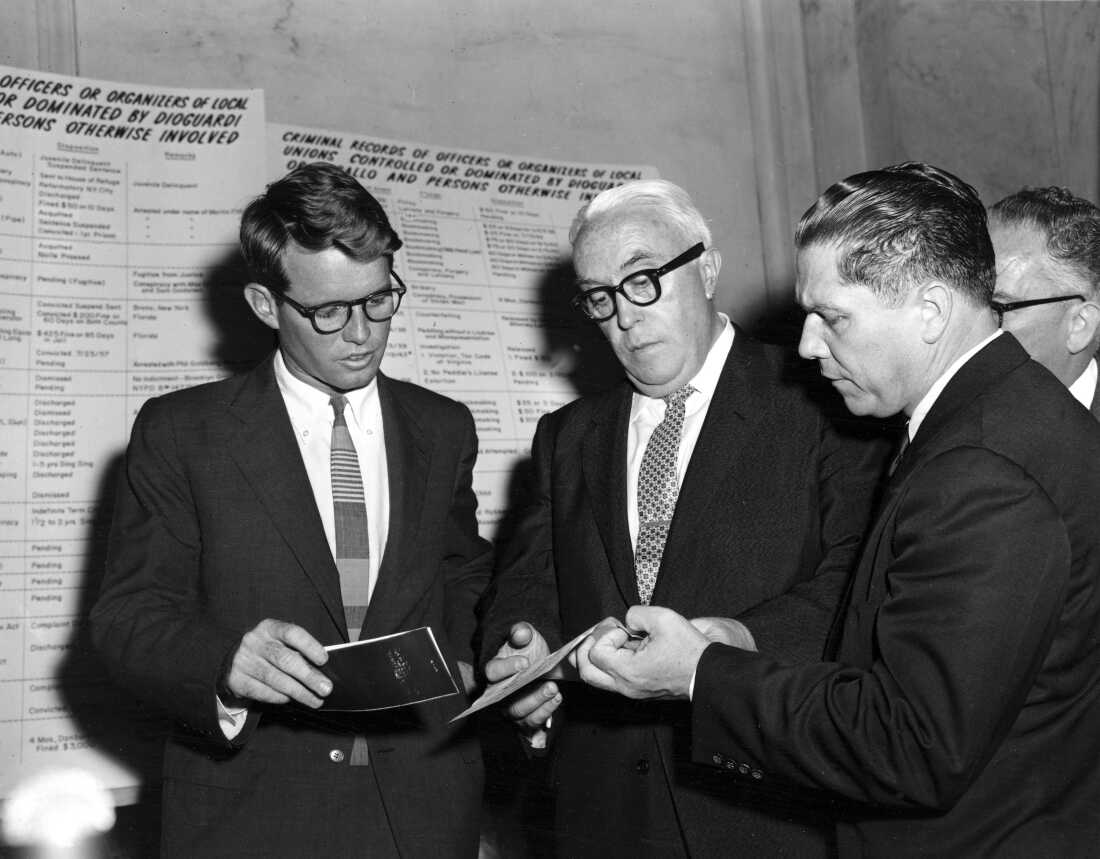
FILE – Robert Kennedy, left, counsel for the Senate Rackets Investigating Committee, attorney George S. Fitzgerald, center, and his client, Teamster Union Vice President James R. Hoffa, confer during a break in hearings in Washington, D.C., in Sept. 1957.
AP/AP
Hoffa’s tenure as Teamsters president was marked by fierce battles with federal authorities, including televised confrontations with Robert F. Kennedy during Senate hearings. These public clashes continued when RFK became Attorney General under President John F. Kennedy, intensifying investigations into Hoffa’s dealings.
Convicted in 1967 for bribery and fraud, Hoffa served over four years in prison until President Richard Nixon commuted his sentence in 1971. However, a condition of his release barred him from union activities, a restriction Hoffa sought to overturn as he attempted to reclaim leadership of the Teamsters. This ambition put him at odds with the union’s current leaders, who had their own ties to organized crime and vested interests to protect.
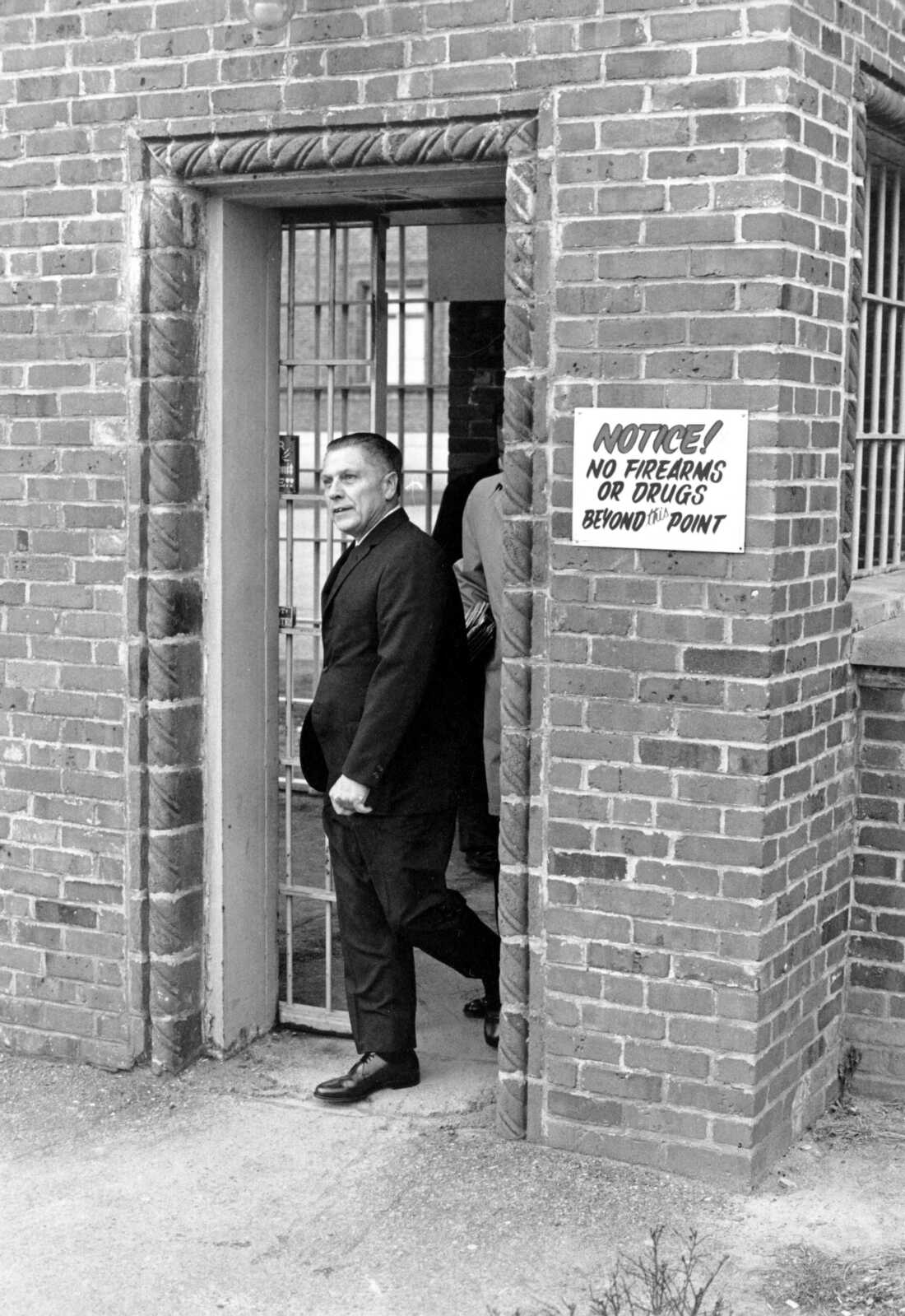
In this file photo, Former Teamster’s President James Hoffa leaves the Lewisberg, Penn., penitentiary on Dec. 23, 1971 after having his sentence commuted by President Richard Nixon.
AP/AP
On that fateful day in late July, Hoffa was scheduled to meet with organized crime figures at the Machus Red Fox restaurant in Detroit’s suburbs. He arrived, but was never seen again, transforming his narrative into one of America’s greatest enduring mysteries. Rumors and theories abound, from mob assassinations to supposed burial sites under sports stadiums, yet none have been substantiated.
Despite being declared legally dead in 1982, the FBI continues to keep the case open, symbolizing the ongoing quest for truth. The Teamsters union, under current President Sean O’Brien, commemorated Hoffa’s legacy, emphasizing his contributions to labor and criticizing the trivialization of his disappearance through cultural jokes.
“For too many years, his death has been the subject of relentless cultural jokes, losing sight of the fact that a family lost a husband and father, and our nation lost an extraordinary leader,” O’Brien stated. “Today and always, we remember James R. Hoffa — not for the tragedy of his death but for his enduring legacy. He was a visionary with remarkable courage and conviction.”
As books and films continue to explore his life and mysterious vanishing, the legend of Jimmy Hoffa lives on, a testament to his complex and impactful legacy.