Federal Judge Overturns $100,000 Fee on H-1B Visas Imposed by Trump Administration
In a significant legal development, a federal judge in Boston has invalidated the Trump administration’s controversial $100,000 fee on new H-1B visas. This decision comes after an earlier ruling in favor of the fee increase, marking a pivotal moment for companies and individuals relying on this visa category.
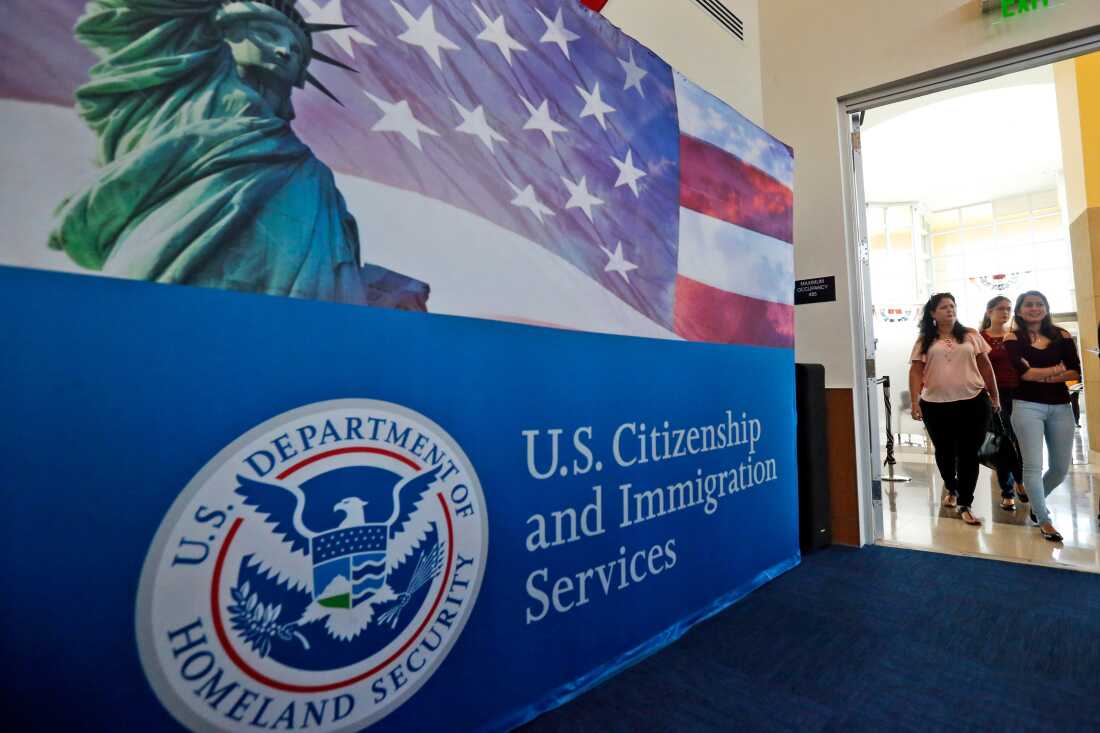
In this Aug. 17, 2018, file photo, people arrive before the start of a naturalization ceremony at the U.S. Citizenship and Immigration Services Miami Field Office in Miami. Wilfredo Lee/AP
The fee, initially aimed at deterring foreign workers from displacing American jobs, was struck down by U.S. District Court Judge Leo Sorokin. Sorokin’s judgment, which aligns with the claims of 20 states, argues that the executive branch overstepped its bounds, infringing on the Administrative Procedure Act’s guidelines for regulation formulation.
“The Court finds that the Policy imposes a tax on H-1B petitions without the requisite delegation by Congress,” Sorokin remarked in his ruling.
This visa category is crucial for high-skilled occupations that are challenging to fulfill with American labor, particularly in the tech sector, which predominantly employs workers from India. States have expressed concerns that the increased fee exacerbated the challenges of recruiting essential professionals, notably in healthcare and education.
Previously, H-1B visa applications already incurred costs reaching several thousand dollars, and the fee hike caused widespread confusion, prompting numerous lawsuits, including one in Boston.
The U.S. Chamber of Commerce also took legal action against the fee in Washington, D.C., contesting the decision that allowed the fee to remain until 2026. Concurrently, another lawsuit initiated by religious and labor groups in San Francisco could result in differing appellate court decisions.
States argued that the policy hindered their capacity to recruit educators and healthcare professionals, potentially stalling academic research and diminishing medical staff.
Massachusetts Attorney General Andrea Joy Campbell commented, “Today’s victory protects the integrity of the H-1B visa program as a tool to address severe labor shortages in vital industries like education, healthcare, and medical research.”
Bobby Mukkamala, president of the American Medical Association, described the ruling as “a victory for patients,” emphasizing its importance in addressing physician shortages and improving access to care, especially in underserved regions.
In response, the Department of Homeland Security voiced its disagreement, labeling the decision as “judicial activism” that undermines President Trump’s immigration reform efforts.
White House spokesperson Taylor Rogers stated the administration’s belief that “this order will be reversed on appeal,” indicating ongoing legal battles surrounding the policy.