Supreme Court Reaffirms Birthright Citizenship Amidst Controversy
In a pivotal decision, the Supreme Court has reaffirmed the principle of birthright citizenship in the United States, a doctrine that guarantees citizenship to children born on American soil regardless of their parents’ immigration status. This ruling marks a significant setback for efforts by former President Trump to alter immigration policies.
Chief Justice John Roberts, writing for the majority, emphasized the historical roots of birthright citizenship, linking it back to the nation’s founding ideals. He noted that, similar to the colonists’ demand for “the rights of Englishmen” over 250 years ago, the Constitution was amended post-Civil War to ensure automatic citizenship for all children born in the U.S. “Citizenship then and now was the right to have rights,” Roberts asserted, affirming the continued relevance of this principle.
The 6-to-3 decision saw five justices fully endorse Roberts’ opinion, with Justice Brett Kavanaugh concurring only on the basis of federal legislation from the 1950s that supports automatic citizenship for U.S.-born children. On the dissenting side, Justice Clarence Thomas, supported by Justice Neil Gorsuch and a separate dissent by Justice Samuel Alito, argued that the 14th Amendment was intended solely for former slaves and their descendants. Thomas expressed skepticism about the long-term viability of the majority’s opinion.
Justice Ketanji Brown Jackson countered Thomas’ arguments, highlighting the unexpected nature of his suggestion that the citizenship clause was race-specific. Cecillia Wang of the ACLU, who argued the case, described Trump’s attempt to redefine birthright citizenship as transparent and emphasized its fundamental role in American ideals of equality.
Yale law professor Akhil Amar regarded the court’s opinion as a steadfast adherence to the original Constitution, noting that the 14th Amendment’s text focuses on the child, not the parents. Conversely, University of Virginia law professor Amanda Frost expressed concern over the court’s narrow split, considering it indicative of the Trump administration’s influence in mainstreaming a fringe argument.
The court’s decision also drew historical parallels, referencing the 1898 case of Wong Kim Ark, whose U.S. citizenship was upheld despite his Chinese parentage. His great-grandson, Norman Wong, commented on the enduring significance of this precedent in today’s context.
In other rulings, the court upheld state laws barring transgender athletes from female sports teams, with Justice Kavanaugh citing safety and fairness concerns. Justice Sonia Sotomayor’s partial dissent emphasized the unconstitutionality of denying transgender athletes the opportunity to compete with peers. Additionally, the court struck down spending limits on political party contributions to candidates, potentially increasing campaign financing.

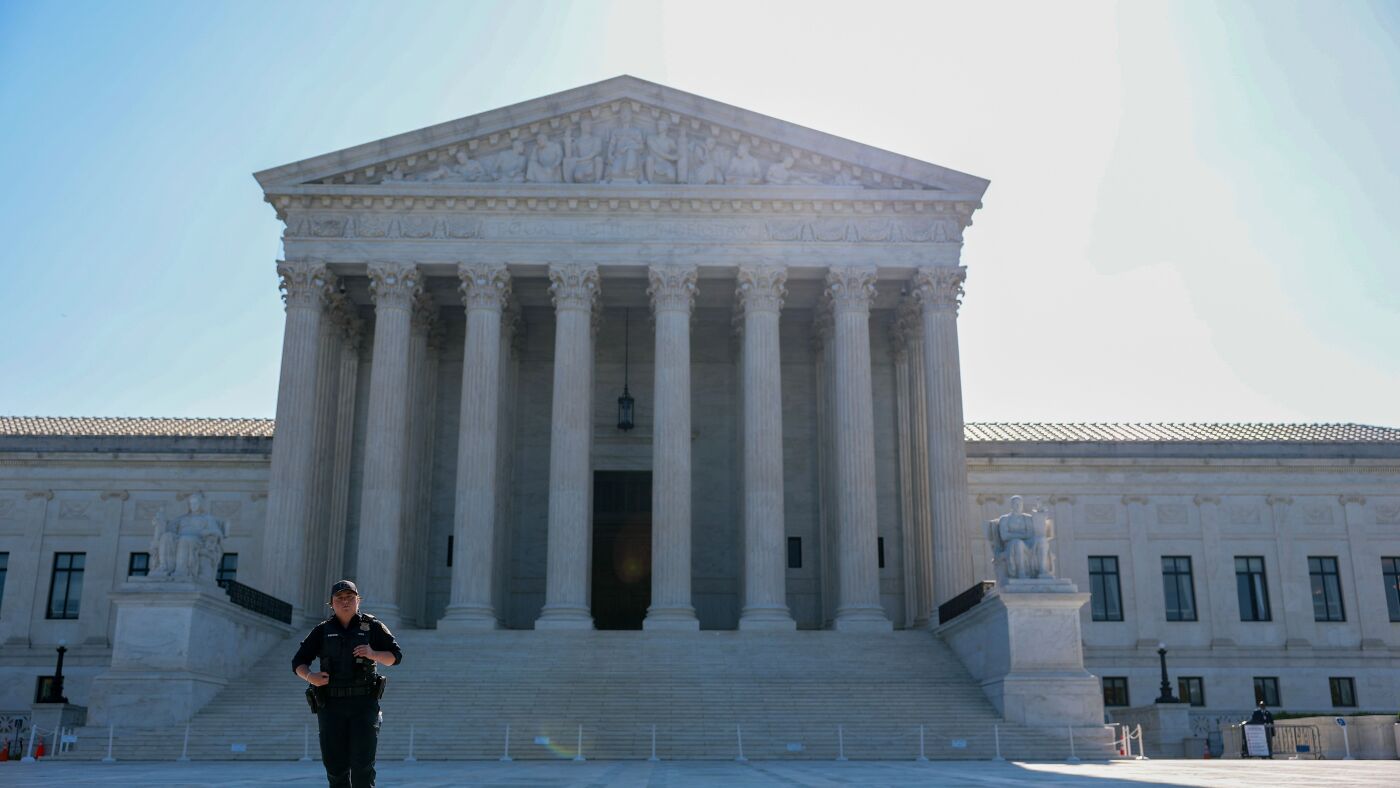
The U.S. Supreme Court
Tasos Katopodis/Getty Images
This article was originally written by www.npr.org