A Federal Judge Blocks Unilateral Firing of Voice of America Director by Kari Lake
An unprecedented legal decision has unfolded in Washington, D.C., where a federal judge has halted the actions of a Trump administration official in an attempt to preserve the integrity of a key international broadcaster. The ruling underscores the complexities of media governance under political pressures.
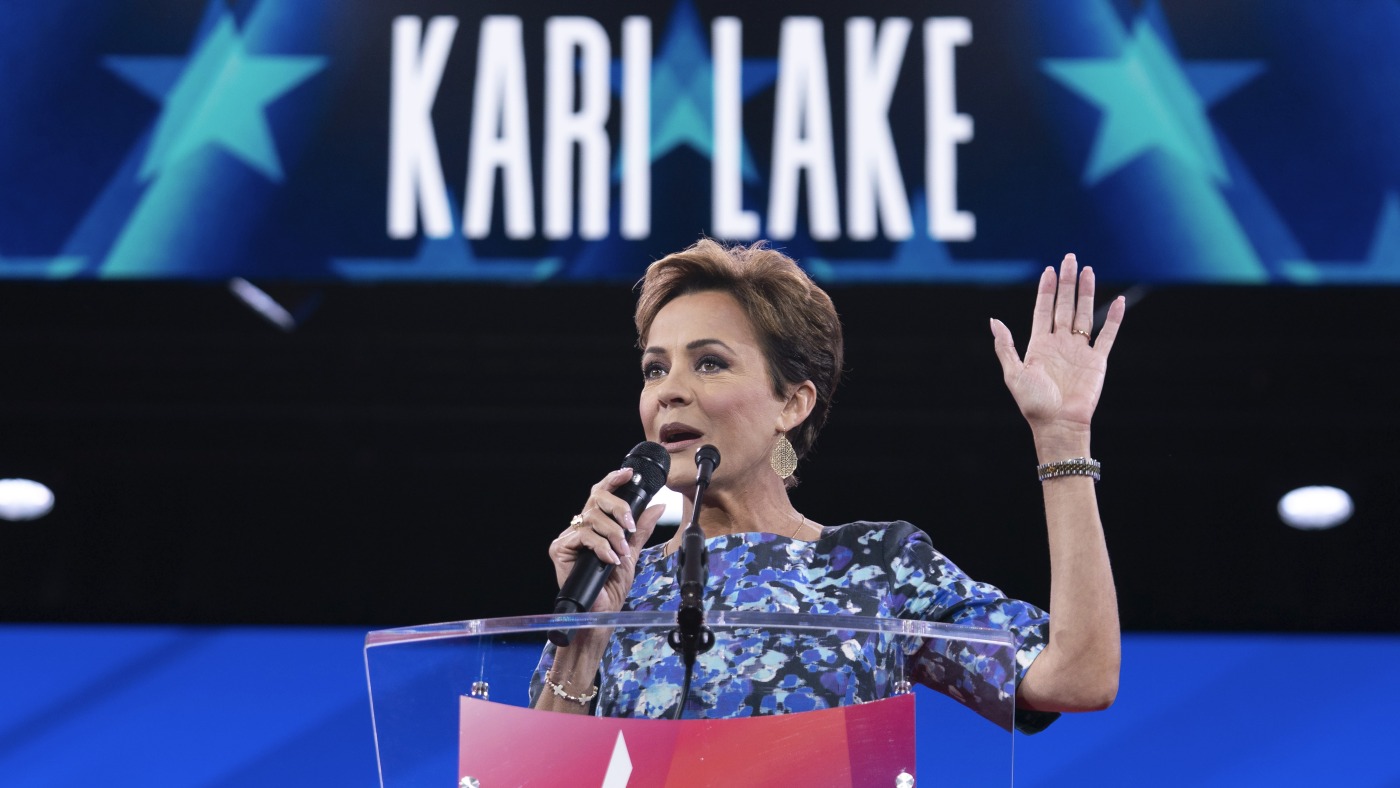
In a decisive ruling, Judge Royce C. Lamberth stated that Kari Lake, a Trump administration official, exceeded her authority in trying to dismiss Michael Abramowitz, the director of Voice of America (VOA). The judge emphasized that Lake’s decision lacked the requisite backing of a congressional advisory panel intended to shield the broadcaster from political influence.
Historically, this advisory panel was designed to protect VOA and its sister networks from undue political pressure, a safeguard established by Congress. However, President Trump had dismissed most of the panel members early in his first term, leaving vacancies that have yet to be filled.
Abramowitz, who faced a potential reassignment to a shortwave radio station in North Carolina, found himself at the center of a legal maelstrom. Judge Lamberth noted such a reassignment would also be illegal. “There is no longer a question of whether the termination was lawful,” Lamberth wrote, further criticizing the administration’s actions.
The legal battle is part of broader lawsuits against Lake’s efforts to restructure VOA and its parent agency, the U.S. Agency for Global Media. Abramowitz commented on the ruling, expressing relief, “I am very gratified by Judge Lamberth’s ruling and his finding that the U.S. Agency for Global Media must follow the law as Congress mandated.”
Under Lake’s leadership, VOA has experienced significant cutbacks, reducing its language services from 49 to just four and severely impacting its workforce and content production. Despite the ruling, Lake has indicated plans to appeal, asserting, “Elections have consequences, and President Trump runs the executive branch.”
The court’s attention also focused on a March executive order from President Trump, which mandated a downsizing of VOA. This included the discontinuation of the Korean language service, a move Lamberth found contrary to congressional requirements. The Justice Department, representing Lake, argued the administration’s actions were constitutionally supported by presidential powers, but these claims were dismissed by the judge.
Lamberth, appointed by President Reagan, criticized Lake’s non-compliance with court requests and described her actions as “verging on contempt of court.” He emphasized that the law directs specific allocations for VOA, and the current management approach was wasteful of taxpayer funds.
Efforts to increase control over federally funded networks, such as Radio Free Europe/Radio Liberty and Radio Free Asia, were met with resistance from Congress, which passed legislation in 2020 to prevent political interference. Though Trump dismissed the advisory board members upon his second term, no replacements have been appointed, leaving the board’s role unfulfilled.
Abramowitz’s legal struggle included a motion to the court after being placed on administrative leave. Despite the government’s contention that administrative remediation was necessary, Lamberth underscored the legal requirement for a bipartisan majority in the board for such decisions.
The legitimacy of Lake’s role as acting chief executive remains in question, with no clear documentation of her presidential appointment, raising further legal uncertainties about her authority over VOA.