
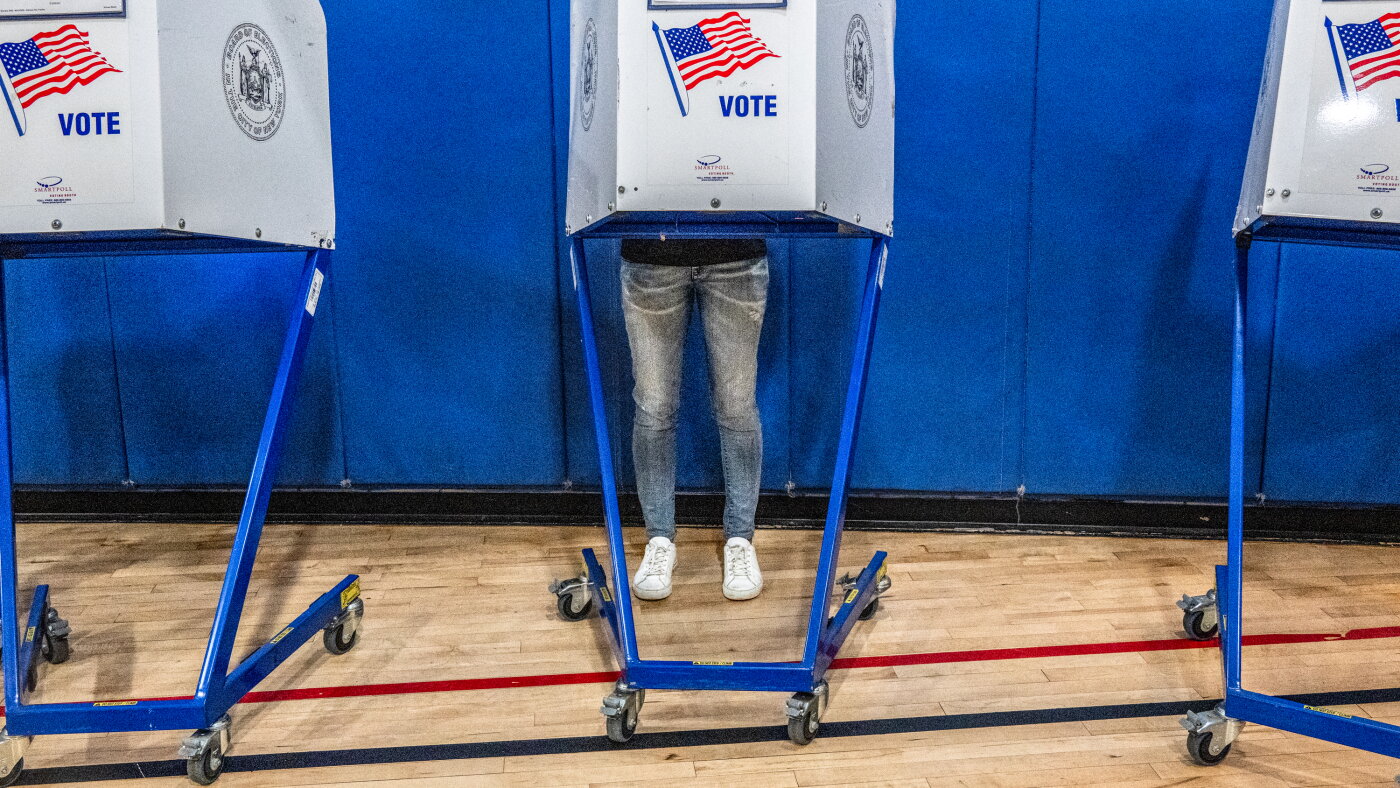
Lawmakers Demand Action on Election Security Funding as Midterm Elections Loom
With the clock ticking towards the midterm elections, two Democratic lawmakers are pressing the Trump administration for answers on delayed election security funding. The funds, intended to shield state and local elections from cyber threats, were mandated by Congress but remain undelivered, raising concerns among election officials.
Senator Alex Padilla of California and Representative Joseph Morelle of New York have formally addressed their concerns to Homeland Security Secretary Markwayne Mullin and Nick Anderson, the acting head of the Cybersecurity and Infrastructure Security Agency (CISA). In their letter, they demand the restoration of over $39.6 million, as allocated in the fiscal year 2026 DHS Appropriations bill passed in April. NPR obtained an exclusive copy of the letter.
“With the midterm elections occurring in two months, we write with grave concern that time is running out … to assist state and local election officials in protecting our elections from cyber and mis-and disinformation threats,” the lawmakers stated.
The Department of Homeland Security (DHS) and CISA have yet to provide a response to NPR’s inquiries regarding this matter.
Padilla, who serves as the ranking member of the Senate Rules Committee, and Morelle, the ranking member on the Committee on House Administration, have highlighted the critical funding gaps affecting the Election Infrastructure Information Sharing and Analysis Center. This center, a vital resource for disseminating intelligence on election infrastructure threats, has faced service limitations due to funding cuts in March 2025. The center has transitioned to a paid membership model, which poses challenges for under-resourced communities.
The specter of foreign interference in U.S. elections has grown since the 2016 presidential election, when intelligence agencies reported attempts by Russia to influence the outcome. Since then, nations like Iran have intensified efforts to undermine confidence in the electoral process, further complicating the landscape of election security.
Under the Trump administration, election security has often been a contentious issue. President Trump has historically focused on questioning the 2016 intelligence assessments and asserting unproven claims of election fraud in 2020. In a recent address, he reiterated these claims without presenting new evidence, as reported by NPR (source).
Meanwhile, federal funding for election security initiatives has been reduced, along with cuts to related federal roles, including at CISA. Padilla and Morelle have expressed concern over the “removal of hundreds of CISA personnel and attempts by the Trump administration to slash the agency’s budget.”
The urgency of the situation is exacerbated by ongoing international conflicts and the surge in cyberattacks on U.S. infrastructure. The lawmakers also pointed to the rapid evolution of artificial intelligence, which is increasingly capable of exploiting vulnerabilities.
“This is particularly disturbing at a time when our nation is at war with the Republic of Iran, which has reportedly engaged in sophisticated cybersecurity attacks, including on water infrastructure in the United States and nuclear energy facilities in the United Kingdom,” they noted. The threat from other state and non-state actors, such as Russia and China, continues to grow with advancements in technology.
As the midterm elections approach, Padilla and Morelle conclude that rebuilding trust with election officials seems unlikely. They insist on the necessity for federal authorities to allocate the funds to the information sharing center and bolster local election security advisory roles nationwide.
“The failure to restore this funding as directed by Congress is a disservice to the thousands of election jurisdictions across this country,” they emphasized.



Comments are closed.