Federal Agents and the Mystery of Unmarked Vehicles in Immigration Operations
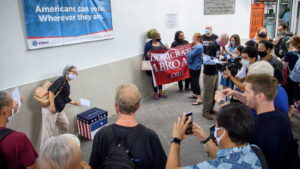
In the bustling streets of Chicago, a TikTok video captured a scene that’s becoming all too familiar: masked individuals in tactical gear climbing into an SUV amidst a crowd’s angry protests. This visual raises questions about U.S. Immigration and Customs Enforcement (ICE) operations and their methods of enforcement.
These incidents, shared on social media, have prompted concerns about the transparency of federal immigration operations. The vehicles used, often devoid of license plates or carrying swapped plates, have been at the center of these discussions. Observers note that such vehicles have been spotted in states like Illinois, California, and Washington, intensifying debates on the legality and ethics of these practices.
According to sources, the Department of Homeland Security (DHS) justifies the disguise of their agents, claiming it’s a protective measure against doxing. However, this practice has led to numerous proposals aimed at banning the masking of federal agents in public.
Activists and witnesses have raised alarms over the use of unmarked vehicles, suggesting that these tactics hinder accountability and blur the lines of lawful enforcement. NPR’s investigation, supported by videos from platforms like TikTok and Eyes Up, confirms these accounts, showing federal agents conducting operations in vehicles that lack proper identification.
ICE’s response to these allegations has been limited. Despite efforts to confirm whether these vehicles belong to federal agents, the agency has remained largely silent. In one instance, spokesperson Mike Alvarez cited federal codes that allow law enforcement vehicles to operate without visible identification during specific duties. Yet, these allowances are meant to be exceptions rather than the rule.
Unveiling the Ghostly Presence
Once rare, the use of unmarked vehicles in ICE operations has now become more common, as noted by former ICE field office director Darius Reeves. “The agency clearly wants to appear like a ghost,” he remarked, highlighting a significant shift in enforcement tactics.
The federal regulations Alvarez referenced require that government vehicles display official plates unless such identification would hinder their duties. Yet, swapping plates is explicitly prohibited. Despite this, activists have documented instances of license plate swapping, particularly in Illinois and California, suggesting a deviation from these guidelines.
Efforts to obtain documentation of license plate waivers through the Freedom of Information Act have been stalled, with ICE yet to provide the requested records. This delay, attributed to a government shutdown, raises further questions about the transparency of these operations.
Disguised Operations with Cultural Icons
Beyond unmarked vehicles, some federal agents have been seen using cars adorned with Mexican symbols, adding another layer of complexity. Videos from Washington and Illinois depict such vehicles in use during arrests, sparking concerns about the intent behind these cultural markers.
While ICE has not clarified their involvement in these operations, DHS spokesperson Tricia McLaughlin denied claims of agents camouflaging their identities, despite acknowledging the use of masks for protection.
Implications for Public Trust and Accountability
The involvement of multiple federal agencies in immigration enforcement complicates the landscape. Reports indicate that officers from various agencies, including the FBI and DEA, have participated in arrests without clear vehicle identification, eroding public trust in law enforcement.
Daniel Hodges, a police officer in Washington D.C., argued that such practices could damage the relationship between local police and the community. “Ethically and in terms of long-term effectiveness of our police departments, it’s only detrimental,” he stated.
Concerns about accountability are echoed by David Bier from the Cato Institute, who warns that untraceable operations hinder legal scrutiny. “Removing or switching license plates removes the opportunity for accountability,” Bier explained, emphasizing the importance of transparency in upholding democratic principles.