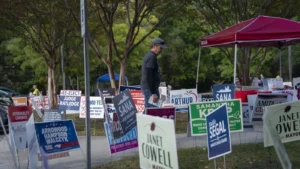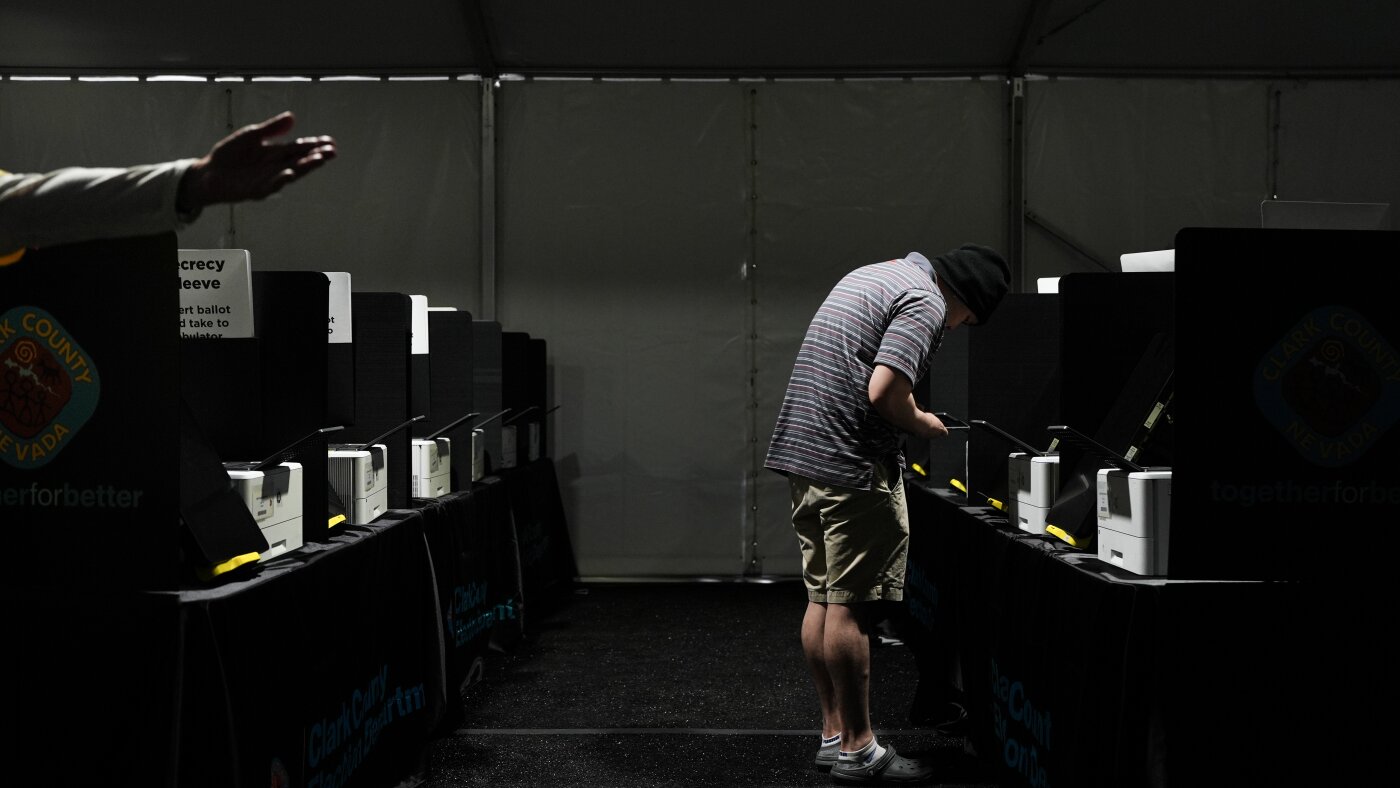

A voter casts a ballot at a vote center set up in a tent in Las Vegas on June 9.
Jae C. Hong/AP
With the upcoming elections drawing close, federal and state officials are embroiled in a debate over the presence of noncitizens on voter rolls. Heather Honey, a Department of Homeland Security (DHS) official, affirmed to Nevada’s election authorities that her team is operating “in good faith” to address this issue.
In a highly publicized announcement, President Trump claimed that his administration had identified over 250,000 noncitizens on voter lists across several states, including Nevada. Yet, states such as Nevada continue to ask for concrete evidence or a comprehensive list from federal officials to substantiate these claims. More than a month has passed, and these states are still awaiting proof.
During a call with Nevada officials, DHS elaborated on the methodology used to arrive at their figures, yet inadvertently cast doubt on the broader implication of widespread noncitizen voting. Initially, the DHS reported finding nearly 16,000 noncitizens in Nevada’s voter registry. However, they later admitted that this figure served as an upper limit and required manual verification. Eventually, a list of 185 voter IDs believed to be noncitizens was provided to the state.
The Nevada officials requested further information about these 185 voters and the criteria used for their identification. Despite this request, DHS declined to disclose additional data but admitted that more than 14,000 voters in Nevada still require further scrutiny.
Similar interactions occurred in Pennsylvania, where state officials also sought clarity from DHS following Trump’s assertions. However, Pennsylvania has yet to receive a refined list of names from the federal government. An informed Pennsylvania official expressed skepticism about the accuracy of the numbers shared by DHS, stressing the need for credible evidence to initiate any legal actions.
Both DHS and the U.S. Citizenship and Immigration Services (USCIS) have not provided explanations for the inflated numbers shared publicly. With the election nearing, state election officials are cautious about removing voters from the rolls without irrefutable evidence of ineligibility.
Mark Wlaschin, Nevada’s deputy secretary of state for elections, emphasized the importance of careful vetting: “The integrity of the electoral process in our state is of supreme importance… we also don’t want to inadvertently accuse a U.S. citizen of not being [a citizen] and then they’re terrified and disenfranchised.”
California also expressed concern about the potential wrongful removal of legitimate voters, describing the federal effort as a “fishing expedition” for supposed noncitizens. According to the state, DHS has not yet responded to inquiries regarding these allegations.
USCIS has committed “significant additional resources” to the initiative, intending to manually cross-reference voter data with its records. However, federal officials have been reluctant to share specific data points used to identify the 185 purported noncitizens.
USCIS official Kimberly Vogt stated, “We’d prefer to limit our information sharing to just providing you the voter ID from your public voter list.” Nevada officials responded that such limited information is insufficient for their investigations.
Homeland Security Secretary Markwayne Mullin pledged that further analyses would be released during the election period, with potential legal repercussions for local officials who fail to act on federal information. However, no criminal referrals have been made against Nevada’s election officials. Honey assured Nevada officials that they are expected to do their best with the provided list.