https://npr.brightspotcdn.com/dims3/default/strip/false/crop/3000×2250+0+0/resize/800/quality/85/format/jpeg/?url=http%3A%2F%2Fnpr-brightspot.s3.amazonaws.com%2F63%2F3f%2Fa29d8bc645b49b9de10da691e955%2Fstate-medicaid-cuts-ysadore-02.jpg 800w,
https://npr.brightspotcdn.com/dims3/default/strip/false/crop/3000×2250+0+0/resize/900/quality/85/format/jpeg/?url=http%3A%2F%2Fnpr-brightspot.s3.amazonaws.com%2F63%2F3f%2Fa29d8bc645b49b9de10da691e955%2Fstate-medicaid-cuts-ysadore-02.jpg 900w,
https://npr.brightspotcdn.com/dims3/default/strip/false/crop/3000×2250+0+0/resize/1200/quality/85/format/jpeg/?url=http%3A%2F%2Fnpr-brightspot.s3.amazonaws.com%2F63%2F3f%2Fa29d8bc645b49b9de10da691e955%2Fstate-medicaid-cuts-ysadore-02.jpg 1200w,
https://npr.brightspotcdn.com/dims3/default/strip/false/crop/3000×2250+0+0/resize/1600/quality/85/format/jpeg/?url=http%3A%2F%2Fnpr-brightspotcdn.com/s3.amazonaws.com/63/3f/a29d8bc645b49b9de10da691e955/state-medicaid-cuts-ysadore-02.jpg 1600w,
https://npr.brightspotcdn.com/dims3/default/strip/false/crop/3000×2250+0+0/resize/1800/quality/85/format/jpeg/?url=http%3A%2F%2Fnpr-brightspotcdn.com/s3.amazonaws.com/63/3f/a29d8bc645b49b9de10da691e955/state-medicaid-cuts-ysadore-02.jpg 1800w” sizes=”(min-width: 1025px) 650px, calc(100vw – 30px)” class=”img” type=”image/jpeg”/>

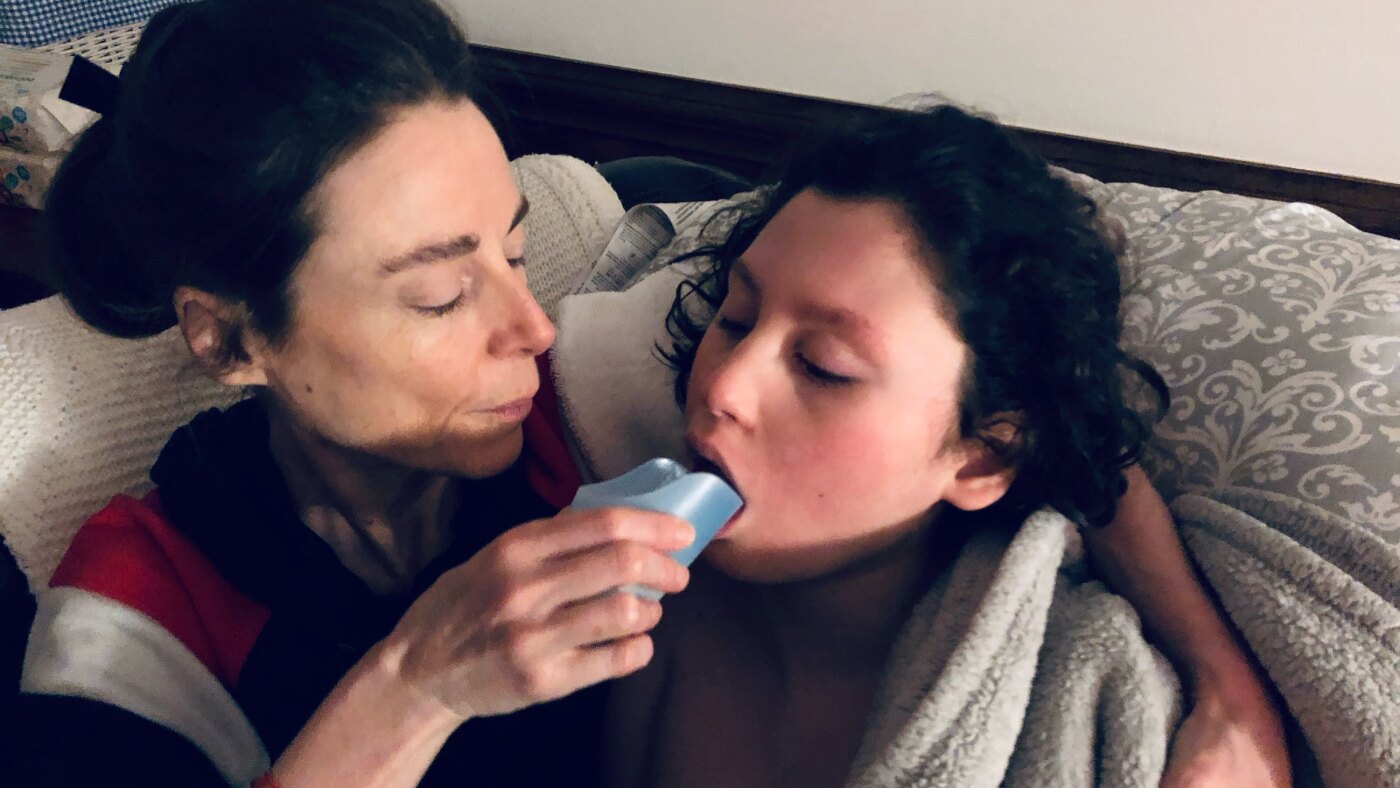
Alessandra Fabrello (left) cares for her son Ysadore Maklakoff. North Carolina Medicaid cuts that went into effect Oct. 1 mean Fabrello will have a pay cut as a family caregiver. Maklakoff qualifies for services he can’t get because providers already didn’t take Medicaid’s low reimbursement rates.
Aaron Marco
Aaron Marco
For nearly 18 years, Alessandra Fabrello has balanced the roles of mother and medical caregiver for her son. “It is almost impossible to explain what it takes to keep a child alive who should be dead,” she remarked about the challenges of raising Ysadore Maklakoff, who at 9 months old, faced a rare brain condition known as acute necrotizing encephalopathy.
Through North Carolina’s Medicaid program, Ysadore is eligible for extensive home-based medical care in Chapel Hill. Despite working with staffing agencies, Fabrello often performs medical tasks typically handled by professionals due to the scarcity of available help.
With recent cuts to Medicaid in North Carolina, accessing and affording this care is becoming increasingly challenging. Medicaid, a joint state and federal program, provides health insurance to individuals with low incomes or disabilities. Across the United States, states are addressing budget deficits, with Medicaid often being targeted due to its significant cost. The situation is expected to worsen as a new federal law is set to reduce Medicaid funding by approximately $1 trillion over the next decade.
States like North Carolina and Idaho have declared reductions in Medicaid payments to healthcare providers, including hospitals and caregivers. Meanwhile, Medicaid spending is a topic of debate in states like Michigan and Pennsylvania, where budgets remain unapproved. In Washington state, lawmakers have enacted program cuts that do not affect eligibility, according to Hayden Mackley, a spokesperson for the state’s Office of Financial Management.
N.C. cuts underway
North Carolina implemented a minimum 3% pay reduction for all Medicaid providers on Oct. 1. Primary care physicians face an 8% decrease, while specialists see a 10% decline in payments, reports the North Carolina Department of Health and Human Services.
Fabrello’s concerns about her son’s dental care are growing as his dentist will stop accepting Medicaid patients in November. This adds to the list of services he qualifies for but can’t access due to a shortage of providers accepting Medicaid.
Occupational and speech therapy, nursing care, and respite care are already hard to obtain. On good weeks, Ysadore receives only 50 out of the 112 hours of skilled nursing care he’s eligible for. “When you say, ‘We’re just cutting provider rates,’ you’re actually cutting access for him for all his needs,” Fabrello emphasized.
Shannon Dowler, former chief medical officer for North Carolina Medicaid, warned that reduced payments would lead to fewer providers in the Medicaid network, resulting in “an immediate loss of access to care, worse outcomes, and cause higher downstream costs.”
Dowler clarified that these cuts are unrelated to the new federal law that reduces Medicaid funding. “This is like the layers of the onion,” she said. “We are hurting ourselves in North Carolina way ahead of the game, way before we need to do this.” North Carolina is projected to lose about $23 billion in federal Medicaid funds over the next decade.
With over 3 million North Carolinians enrolled in Medicaid, the state’s budget impasse led to a mini-budget in July, providing the Medicaid agency $319 million less than requested. Lawmakers might restore funding this fiscal year, Dowler noted. “We all hope it changes,” she added, warning of potential provider dropouts if it doesn’t.
Tough options
Since at least 2019, North Carolina’s Medicaid agency has consistently requested more funding than received. Federal resources, including pandemic relief funds, helped bridge the gap, but those are now depleted. The state faced a choice: cut optional program parts or reduce payments to all Medicaid providers. It chose the latter.
“It’s a difficult moment for North Carolina,” said Jay Ludlam, deputy secretary for North Carolina Medicaid. Budget cuts are “absolutely the opposite direction of where we really want to go, need to go, have been headed as a state.”
Anita Case, who leads a group of health clinics in North Carolina, finds the cuts challenging for serving the “most vulnerable in our community.” Western North Carolina Community Health Services, serving about 15,000 patients in Asheville, will review staffing, services, and contracts to find savings.
Hospitals at risk of closure in Idaho
Idaho, with roughly 350,000 Medicaid enrollees, responded to an $80 million budget shortfall by slashing Medicaid pay rates 4% across the board this month.
The cuts sparked backlash from nursing home operators and patient advocacy groups. In a recent op-ed, nursing home leaders warned that Medicaid’s funding cuts would necessitate staff reductions or accepting fewer residents.
Idaho Department of Health and Welfare spokesperson AJ McWhorter explained the state’s difficult choices, noting a 19% growth in Medicaid spending this year.
Toni Lawson of the Idaho Hospital Association highlighted the financial strain on about two dozen small hospitals, each with 25 or fewer beds. Some hospitals have reported having less than two days’ worth of cash for payroll, while others have only 30 days’ worth. “Hopefully, none of them will close,” Lawson said, predicting that labor and delivery and behavioral health units might be the first to shut down as they often operate at a loss. Several rural hospitals closed their labor and delivery units last year.
A big part of state budgets
Medicaid accounts for an average of 19% of state general fund spending nationwide, second only to K-12 education, according to Brian Sigritz, director of state fiscal studies for the National Association of State Budget Officers.
States saw strong revenue growth in 2021 and 2022 due to economic recovery and federal aid. However, revenue growth has since slowed, and some states have reduced income and property taxes. Meanwhile, Medicaid, housing, education, and disaster response costs have risen, Sigritz noted.
In North Carolina, Fabrello has been unable to work outside of caring for her son. Her savings are almost exhausted, and she was on the brink of financial ruin until the state began compensating parents for caregiving duties. She has received this income for about a year, preventing the loss of her home. Now, with state cuts, her salary is at risk.
“As parents, we are indispensable lifelines to our children, and we are struggling to fight for our own survival on top of it,” Fabrello said.
KFF Health News is a national newsroom that produces in-depth journalism about health issues and is one of the core operating programs at KFF — the independent source for health policy research, polling, and journalism.